

An accent wall is one of the easiest ways to give a bedroom a focal point without repainting or redecorating the whole room. Done well, it anchors the bed, adds depth, and creates a cocooning, restful feel rather than looking dated. Below are ten accent wall bedroom ideas, from paint colors to texture and material choices, along with tips for getting each one right.
Quick Answer
The best accent wall bedroom ideas for 2026 lean on muted, earthy tones like sage green, terracotta, and warm clay, plus bold jewel tones like emerald or deep teal for drama. Apply the accent to the wall behind the headboard, and choose a finish, matte, limewash, or textured, that adds depth rather than a single flat color.
| Accent Style | Mood | Commitment Level |
| Sage or moss green | Calm, nature inspired | Standard |
| Deep emerald or teal | Dramatic, cozy | Caution |
| Terracotta or clay | Warm, grounding | Standard |
| Textured plaster | Soft, editorial | Varies |
| Wood slat wall | Modern, structured | Caution |
Rough cost comparison by accent wall type
1. Sage Or Moss Green
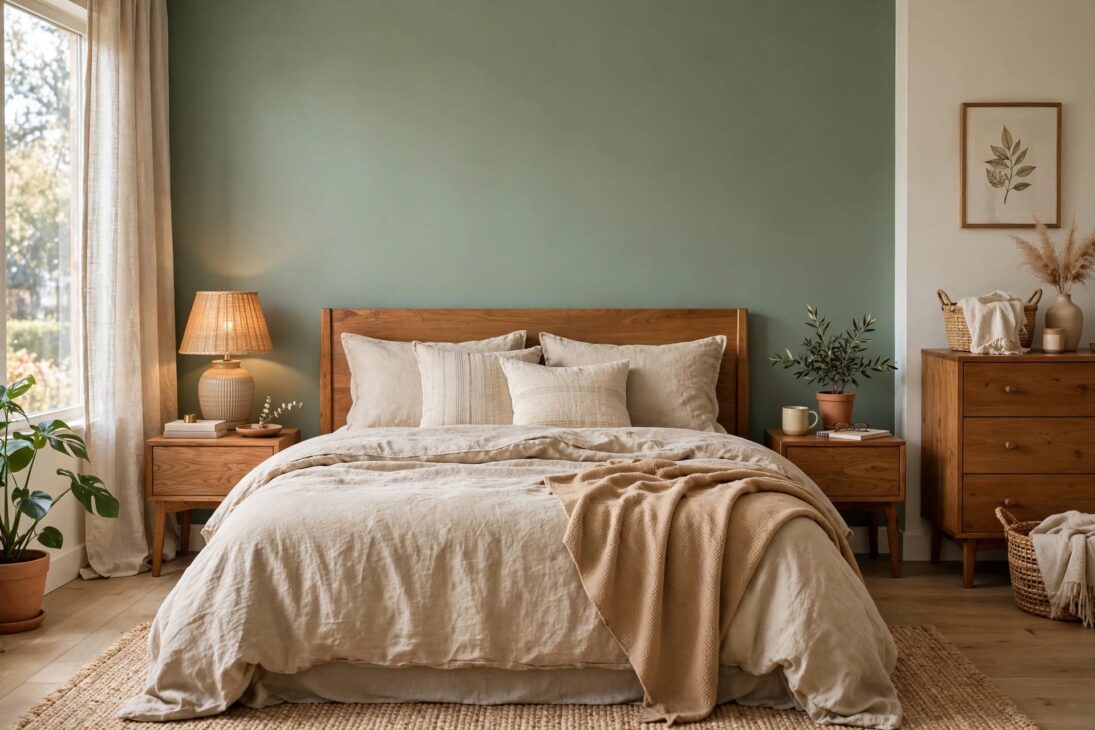
Muted greens connect a bedroom to nature and pair beautifully with wood furniture and natural fabrics. Sage works especially well as an accent wall because it reads as calm rather than bold, making it easy to live with long term. It also pairs well with warm neutrals like beige and oatmeal on the surrounding walls.
Test the color on the wall at different times of day before committing, since green shifts noticeably between warm morning light and cooler evening light.
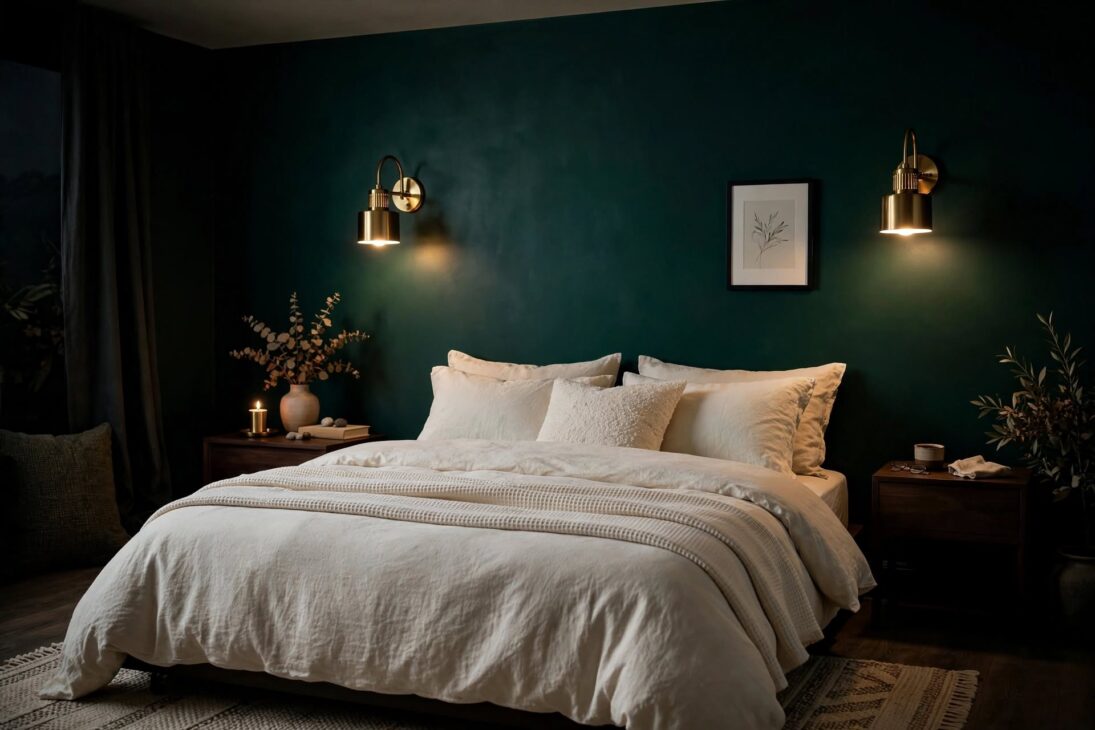
2. Deep Emerald Or Teal
For a bolder, more dramatic look, deep blue-green shades like emerald and teal create a moody, sophisticated retreat. These colors work especially well behind the bed in a room that gets good natural light, since the depth of the color needs some brightness to keep it from feeling too heavy. Pair it with brass or gold hardware for contrast.
Balance a bold accent wall with lighter bedding and curtains, so the rest of the room doesn’t compete with the wall’s intensity.
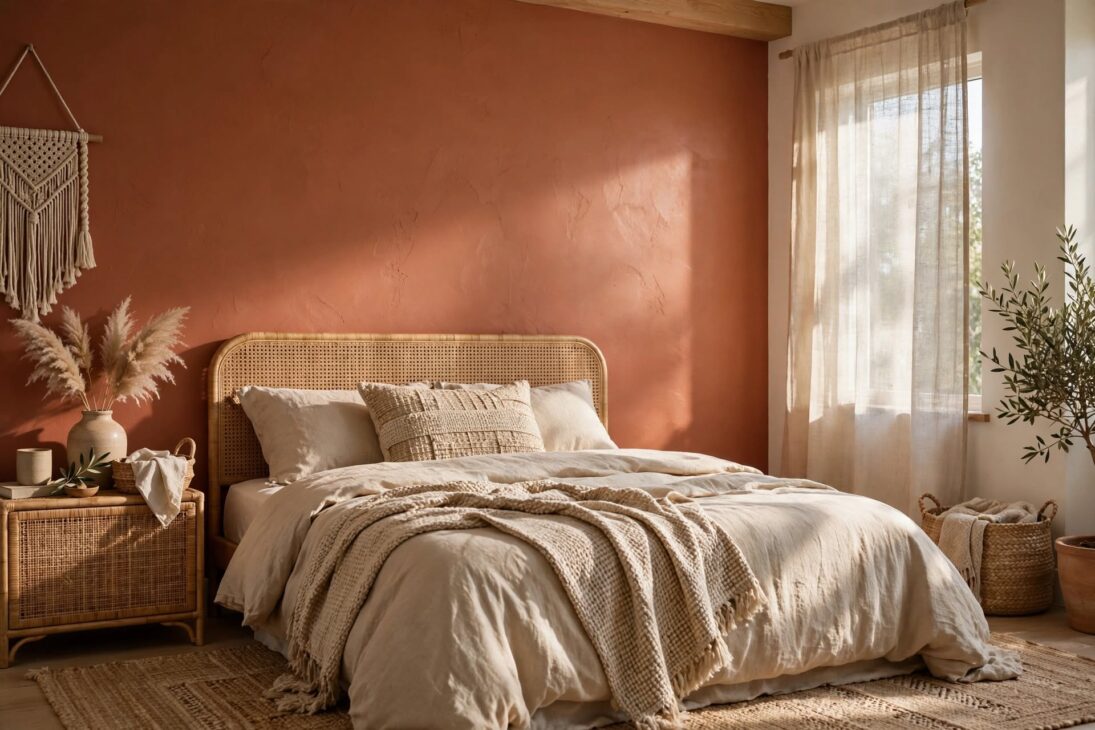
3. Terracotta Or Clay
Warm terracotta and clay tones bring an earthy, grounding feel to a bedroom, especially paired with wood tones and woven textures. These colors work well in rooms without a lot of natural light, since the warmth keeps the space feeling cozy rather than dark. It’s also one of the easier bold colors to pair with existing furniture.
Choose a matte finish over a glossy one, since matte paint absorbs light softly and gives terracotta a more natural, clay-like look.
4. Textured Limewash Or Plaster
Limewash and plaster finishes add a soft, cloudy texture to a single color rather than the flat look of standard paint. Light catches the surface differently throughout the day, giving the wall a subtle, editorial quality. This works well in warm neutral tones, cream on cream or soft taupe, for a look that’s still calm but not boring.
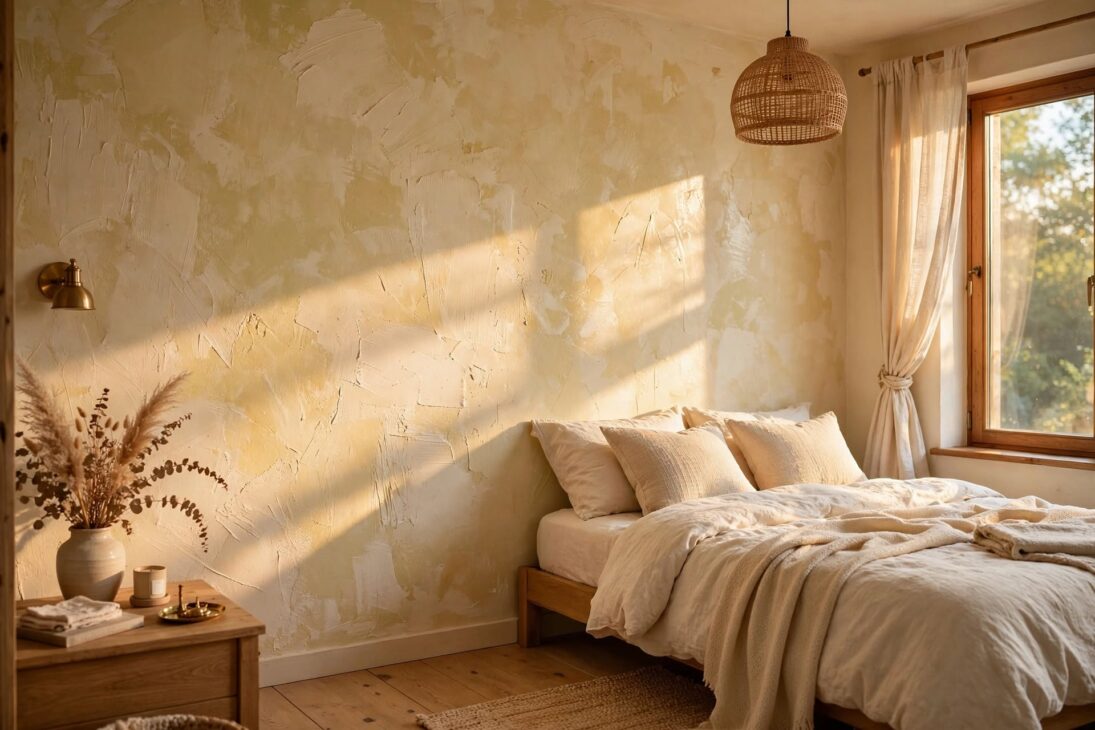
Hire someone experienced with limewash application if you haven’t used it before, since the texture depends heavily on brush technique and dries differently than regular paint.
5. Wood Slat Accent Wall
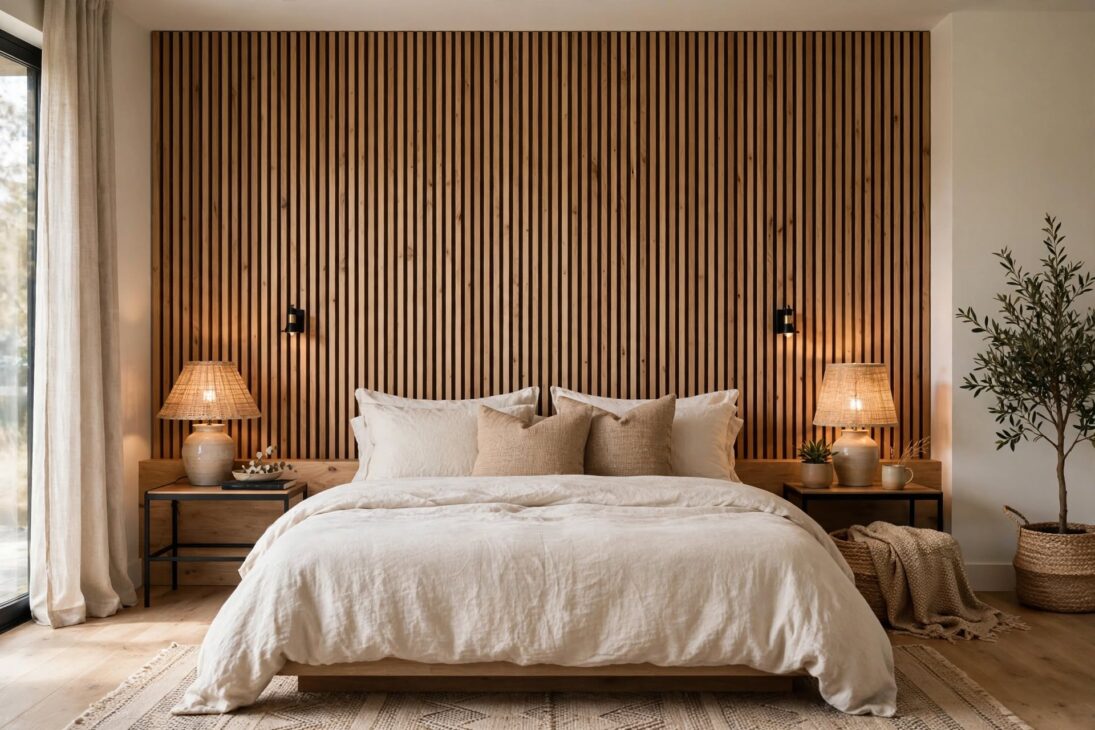
Vertical wood slats behind the bed add a structured, modern texture that paint alone can’t achieve. Leave the wood natural for warmth, or paint the slats a solid color for a more monochrome, sculptural look. This idea works especially well as a built-in headboard alternative in a primary bedroom.
Space the slats evenly using a spacer block while installing, since even small gaps in spacing become obvious once the wall is lit and finished.
6. Two-Tone Wall Paint
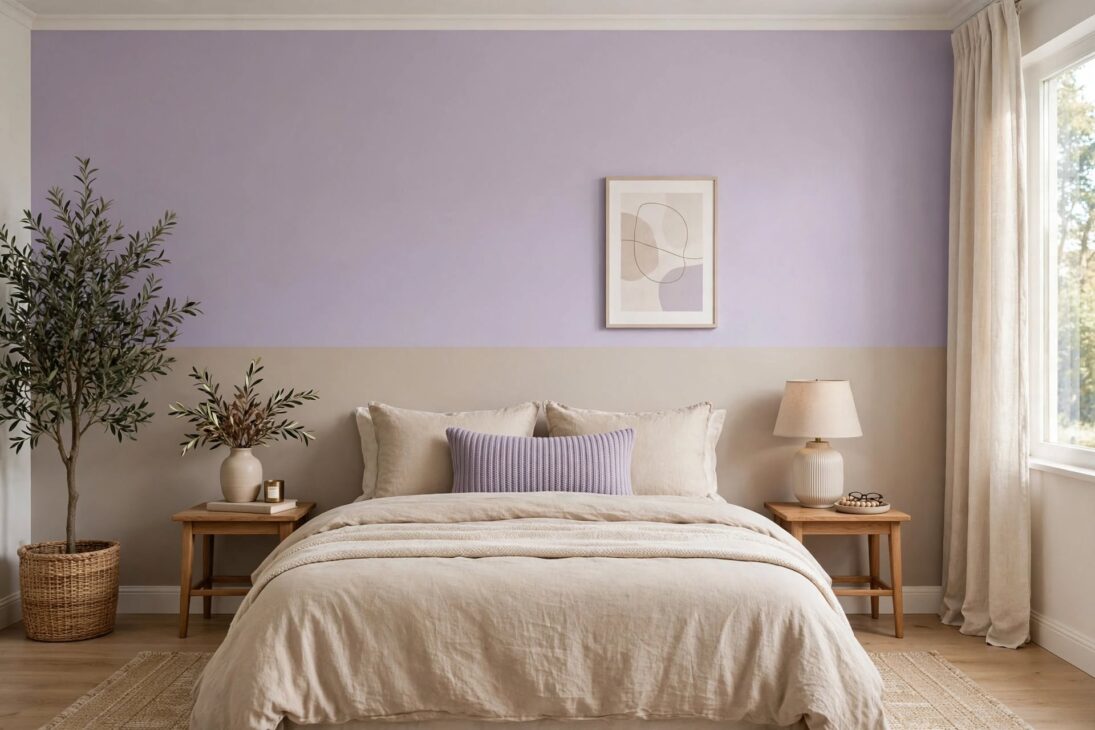
Splitting the accent wall into two colors, one on the lower half and one above, or a painted block behind the headboard only, adds dimension without a full commitment to one bold shade. This works well when you want an accent color but aren’t ready to cover the entire wall in it. A soft lavender paired with a warm neutral is a popular combination for this look.
Use painter’s tape and a level to mark the divide line carefully, since even a slightly crooked line becomes very noticeable across a full wall.
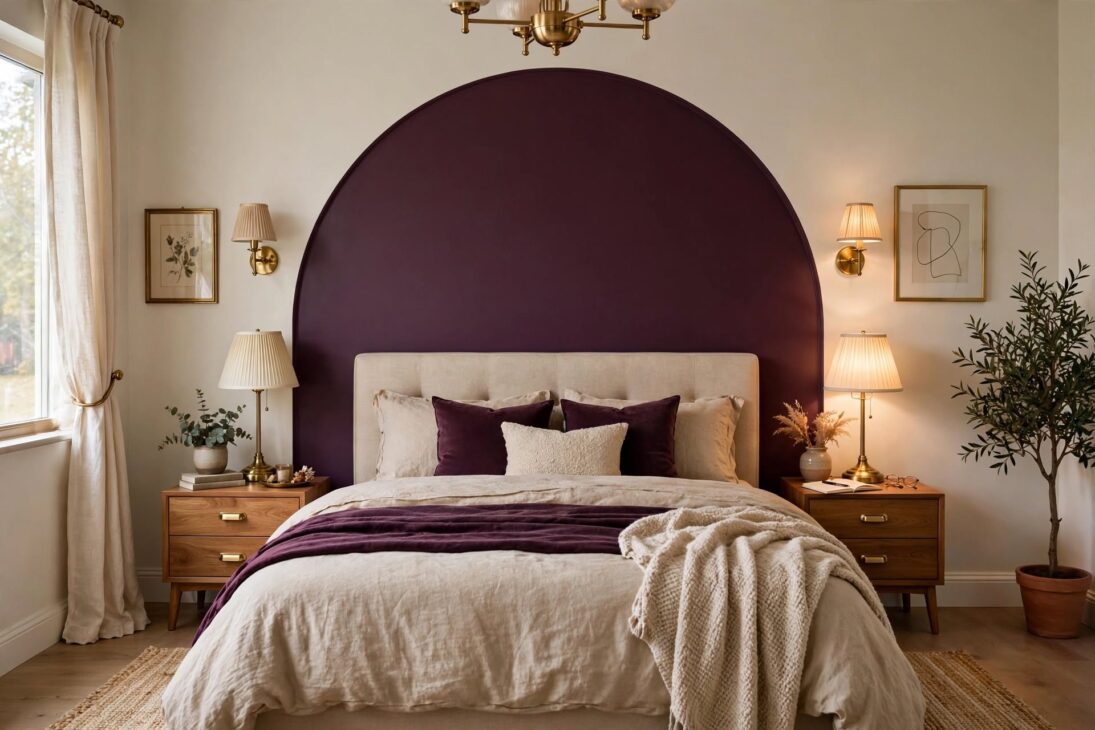
7. Deep Plum Or Berry Tones
For a bolder statement, deep plum and berry shades bring drama without leaning as cold as navy or black can. These tones work especially well in bedrooms styled for evening use, since the deep color feels richer under lamp light than daylight. Pair with warm brass fixtures and soft textiles to keep the room from feeling too heavy.
If a full plum wall feels like too much, apply the color only behind the headboard in a painted arch or rectangle instead of edge to edge.
8. Warm Neutral Greige
If bold color isn’t your style, a warm greige or taupe accent wall still creates a focal point through contrast rather than color intensity. This subtle approach works well for anyone who wants the anchoring effect of an accent wall without a strong color statement. It also ages well, since neutral tones rarely feel dated the way trend colors sometimes do.
Choose a greige with a slightly warmer undertone than your main wall color, so the contrast is noticeable even though both shades are neutral.
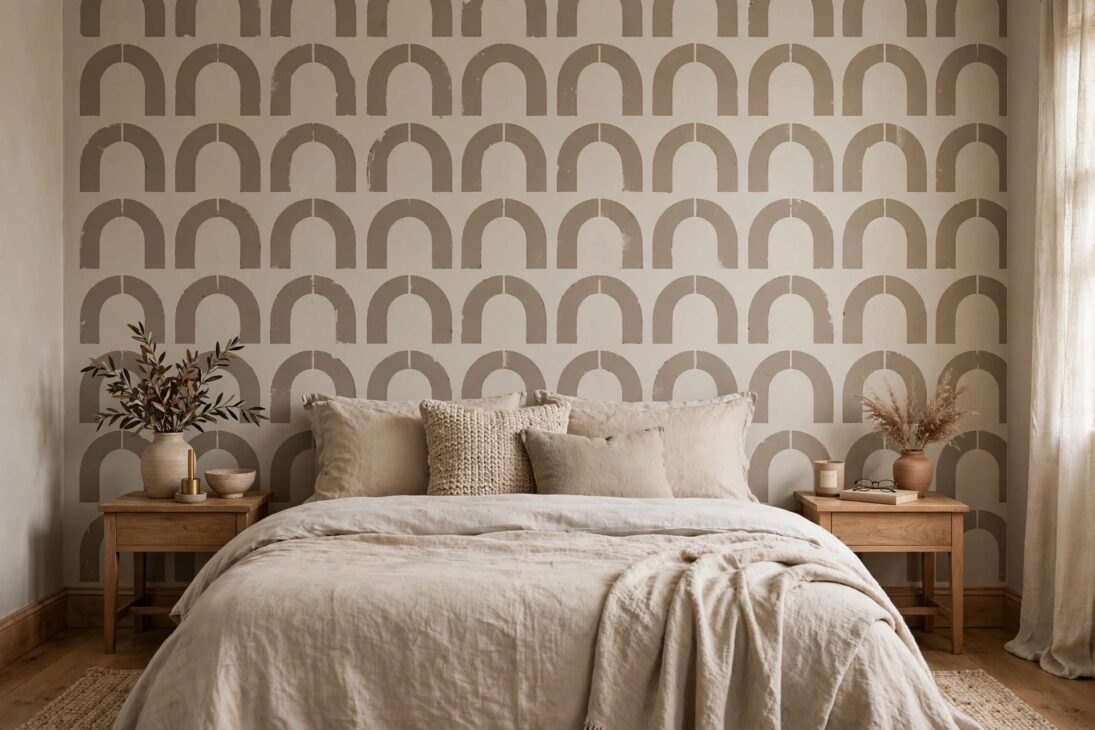
9. Patterned Stencil Wall
A hand-stenciled pattern, arches, scallops, or a simple geometric repeat, gives the look of wallpaper at a fraction of the cost. This works well for anyone comfortable with a bit of DIY, since the pattern can be adjusted to fit the wall exactly. Two-tone stencils in close, muted shades read as sophisticated rather than busy.
Practice the stencil pattern on a scrap board first, since getting comfortable with the paint roller pressure takes a test run before working on the actual wall.
10. Stone Or Brick Veneer
A section of stacked stone or exposed brick veneer behind the bed adds real texture and a strong architectural feel. This works especially well in a loft-style bedroom or a room already leaning industrial. Because the material itself carries so much visual weight, keep the rest of the room’s decor simple so the wall stays the star.
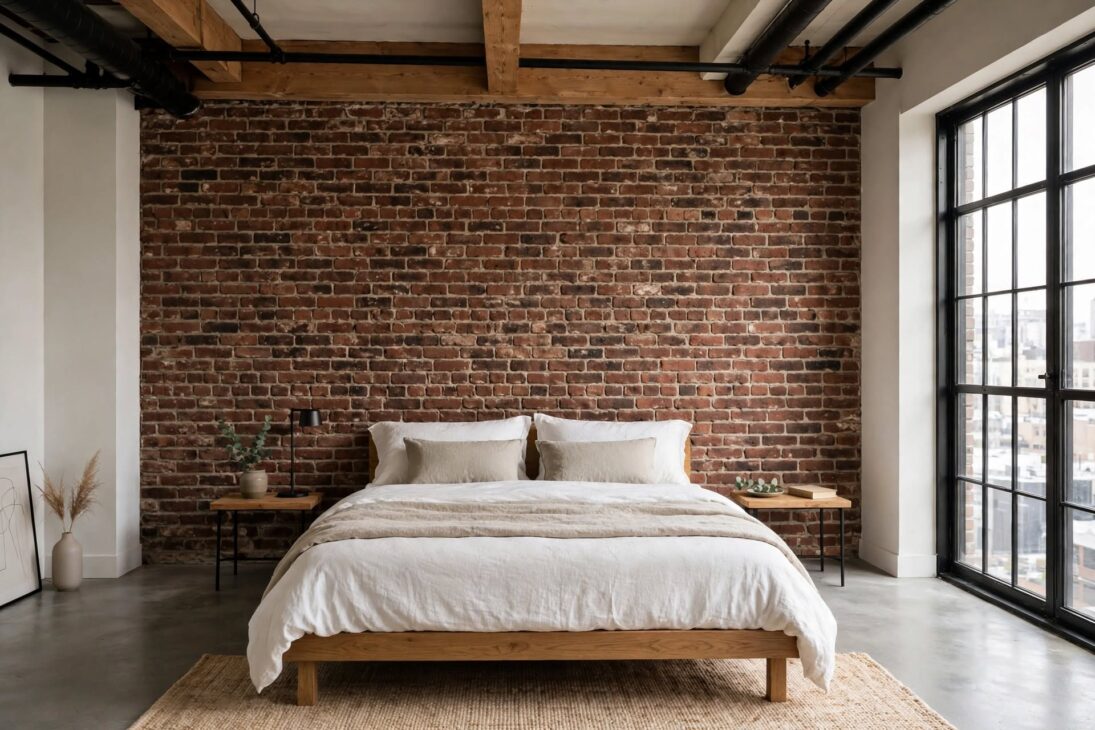
Confirm the wall can support the added weight of veneer panels, since some stone and brick products are heavier than standard wall material can hold without reinforcement.
FAQ
Which wall should be the accent wall in a bedroom?
The wall behind the headboard is the most common and effective choice, since it anchors the bed as the visual focal point of the room.
Are accent walls still in style?
Yes, accent walls remain popular, especially with muted, earthy colors and textured finishes replacing the bold, contrasting looks of past decades.
What colors are trending for bedroom accent walls?
Sage green, terracotta, warm greige, and deep jewel tones like emerald and plum are all trending for bedroom accent walls this year.
Do I need to hire a professional for a textured accent wall?
For limewash, plaster, or stone veneer, hiring a professional gets a cleaner result. Simple paint colors or stencils are usually manageable as a DIY project.
References
- DesignShop, “5 Bedroom Accent Wall Ideas for 2026” (2026)
- DesignCafe, “Bedroom Colour Trends 2026: Create Calm, Stylish & Inviting Spaces” (2026)
- Aboffs, “Top Accent Wall Color Ideas” (2026)
- Hunker, “8 Stunning Colors Everyone Will Be Painting Their Bedrooms This Year” (2026)

jessy
Jessy Grace has spent over 5 years researching and writing about household energy, covering everything from gas and electricity tariffs to appliance efficiency and smart meter technology. With a background in [energy consulting / utilities journalism / consumer finance], [he/she/they] specializes in breaking down complex tariff structures, regulatory changes, and cost-saving strategies into practical advice homeowners can actually use. [Author Name]'s work draws on data from official regulators, utility providers, and independent consumer bodies to ensure every guide is accurate and up to date. When not writing, [he/she/they] tests energy-saving products firsthand and stays close to industry shifts, from renewable tariffs to price cap changes, to keep readers ahead of the curve.