

Beaded flowers are beautiful and last forever. You use wire and beads to shape petals. As of the latest crafting trends, beaded flower patterns are used in bouquets and jewelry. This guide will show you some easy patterns to try. You do not need to be an expert. You just need patience and the right tools. Let’s look at some fun patterns you can make today.
Before you start, it helps to know how many beads you need. Use the simple calculator below to figure out how many beads to string for your petals.
Bead Quantity Calculator
Enter petal length (inches) and bead size (mm).
Quick answer: Easy beaded flower patterns include the French beaded rose, the daisy chain, and the brick stitch tulip. These patterns use seed beads and wire to create simple, beautiful floral designs for beginners.
| Pattern Name | Difficulty | Best Use |
|---|---|---|
| French Beaded Rose | Easy | Brooch |
| Daisy Chain | Easy | Bracelet |
| Brick Stitch Tulip | Medium | Pendant |
| Wire-Wrapped Orchid | Hard | Home Decor |
| Peyote Stitch Lily | Hard | Statement Piece |
| Beaded Sunflower | Easy | Hair Clip |
| Cherry Blossom Branch | Medium | Vase Decor |
| Right Angle Weave Violet | Medium | Ring |
| Spiral Beaded Succulent | Medium | Desk Plant |
| Kanzashi Folded Petal | Hard | Hair Stick |
| Pattern Name | Main Stitch | Time To Finish |
|---|---|---|
| French Beaded Rose | Continuous Wrap | 2.5 hours |
| Daisy Chain | Running Stitch | 1 hour |
| Brick Stitch Tulip | Brick Stitch | 3 hours |
| Wire-Wrapped Orchid | Wire Wrap | 4 hours |
| Peyote Stitch Lily | Peyote Stitch | 5 hours |
| Beaded Sunflower | Loop Stitch | 1.5 hours |
| Cherry Blossom Branch | Simple Loop | 2 hours |
| Right Angle Weave Violet | RAW | 2 hours |
| Spiral Beaded Succulent | Spiral Rope | 3 hours |
| Kanzashi Folded Petal | Folding Stitch | 4 hours |
Approximate Time To Complete
1. French Beaded Rose
The French beaded rose is a classic pattern. You use a technique where you wrap beads around a central wire. This creates curved petals that look just like a real rose. You make small petals for the center and larger ones for the outside. Then you wrap all the petals together with floral tape.
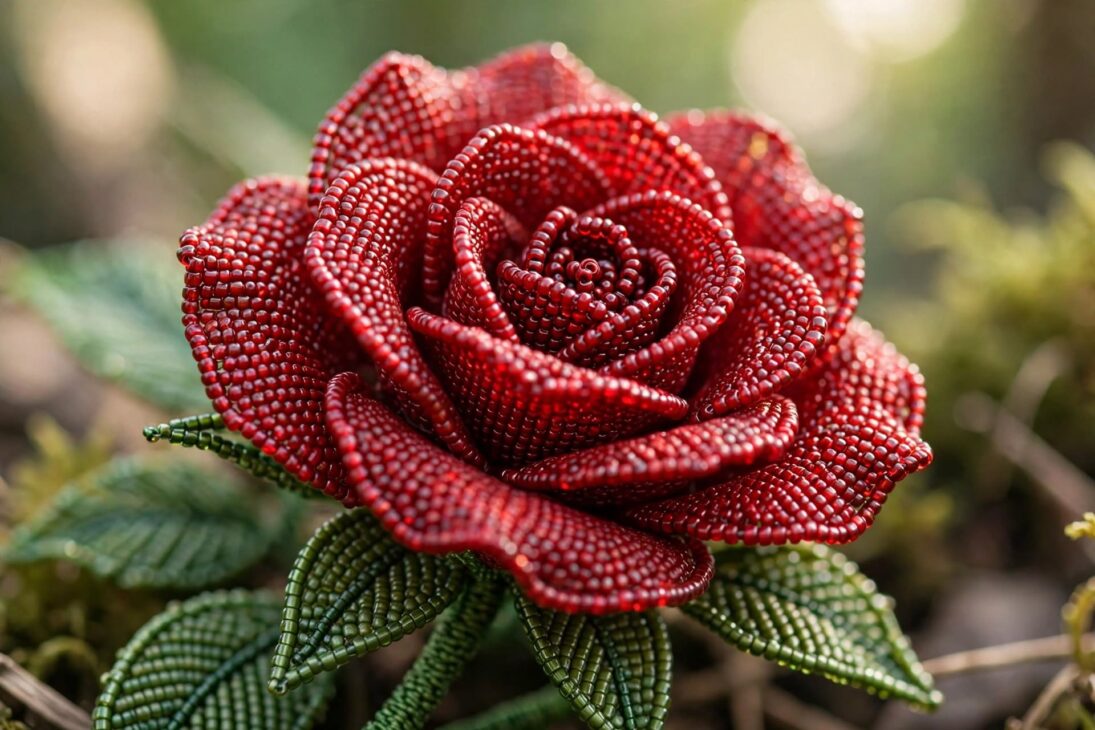
This flower looks hard but is great for beginners. The basic wrapping stitch is easy to learn. You can use red beads for a classic look or pink for a softer feel. This rose makes a wonderful brooch or hair piece. According to Beadaholique, this method has been used for centuries to create lasting floral arrangements.
Tip: Keep your wire tension even so the petals hold their shape.
2. Daisy Chain Pattern
The daisy chain is the perfect first project. It is simple and fast. You string beads in a line to make the stem. Then you form a circle of beads to make the flower head. You can use white petals with a yellow center. Or you can make wild daisies with pink tips.

This design uses a basic running stitch. You pass the needle back through the beads to lock them in place. Daisy chains are great for bracelets and anklets. Fire Mountain Gems notes that this stitch is one of the oldest and most loved bead weaving techniques.
Tip: Use size 8/0 seed beads if you are a beginner. They are larger and easier to handle.
3. Brick Stitch Tulip
The brick stitch tulip gives you a lovely 3D flower. You use the brick stitch to build the petals row by row. This stitch looks like a brick wall. You sew the beads together so they lay flat. Then you shape the flat piece into a curved petal.
A tulip has a cup shape. You join the sides of the petal to hold that cup shape. Use bright colors like red, yellow, or purple. This tulip makes a pretty pendant for a necklace. Potomac Beads suggests using cylinder beads for this project because they snap together neatly.

Tip: Add a loop at the top before you finish the petal so you can hang it easily.
4. Wire-Wrapped Orchid
The wire-wrapped orchid is an elegant pattern. Orchids have a distinct shape with five back petals and a special lip petal. You make each petal separately by wrapping beads around a wire frame. Then you twist the wires together to form the flower.

This method lets you shape the petals exactly how you want. You can curve them gently to look like a living orchid. This flower is a bit harder. It takes patience to shape all the petals. According to Beading Daily, wire wrapping gives you the most control over your flower’s final shape.
Tip: Use a thicker 18 gauge wire for the main stem to support the heavy flower head.
5. Peyote Stitch Lily
The peyote stitch lily is for advanced crafters. Peyote stitch is an off-loom technique. You weave beads one by one in a staggered pattern. For a lily, you weave a flat diamond shape. Then you zip the edges together to form a 3D petal.
You make six petals and join them. The finished lily is very realistic. It has the long trumpet shape of a true lily flower. This project takes time. You need to count your beads carefully. Bead&Jewelry explains that peyote stitch creates a very strong and flexible fabric of beads.

Tip: Use variegated beads for a natural look. A bead that fades from white to pink works well for lilies.
6. Beaded Sunflower
A beaded sunflower is a cheerful pattern. Sunflowers have bright yellow petals and a dark brown center. You can make this flower flat or 3D. For a flat flower, make a ring of brown beads for the center. Then add yellow petals around the outside using a loop stitch.

Sunflowers are happy flowers. They make great gifts. You can attach a magnet to the back and put it on your fridge. Or you can add a barrette clip for a cute hair accessory. Beadaholique notes that sunflowers are a popular choice because the color contrast is so striking.
Tip: Use matte yellow beads instead of shiny ones. They look more like real flower petals.
7. Cherry Blossom Branch
A cherry blossom branch is a delicate pattern. Cherry blossoms are small and simple. They have five petals in soft pink or white. You make many tiny flowers. Then you attach them to a real branch or a thick wire stem. You also add small green leaves.

The result is a beautiful spring branch that will never fade. This project is relaxing because you make the same small flower over and over. Fire Mountain Gems suggests using pink seed beads with a slight color variation. This makes the blossoms look more natural.
Tip: Use a real dried branch from your yard for a truly authentic look.
8. Right Angle Weave Violet
The right angle weave (RAW) violet is a dainty flower. RAW is a stitch where you connect beads in square units. It sounds hard but is actually quite logical. For a violet, you make five small petals using RAW. Then you join them in a circle.
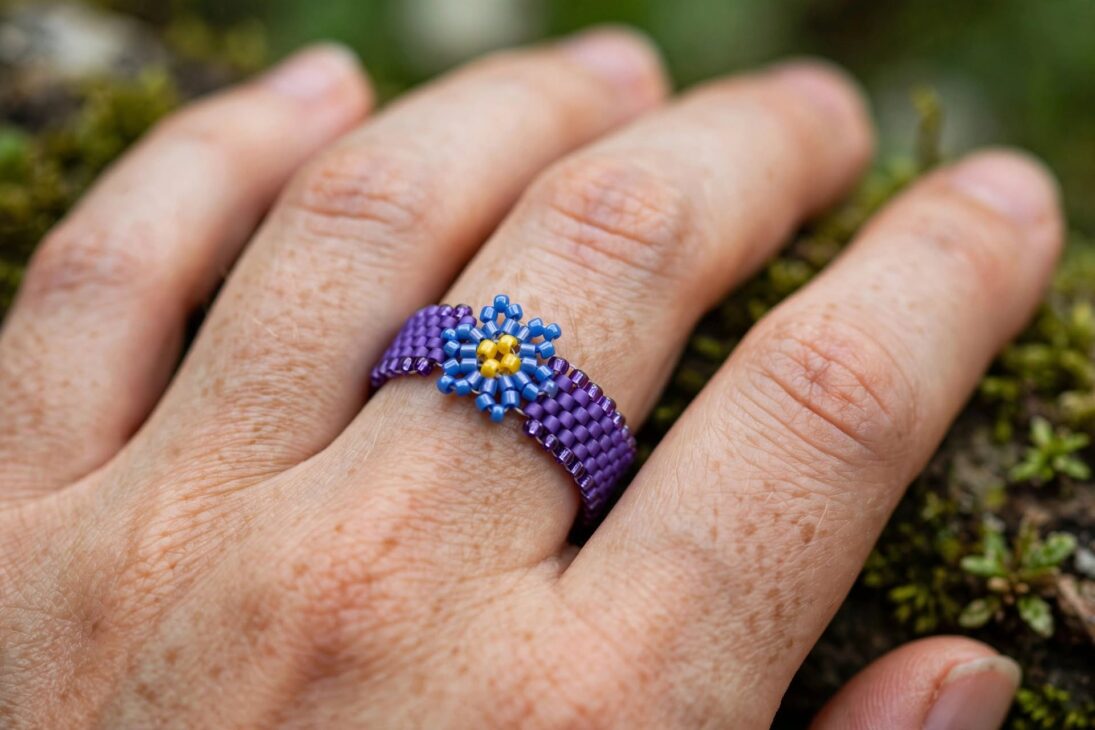
Add a tiny yellow bead in the center. Violets are small, so this project works up fast. You can use purple, blue, or even white beads. These little violets are perfect for rings. Potomac Beads explains that mastering RAW opens up many new design possibilities for beaders.
Tip: Pull your thread tight after each square. This keeps the flower from being floppy.
9. Spiral Beaded Succulent
A spiral beaded succulent is a modern pattern. Succulents have thick fleshy leaves. You can make a succulent using a spiral rope stitch. You start in the center and add beads in a spiral pattern. The flower grows outward as you stitch.
Use green beads with a touch of pink or red on the tips. This gives it a natural sun-kissed look. Put your finished succulent in a tiny pot. This project is great for people who love houseplants but lack a green thumb. A beaded succulent needs no water. Beadaholique points out that succulents are trendy and a beaded version is a unique twist.
Tip: Use a small piece of foam at the bottom of your pot to stick the wire stem into.
10. Kanzashi Folded Petal
The Kanzashi folded petal is a beautiful Japanese-inspired pattern. Traditional Kanzashi uses folded fabric. The beaded version uses a stitch that creates folded petal shapes. You make each petal separately. The petal has a crease or fold in it.
Then you join the folded petals together. This creates a flower with a lot of texture and depth. You can use solid colors or gradient beads. These flowers are often worn in the hair. Bead&Jewelry explains that the beaded Kanzashi style is a modern take on a very old Japanese art form.
Tip: Use a stiff beading thread like FireLine. It helps hold the folds tight.
FAQ
What wire is best for beaded flowers?
Use 24 or 26 gauge copper craft wire. This thickness is easy to bend but holds its shape well. For the main stem, use a thicker 18 or 20 gauge wire for support.
Can I use any beads?
Seed beads in size 11/0 work best for most patterns. You can also use larger beads for bigger, chunkier designs. Choose glass beads for a quality finish.
How do I clean beaded flowers?
Use a soft makeup brush or a can of compressed air to remove dust. Do not use water or liquid cleaners, as this can rust the wire or fade the beads.
Are beaded flower patterns hard to follow?
Easy ones like the daisy chain take a few minutes to learn. Complex designs like the peyote lily take more practice. Start with simple patterns and work your way up.
Conclusion
Beaded flower patterns are a wonderful way to express your creativity. You can make simple daisies for a quick bracelet or spend hours on a complex wire-wrapped orchid. The key is to start with a pattern that matches your skill level. A daisy chain is perfect for your first try. Once you feel comfortable, move on to a French beaded rose. You can turn your finished flowers into jewelry, hair accessories, or home decor. They make lovely, personal gifts for friends and family. The best part is that these flowers last forever. They will never wilt or fade. Gather your beads, wire, and tools. Pick a pattern from this list. Start crafting your own beautiful beaded garden today.
References
- Beadaholique, “French Beading Techniques”
- Fire Mountain Gems, “Bead Weaving Patterns”
- Potomac Beads, “Brick Stitch Tutorials”
- Beading Daily, “Peyote Stitch Guide”
- Bead&Jewelry, “Wire Wrapped Flowers

jessy
Jessy Grace has spent over 5 years researching and writing about household energy, covering everything from gas and electricity tariffs to appliance efficiency and smart meter technology. With a background in [energy consulting / utilities journalism / consumer finance], [he/she/they] specializes in breaking down complex tariff structures, regulatory changes, and cost-saving strategies into practical advice homeowners can actually use. [Author Name]'s work draws on data from official regulators, utility providers, and independent consumer bodies to ensure every guide is accurate and up to date. When not writing, [he/she/they] tests energy-saving products firsthand and stays close to industry shifts, from renewable tariffs to price cap changes, to keep readers ahead of the curve.