

Charcuterie boards turn simple snacks into a centerpiece that guests love to gather around. These 11 best charcuterie board ideas cover classic meat-and-cheese spreads, seafood versions, plant-based options, and themed arrangements for every season and diet. Each one balances flavor, texture, and color so the board looks as good as it tastes. You can scale them for a small gathering or a larger party with the same core approach.
Quick answer: The best charcuterie board ideas include classic French and Italian spreads, seacuterie with tinned fish, vegan plant-based boards, Spanish tapas styles, dessert versions, and seasonal fall or brunch themes. Focus on variety in texture, color contrast, and easy-to-grab portions.
Recent trends show boards moving beyond basic salami and cheddar. People now mix global flavors, sustainable seafood, and fully plant-based options. Professionals who build boards for a living stress thin-sliced meats, bright fruit next to neutral cheeses, and enough height and empty space so the arrangement feels abundant but not crowded. The ideas below follow those current principles.
| Board Style | Main Focus | Key Add-Ons | Best For | Diet Note |
|---|---|---|---|---|
| Classic French | Cured meats + soft cheese | Cornichons, baguette | Dinner parties | Standard |
| Seacuterie | Tinned fish + smoked seafood | Fennel, lemon, crackers | Casual nights | Pescatarian |
| Vegan | Plant cheeses + spreads | Nuts, fruit, olives | Mixed groups | Plant-based |
| Spanish Tapas | Chorizo + Manchego | Olives, almonds, quince | Wine nights | Standard |
| Dessert | Sweet cheeses + fruit | Chocolate, honey, cookies | After dinner | Varies |
Relative Prep Time
Green = quicker prep • Blue = a bit more assembly
1. Classic French Fromage Board
A classic French board starts with soft brie or Camembert, a firm Comté or Gruyère, and thin slices of saucisson sec or prosciutto. Add cornichons, Dijon mustard, and sliced baguette. The combination of creamy, salty, and crunchy creates balance in every bite.

This style works because the flavors stay familiar and reliable. Guests know what to expect and can build their own small plates. It suits dinner parties or casual wine evenings without needing special ingredients.
Fold the meats into ribbons or roses for height. Place the soft cheese near the center and the firm cheese toward the edge. Scatter a few grapes or figs for color. Keep crackers in a separate pile so they stay crisp.
Serve at room temperature for the best aroma and texture. Recent professional tips stress paper-thin meat slices and bright fruit next to neutral cheeses to make the whole board pop. This remains the foundation most other styles build on.
2. Seacuterie Board with Tinned Fish
A seacuterie board swaps cured meats for high-quality tinned fish and smoked seafood. Include Spanish sardines in olive oil, smoked salmon or trout, and maybe mussels or anchovies. Pair them with crisp fennel, lemon wedges, salted butter, and sturdy crackers or potato chips.
This idea has grown popular because tinned fish now comes in beautiful packaging and offers strong flavor with little prep. It feels modern and sustainable when you choose well-sourced options. The briny notes stand out against creamy elements.
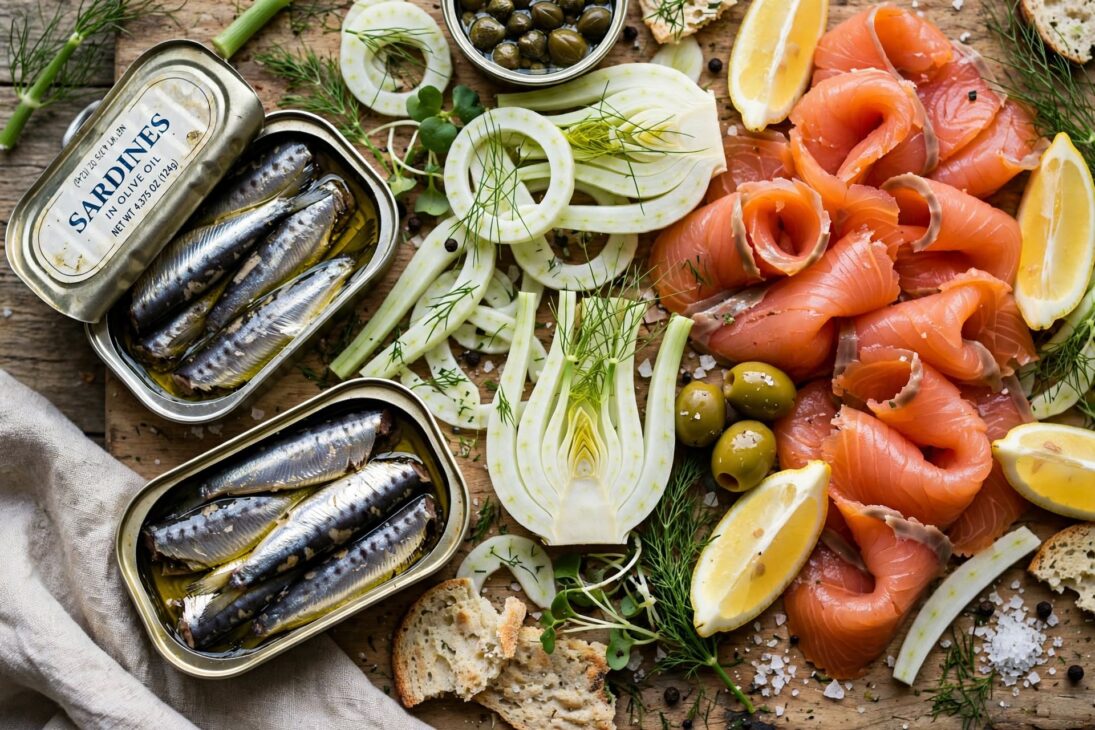
Open the tins and place them directly on the board or transfer the fish to small dishes. Add pickled items and a few soft cheeses for contrast. Keep the arrangement open so guests can see each type of seafood clearly.
Recent trend reports list seacuterie among the top 2026 board styles. Choose fish packed in good oil and serve with plenty of acid from lemon or vinegar to cut the richness. It works especially well for smaller groups who enjoy bold flavors.
3. Vegan Plant-Based Board
A vegan board relies on cultured cashew or almond cheeses that mimic soft chèvre or aged cheddar. Add hummus, muhammara, marinated olives, stuffed grape leaves, dates, figs, nuts, and pita or seed crackers. Bright produce and bold spreads replace the traditional meats.

This version lets everyone at the table enjoy the same board. Modern plant-based cheeses have improved in texture and flavor, so the experience no longer feels limited. Color and variety still create the same visual impact.
Arrange the soft spreads in small bowls or directly on the board. Cluster nuts and dried fruit for texture contrast. Use fresh herbs and edible flowers if you want extra height and color. Keep everything room temperature for easy grazing.
Current guides note that wellness-focused and fully plant-based boards continue to rise. Choose a few strong-flavored elements so the board does not taste flat. Guests appreciate the inclusive option and often find new favorites among the spreads.
4. Spanish Tapas-Style Board
A Spanish-inspired board centers on jamón or chorizo, aged Manchego, and Marcona almonds. Add quince paste, roasted piquillo peppers, olives, and slices of pan con tomate or simple crackers. The mix of smoky, salty, and sweet creates classic tapas energy.

This style feels lively and shareable. The bold flavors encourage conversation and pair well with wine or sherry. It works for both casual nights and more formal gatherings.
Slice the chorizo into coins and drape the jamón in loose folds. Place the quince paste near the Manchego so guests can combine them easily. Scatter the almonds and peppers for color and crunch throughout the board.
Global inspiration boards remain strong in recent roundups. Spanish elements deliver big flavor with relatively few components. Keep portions small so guests can try everything without filling up too fast.
5. Italian Antipasto Board
An Italian antipasto board features prosciutto di Parma, salami, aged Parmesan, and fresh mozzarella or burrata. Surround them with marinated artichokes, sun-dried tomatoes, olives, and focaccia or grissini. The warm, savory notes feel generous and inviting.
This arrangement celebrates abundance and color. It suits family-style dinners or larger parties where people graze over time. The familiar Italian flavors make it a crowd-pleaser.
Fold the prosciutto into ribbons and stack the salami. Break the Parmesan into irregular chunks for texture. Place the soft cheese in a small dish if it is very soft. Add a few basil leaves for a fresh green accent.
Italian-style boards appear consistently in current idea lists because they balance salt, fat, and acidity so well. Serve the focaccia slightly warm if possible. Guests often return for second helpings of the simple combinations.
6. Fall Harvest Board

A fall harvest board uses sharp cheddar, smoky salami, crisp apples, pears, and roasted nuts. Add a drizzle of honey, dried fruit, and maybe a few chocolate pieces. The seasonal produce and warmer flavors match cooler weather perfectly.
This version feels cozy and abundant. It works for autumn gatherings, Thanksgiving appetizers, or casual weekend evenings. The fruit provides natural sweetness that balances the salty elements.
Slice the apples and pears just before serving so they stay fresh. Arrange them in overlapping rows next to the cheese. Scatter the nuts and dried fruit in small clusters. A small bowl of honey with a dipper makes it easy for guests to add a touch of sweetness.
Seasonal boards remain popular in recent fall roundups. Choose firm fruit that holds its shape and a mix of mild and sharp cheeses. The board looks especially inviting when the colors lean into deep reds, oranges, and browns.
7. Dessert Charcuterie Board
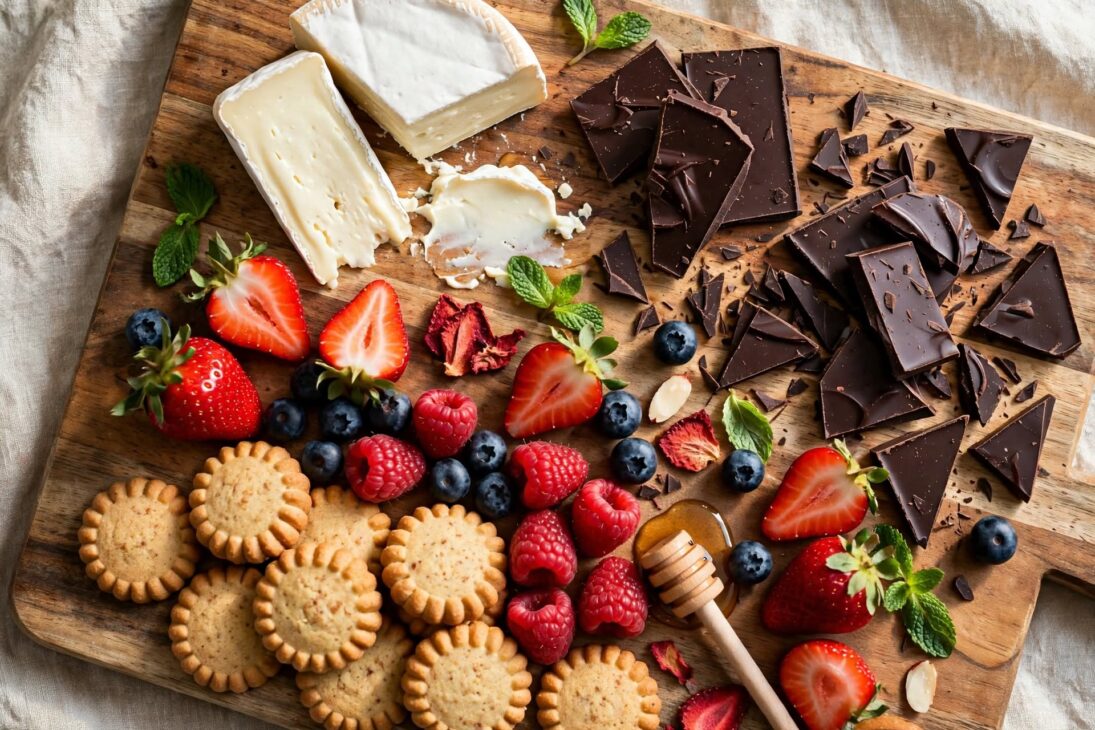
A dessert board shifts the focus to sweet elements while keeping the grazing format. Include mild cheeses that pair with fruit, dark chocolate, honey, cookies, dried fruit, and fresh berries. Some versions add small pastries or chocolate-covered nuts.
This idea works as a light ending to a meal or a standalone treat for a sweet-focused gathering. It still encourages sharing and conversation. The mix of creamy, crunchy, and fruity textures keeps every bite interesting.
Place the cheese toward one side and build the sweets outward. Use small bowls for honey or chocolate spread. Break the chocolate into irregular pieces so it looks abundant. Fresh berries add bright color and freshness.
Dessert boards have gained traction on social media and in recent trend reports. Keep portions modest so the board feels special rather than heavy. Guests often appreciate the option after a savory main course.
8. Brunch-Style Board
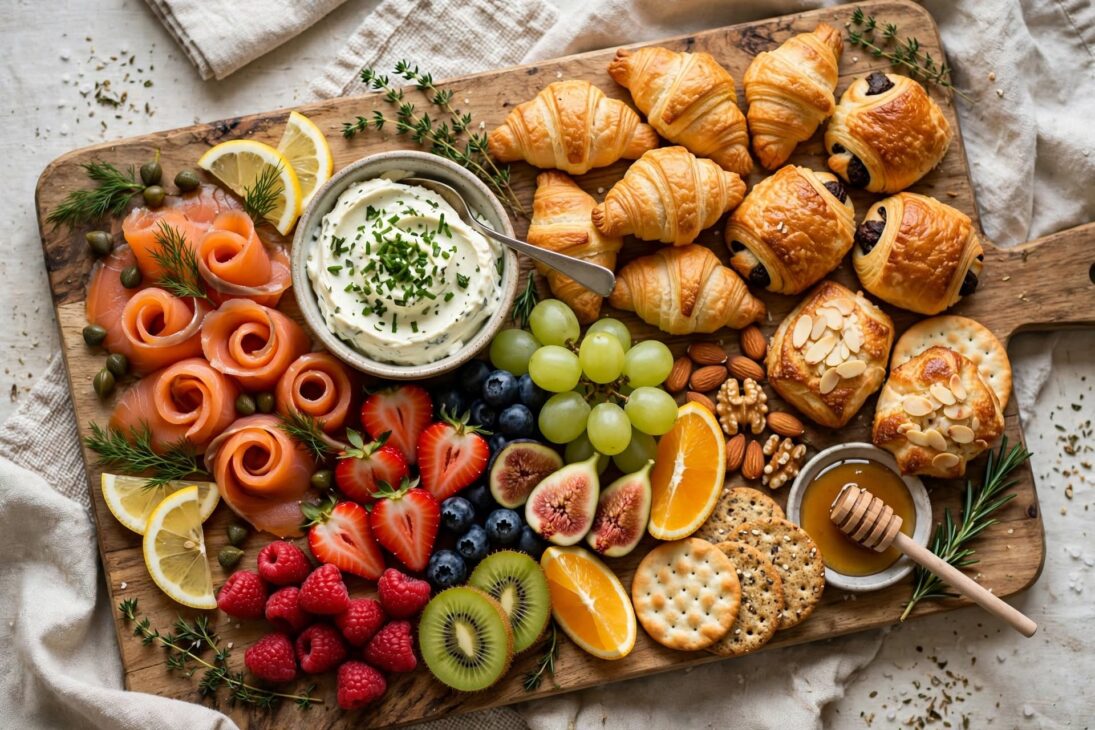
A brunch board mixes savory and sweet morning flavors. Include soft cheeses, smoked salmon or thinly sliced ham, hard-boiled eggs, fresh fruit, mini pastries or pancakes, and a few spreads. Yogurt or overnight oats in small jars can sit alongside.
This format turns brunch into a relaxed, interactive meal. Guests can build their own plates at their own pace. It works well for weekend gatherings or holiday mornings.
Keep cold items chilled until serving time. Arrange the proteins and cheeses on one side and the sweeter elements on the other. Add a small bowl of jam or honey and a few lemon wedges for the salmon.
Brunch sharing boards appear in current entertaining guides because they feel both special and low-pressure. Focus on items that hold well at room temperature for at least an hour so you are not constantly refreshing the board.
9. Mediterranean Mezze Board
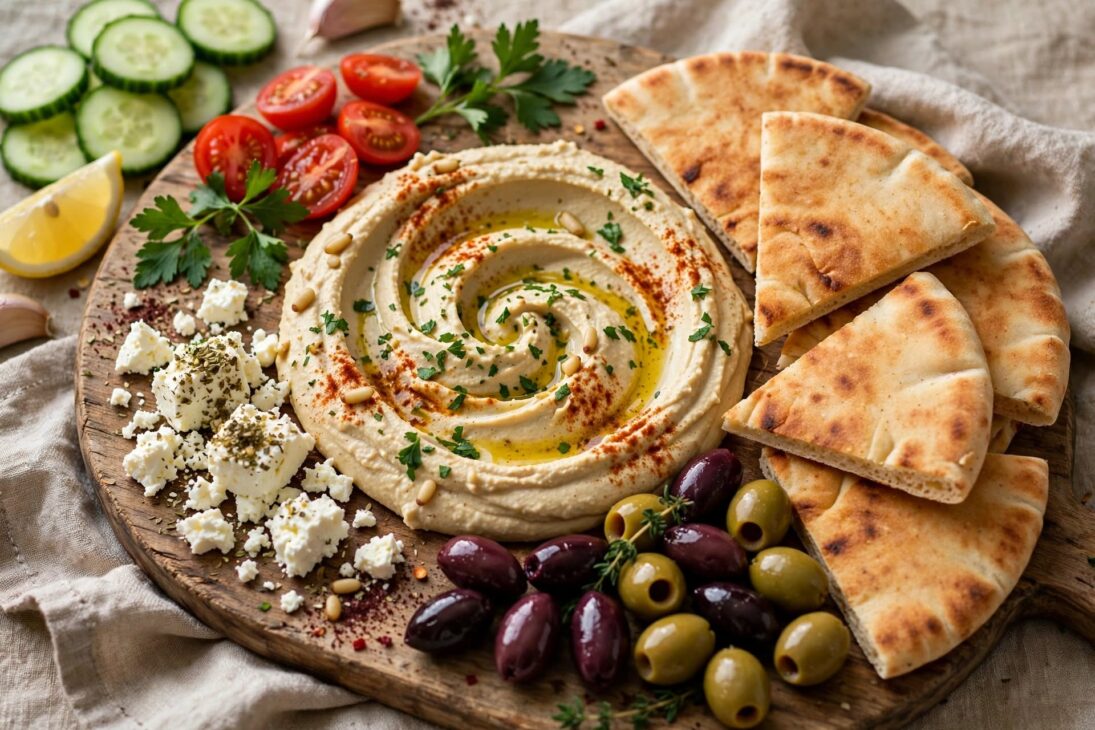
A Mediterranean mezze board features hummus, baba ganoush, feta or halloumi, olives, stuffed grape leaves, fresh vegetables, and warm pita. Add a few slices of cured meat or keep it fully vegetarian. The bright, herb-forward flavors feel light and inviting.
This style suits warm weather or any gathering that needs lighter options. The dips and vegetables encourage healthy grazing. Colorful produce makes the board look abundant even with fewer rich items.
Place the dips in small bowls or directly on the board with a swirl of olive oil on top. Arrange the vegetables in neat rows or loose piles. Warm the pita just before serving and cut it into wedges.
Mediterranean and Middle Eastern influences rank high in recent global board roundups. The combination of creamy, briny, and fresh elements keeps guests coming back. Offer extra pita on the side so the board does not empty too quickly.
10. Budget-Friendly Everyday Board
A budget-friendly board uses grocery-store staples without sacrificing look or taste. Choose one or two good salamis, a block of Gouda or cheddar, grapes, olives, a jar of jam, crackers, and a baguette. Simple additions like pickles and nuts stretch the spread further.
This approach proves that a beautiful board does not require expensive ingredients. It works for weeknight gatherings or last-minute guests. Careful arrangement still makes the table feel special.
Slice the meats thin and fold them for height. Cut the cheese into different shapes. Place the fruit and olives in clusters for color. A small bowl of jam or mustard adds interest without extra cost.
Recent budget guides show that a solid board for ten people can stay under a modest total when you shop smart. Focus on a few strong flavors rather than many mediocre ones. Guests respond more to abundance and care than to price tags.
11. Minimalist Cheese-Focused Board
A minimalist board puts three or four excellent cheeses at the center and keeps the supporting elements simple. Choose one soft, one firm, and one blue or aged variety. Add only crackers, a few nuts, a small amount of fruit, and one good spread such as honey or fig jam.
This style highlights quality over quantity. It works when you want a quieter, more refined presentation. The open space on the board lets each cheese stand out.
Leave generous empty areas between items. Label the cheeses if guests may not recognize them. Serve the soft cheese with a small knife and the firm cheese already portioned. Keep the crackers in a separate small stack or basket.
Professionals often note that a well-chosen cheese selection needs very little else. Recent advice emphasizes letting the best ingredients speak for themselves. This board feels elegant and is easy to assemble at the last minute.
FAQ
How much food do I need for a charcuterie board?
Plan about 2 to 3 ounces of cheese and 2 ounces of meat per person for an appetizer board. Add plenty of crackers, fruit, and extras so the board looks full. Increase the amounts if the board is the main food.
How far ahead can I assemble a board?
You can slice most items a few hours ahead and keep them covered in the refrigerator. Assemble the full board no more than an hour before serving so the textures stay ideal and the fruit does not brown.
What if guests have dietary restrictions?
Offer a separate small vegan or gluten-free section, or build a fully plant-based board from the start. Clearly separate items that contain common allergens such as nuts.
Do I need a special board?
No. A large wooden cutting board, a baking sheet lined with parchment, or even a clean marble slab works well. Choose a surface that is easy to clean and large enough for the number of guests.
How do I keep the board looking full?
Start with the larger items and fill gaps with smaller ones. Fold meats for height and leave a little open space so the arrangement does not feel crowded. Replenish popular items as the evening goes on.
What drinks pair best?
Light red wines, sparkling wine, dry white wine, or simple sparkling water with citrus all work well. Match the drink intensity to the strongest flavors on the board.
Conclusion
These 11 best charcuterie board ideas give you flexible templates for any gathering. Whether you choose a classic French spread, a modern seacuterie board, a fully plant-based version, or a seasonal harvest arrangement, the same principles apply. Mix textures, contrast colors, and leave room for guests to explore. Thin slices, thoughtful placement, and a few bright accents turn everyday ingredients into something special.
Start with the style that matches your guests and the occasion. Shop for a few high-quality anchors and fill in with simpler items. Assemble close to serving time so everything tastes and looks its best. The board becomes both the appetizer and the centerpiece of the evening.
Pick one idea, gather the ingredients, and build with care. Guests will remember the generous, inviting spread long after the last bite is gone.
References
- Business Insider. “How to Make the Best Cheese Board, From Man Who Makes Them As a Job.” 2026. https://www.businessinsider.com/how-to-make-best-cheese-board-charcuterie-tips-from-professional-2026-8
- Eat Healthy 365. “Charcuterie Board Trends 2026: What Was Hot This Year.” 2026. https://eathealthy365.com/the-ultimate-guide-to-2026s-top-charcuterie-trends/
- BeginnerFood. “30 Creative Charcuterie Board Ideas for Any Occasion.” 2025. https://beginnerfood.com/charcuterie-board/
- The Penny Hoarder. “How to Make a Cheap Charcuterie Board for $45.” 2026. https://www.thepennyhoarder.com/save-money/cheap-charcuterie-board/
- Harry & David. “Charcuterie Board Ideas for Everyone.” 2025. https://www.harryanddavid.com/articles/food-drink/charcuterie-board-ideas
- Food Network. “19 Charcuterie Board Ideas for Every Gathering.” Updated 2026. https://www.foodnetwork.com/recipes/photos/charcuterie-board-ideas
- BeginnerFood. “The Ultimate Fall Charcuterie: 40 Boards to Try This Season.” 2025. https://beginnerfood.com/fall-charcuterie/
- Curated Spread. “Charcuterie Boards Around the World: Global Inspirations.” 2025. https://curatedspread.com/blogs/news/charcuterie-boards-around-the-world-global-inspirations

jessy
Jessy Grace has spent over 5 years researching and writing about household energy, covering everything from gas and electricity tariffs to appliance efficiency and smart meter technology. With a background in [energy consulting / utilities journalism / consumer finance], [he/she/they] specializes in breaking down complex tariff structures, regulatory changes, and cost-saving strategies into practical advice homeowners can actually use. [Author Name]'s work draws on data from official regulators, utility providers, and independent consumer bodies to ensure every guide is accurate and up to date. When not writing, [he/she/they] tests energy-saving products firsthand and stays close to industry shifts, from renewable tariffs to price cap changes, to keep readers ahead of the curve.