

A screened in porch gives you the best of both worlds, fresh air and open views without bugs or sudden rain crashing the moment. Whether you have a small side porch or a full wraparound space, the right furniture, colors, and small touches can turn it into the room you actually want to spend time in. Below are eleven screened in porch ideas to borrow, along with tips for pulling each one off.
Quick Answer
The best screened in porch ideas pair comfortable, weather-ready furniture with personal touches like a ceiling fan, layered rugs, and warm lighting. A classic neutral porch with wicker seating works almost anywhere, while bolder styles like rustic farmhouse or tropical retreat suit a specific home style.
| Porch Style | Best For | Budget Level |
| Classic neutral | Any home style | Standard |
| Rustic farmhouse | Country or lake homes | Standard |
| Modern minimalist | Contemporary homes | Varies |
| Porch with fireplace | Year-round use | Caution |
| Sunroom-inspired | More natural light | Caution |
Rough cost comparison by porch upgrade
1. Classic Neutral Porch
A neutral color scheme with wicker furniture, soft cushions, and a simple rug gives your porch a timeless, calm feel that works with almost any home style. White or cream frames keep the space feeling airy, especially if the porch doesn’t get much direct sun. This is a safe, welcoming choice if you plan to use the porch for morning coffee or evening cocktails.
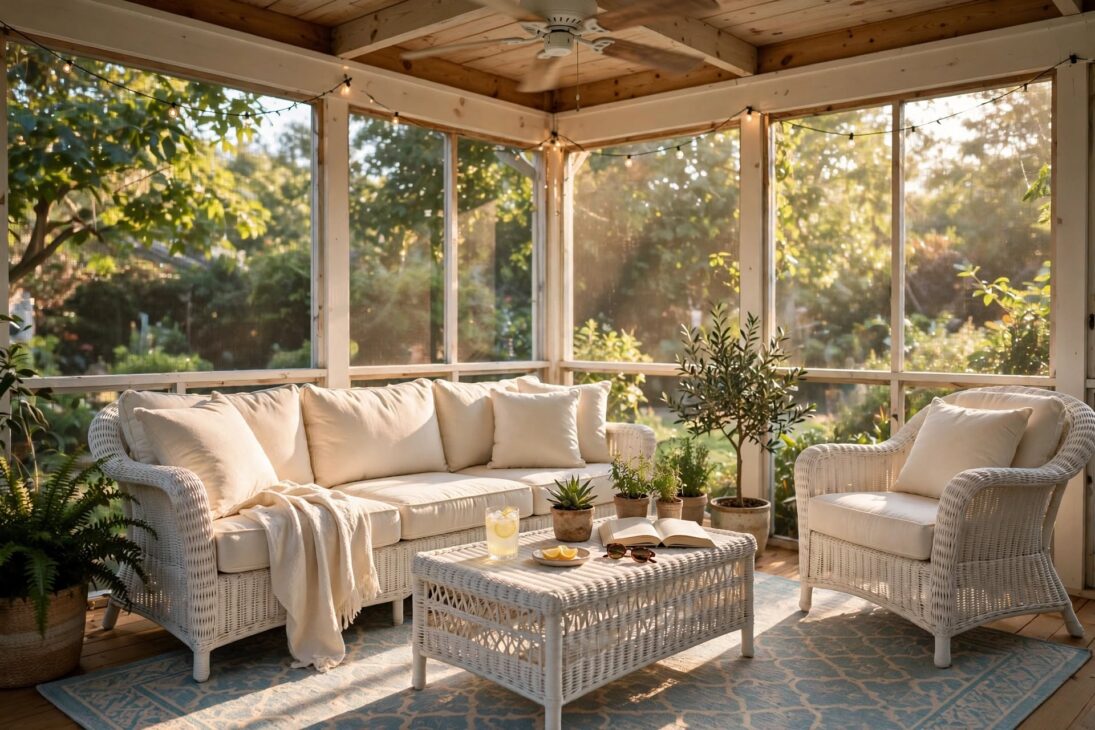
Layer two or three cushion patterns in the same color family rather than one flat solid, so the seating area has depth without looking mismatched.
2. Rustic Farmhouse Style
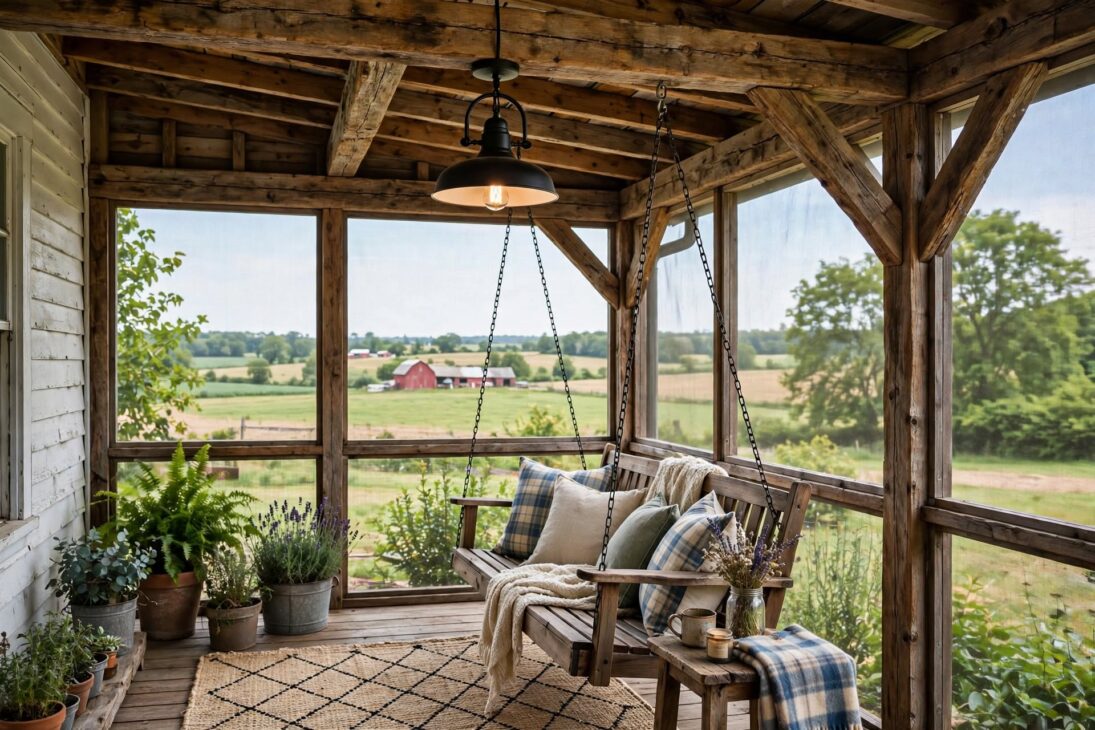
Exposed wood beams, a barn-style light fixture, and distressed flooring give a screened porch that warm, lived-in country feel. Add a porch swing or a pair of rocking chairs to complete the look. This style suits lake houses and country properties especially well, where the surrounding scenery already leans rustic.
A vintage item with real history, an old boat oar, a weathered ladder, or reclaimed shutters, adds more character here than a brand new piece made to look old.
3. Modern Minimalist Porch
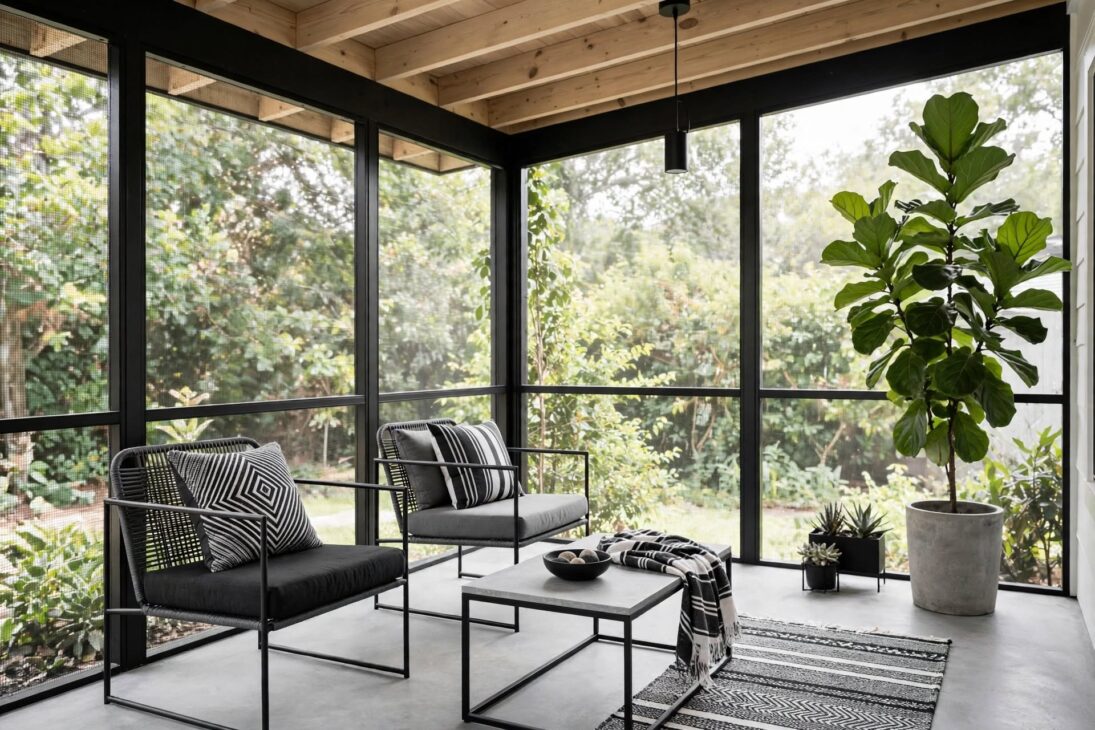
Metal frames, glass accents, and monochrome furniture keep this style clean and simple. Skip the busy patterns and stick to two or three colors at most across the whole space. This works especially well on newer builds with sleek architectural lines, where a rustic or cottage look would feel out of place.
Add one or two sculptural plants, like a fiddle leaf fig or a tall snake plant, to soften the hard lines without adding visual clutter.
4. Sunroom-Inspired Porch
Larger screen panels or retractable screens let in more light and blur the line between indoor and outdoor. Add plush sofas, an indoor-style area rug, and a few tall plants for a seamless transition from the house. This idea works well for a porch attached directly to a living room or kitchen.
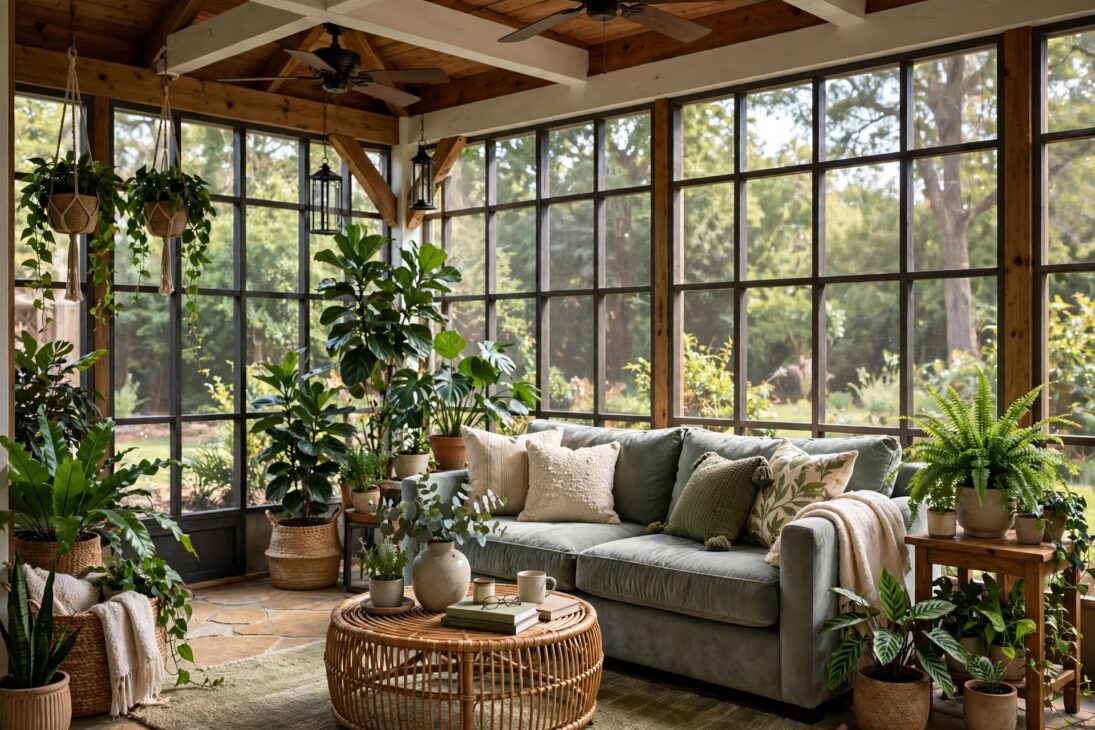
Choose fabric labeled for outdoor or high-humidity use even though the space feels indoor, since the screens still let in moisture and temperature swings a true sunroom wouldn’t have.
5. Cottage Charm
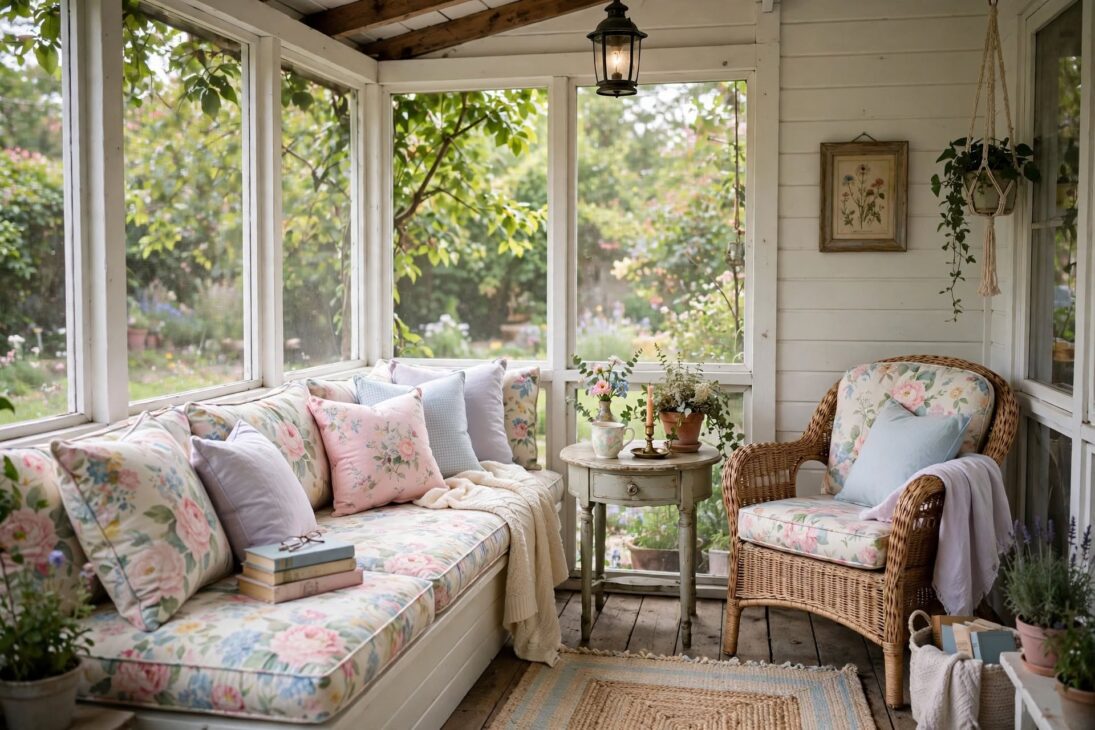
Pastel colors, floral fabrics, and small vintage decor pieces give a screened porch a cozy, quaint feel. A small coffee table and soft cushions turn the corner into a reading nook or conversation spot. This style pairs naturally with a garden view or a home already leaning into a cottage aesthetic.
Keep the floral pattern to one or two pieces, the cushions or a single accent chair, so the pastel palette doesn’t tip into feeling overdone.
6. Tropical Retreat
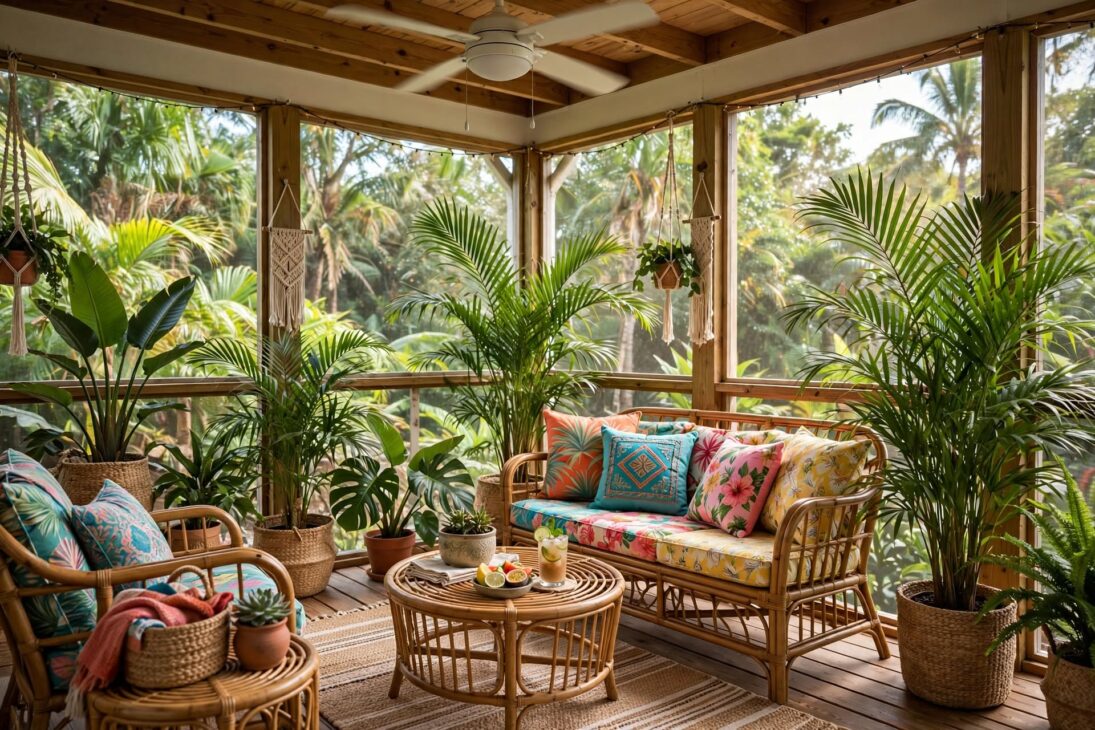
Rattan furniture, lush greenery, and colorful cushions bring island energy to a screened porch. A ceiling fan keeps the air moving on warm days, while the screen keeps mosquitoes out without blocking the breeze. This style suits warm climates especially well, though a few tropical plants can bring the look anywhere with enough indoor light.
Group plants of different heights, a tall palm, a mid-size fern, and a trailing pothos, to create the layered, jungle-like feel the style is known for.
7. Porch With A Fireplace
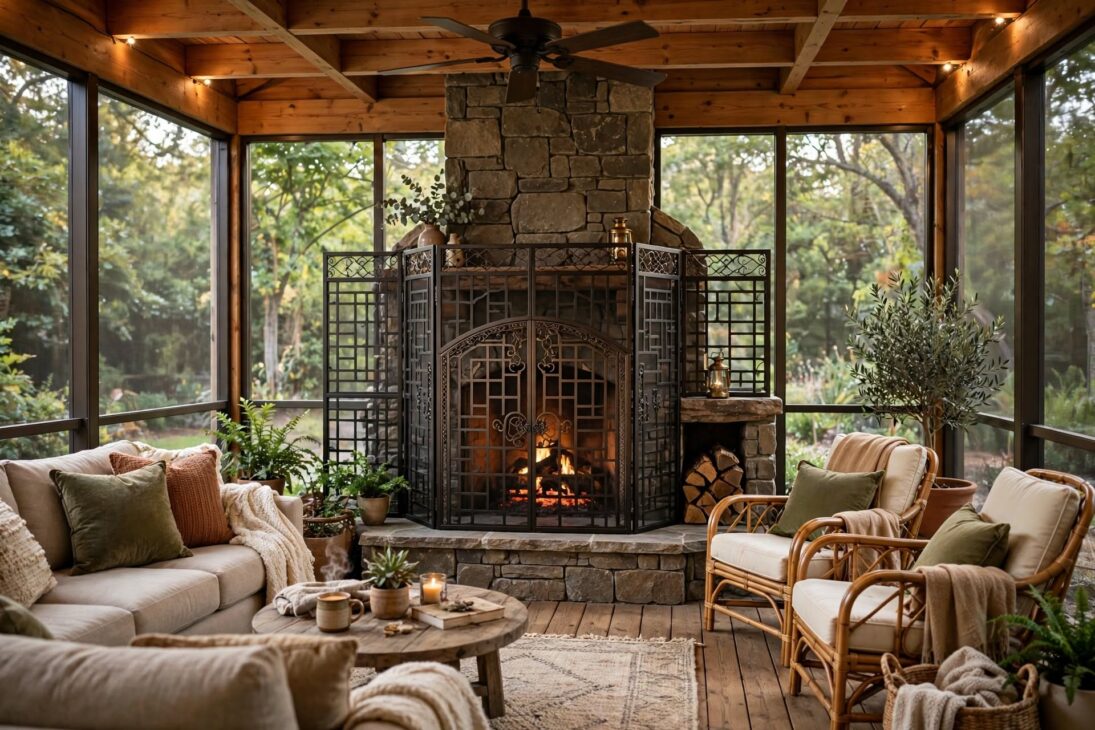
A fireplace or fire feature extends porch season well into fall, giving you a warm gathering spot even after the sun goes down. Pair it with a mix of lounge seating and dining space if the porch is large enough for both. A custom fire screen mounted to the surrounding brick or stone keeps sparks contained on cooler nights.
Check local building codes before adding a fireplace to a screened structure, since venting and clearance rules vary and often require a permit.
8. Wraparound Porch Screen
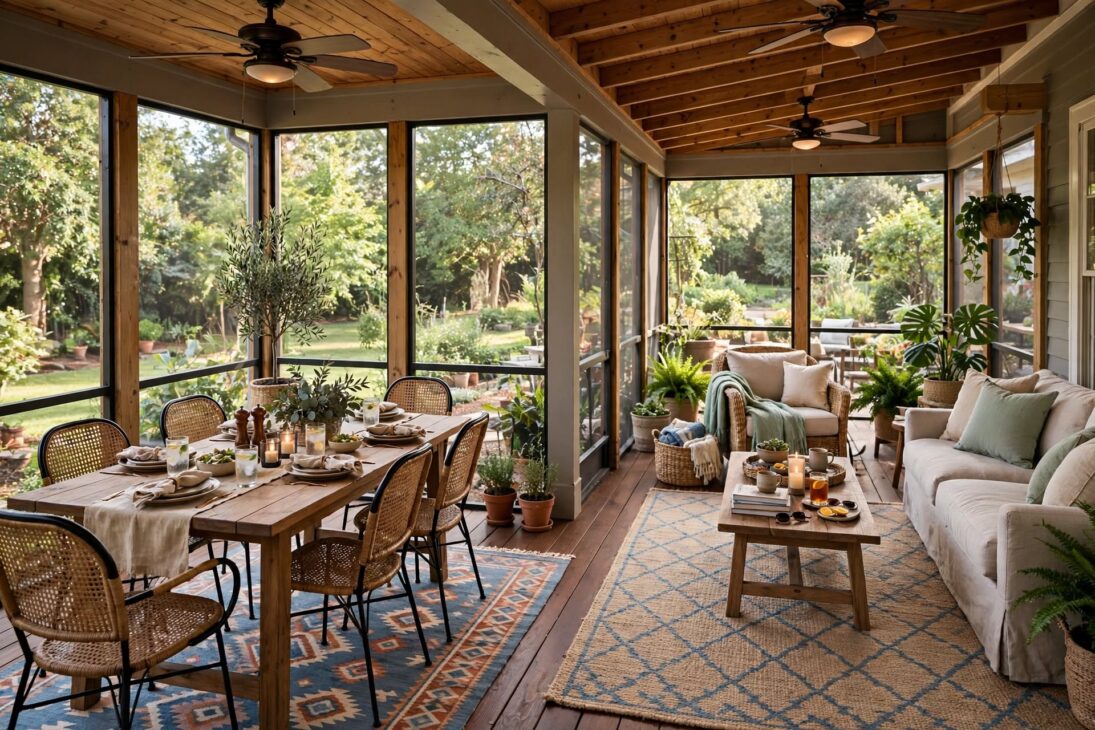
For larger homes, wrapping the screen around two or three sides of the porch opens up panoramic views and multiple entry points. It also connects several outdoor spaces, like a garden and a pool area, without leaving any of them exposed to bugs. Zone the space into two or three seating areas so a long porch doesn’t feel like one empty stretch.
Use a large area rug or a change in flooring material to visually separate a dining zone from a lounge zone along the wraparound path.
9. Dark Walls With Colorful Pillows
Dark walls, charcoal, forest green, or navy, give a screened porch depth and make bright throw pillows and patterns pop against the backdrop. This works well on a porch that doesn’t get harsh direct sun, since dark colors can absorb more heat in full sunlight. Mixing several pillow patterns in a shared color family keeps the space feeling playful instead of chaotic.
Test a dark paint swatch on the porch at different times of day before committing, since the color reads very differently under morning versus evening light outdoors.
10. Layered Outdoor Rug And Lighting
An outdoor rug grounds the seating area and makes a screened porch feel more like an extension of the home rather than an outdoor afterthought. Pair it with warm string lights or a few lanterns for evening use. Metal lanterns, especially in a Moroccan or vintage style, add detail and character without needing extra furniture.
Choose a rug made for outdoor or covered patio use, since standard indoor rugs trap moisture and mildew faster in a space that isn’t fully enclosed.
11. Herb Garden Corner
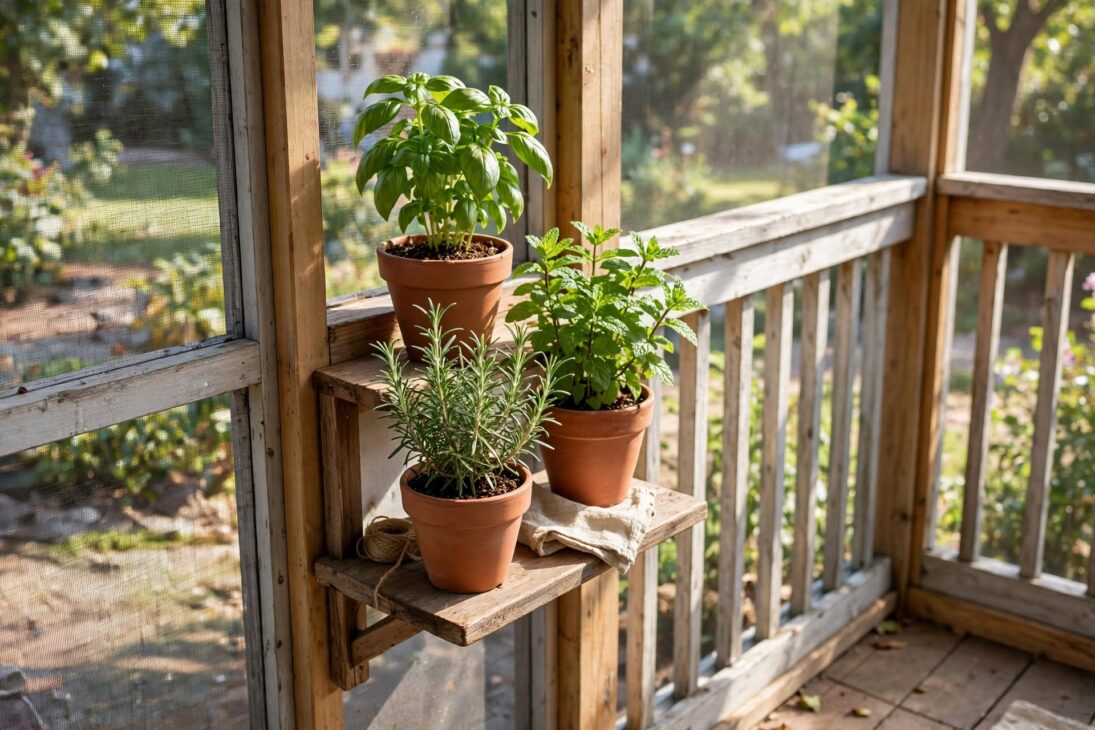
A small shelf or plant stand with potted herbs, basil, mint, and rosemary, adds greenery and a practical use for the space. It fits neatly between a sofa and a chair, or along the porch railing if space is tight. This idea works especially well on a porch near the kitchen, so herbs are easy to grab while cooking.
Group herbs by sunlight need, since some, like basil, want more direct light than others, like mint, which tolerates shade better.
FAQ
What furniture holds up best on a screened porch?
Wicker, rattan, and metal frames with outdoor-rated cushions hold up best, since they resist humidity and temperature swings better than indoor furniture.
Can I use a screened porch year-round?
It depends on your climate and whether you add heat, like a fireplace or space heater. In colder regions, most screened porches work best as a three-season space.
Do screened porches need a ceiling fan?
A ceiling fan is not required but makes a big difference in warmer months, keeping air moving and bugs less interested even with the screen in place.
What rug works best for a screened porch?
Choose a rug labeled for outdoor or covered patio use. These are made to handle humidity and won’t trap moisture the way an indoor rug can.
References
- HGTV, “40 Screened Porch Design Ideas for Maximum Relaxation” (2026)
- One Kindesign, “27 Screened-In Porch Design Ideas Perfect For Every Season” (2026)
- Tag and Tibby, “10 Screened In Porch Ideas” (2026)
- vrafortoday, “19 Screened in Porch Design Ideas” (2026)

jessy
Jessy Grace has spent over 5 years researching and writing about household energy, covering everything from gas and electricity tariffs to appliance efficiency and smart meter technology. With a background in [energy consulting / utilities journalism / consumer finance], [he/she/they] specializes in breaking down complex tariff structures, regulatory changes, and cost-saving strategies into practical advice homeowners can actually use. [Author Name]'s work draws on data from official regulators, utility providers, and independent consumer bodies to ensure every guide is accurate and up to date. When not writing, [he/she/they] tests energy-saving products firsthand and stays close to industry shifts, from renewable tariffs to price cap changes, to keep readers ahead of the curve.