

Wood carving looks hard from the outside, but the right starter projects teach the basics fast. Soft woods like basswood cut cleanly with one sharp knife. You learn grain direction, stop cuts, and smooth curves without fighting the material. Recent beginner guides still recommend simple shapes that finish in a few hours and leave you with something useful or decorative. Adults and teens can start at a kitchen table with basic safety habits.
Quick answer: Start with soft basswood and one sharp carving knife. The twelve easy ideas include comfort birds, spoons, mushrooms, hearts, simple animals, gnomes, pendants, and worry stones. Most finish in one to three hours and build the core skills of push cuts, stop cuts, and rounding.
Current carving sites agree that basswood is the best first wood because it is soft, even-grained, and forgiving. Keep the knife sharp and cut away from your body. The projects below move from the simplest shapes to slightly more detailed figures while staying within beginner range.
| Project | Time | Difficulty | Main Skill |
|---|---|---|---|
| Comfort Bird | 1-2 hrs | Easy | Rounding |
| Wooden Spoon | 2-4 hrs | Easy | Curves & hollow |
| Mushroom | 1-3 hrs | Easy | Dome shape |
| Heart or Star | 30-60 min | Easy | Stop cuts |
| Simple Animal | 2-4 hrs | Varies | Blocky form |
Average Project Time (hours)
1. Comfort Bird
Start with a small basswood block about the size of your palm. Round all the corners into a smooth, egg-like body with a subtle tail. There are no legs, beak details, or thin parts that snap. This shape teaches basic push cuts and continuous rounding. Recent beginner lists still call the comfort bird the single best first project because it finishes cleanly and feels good in the hand.
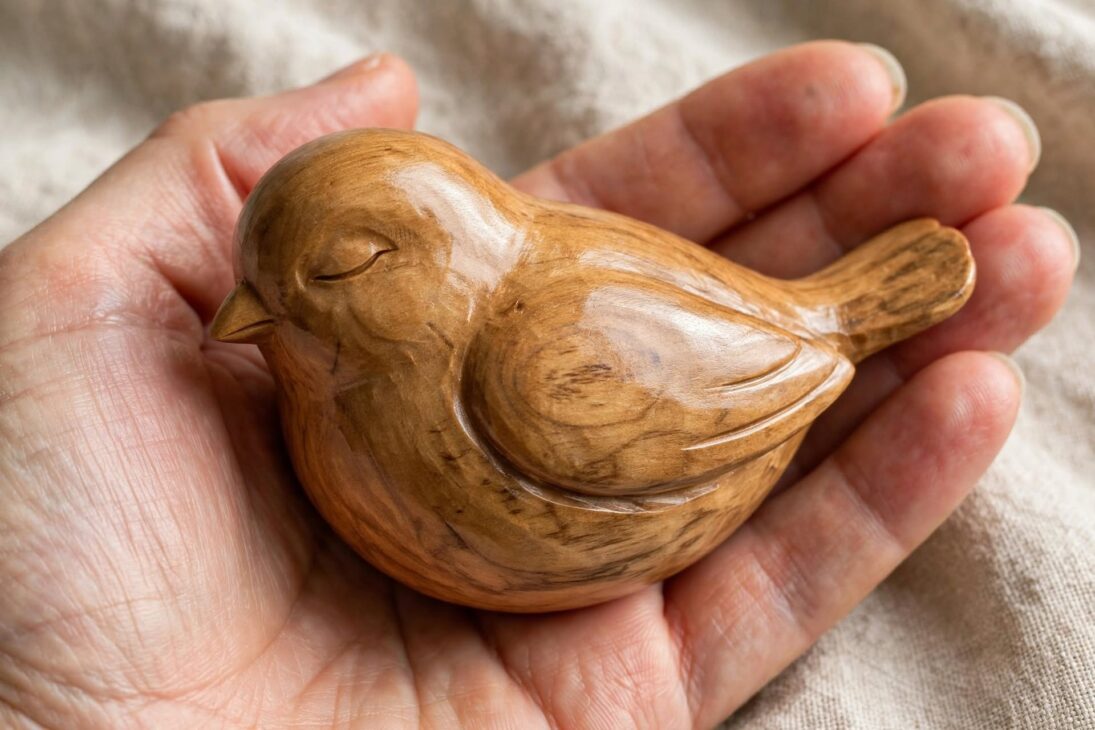
Keep the knife sharp and cut with the grain when possible. Sand lightly and oil the finished bird for a soft sheen. The piece becomes a pocket fidget or small gift.
2. Simple Wooden Spoon
Outline a handle and shallow bowl on a basswood blank roughly ten inches long. Remove waste with straight cuts, then hollow the bowl with a hook knife or careful scooping. The spoon teaches curves, depth, and grain reading while giving you a usable kitchen tool. Current guides list it among the most satisfying early projects.

Work slowly on the thin edges so they do not split. Finish with food-safe oil. A first spoon rarely looks perfect, yet it works and shows clear progress.
3. Basic Mushroom
Carve a rounded dome for the cap and a simple cylinder for the stem. No faces or thin stems required. The shape is forgiving and finishes in an afternoon. Many recent tutorials use the mushroom as the second or third project after the comfort bird because it introduces a clear change of form.
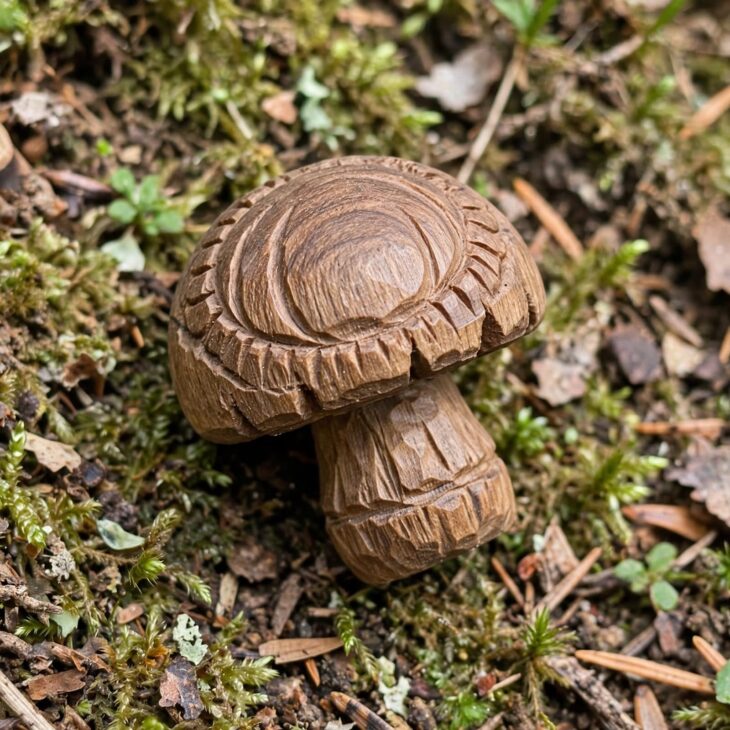
Leave the underside of the cap slightly undercut for a more realistic look if you want extra practice. Sand and oil, or leave the wood natural. A set of small mushrooms makes a cheerful shelf display.
4. Heart or Star Pendant
Sketch a heart or five-point star on a thin basswood blank. Use stop cuts to define the outline, then remove the waste. Drill a small hole for a cord. These flat shapes practice precise knife control and finish in under an hour. Beginner pattern lists still recommend them for early confidence.
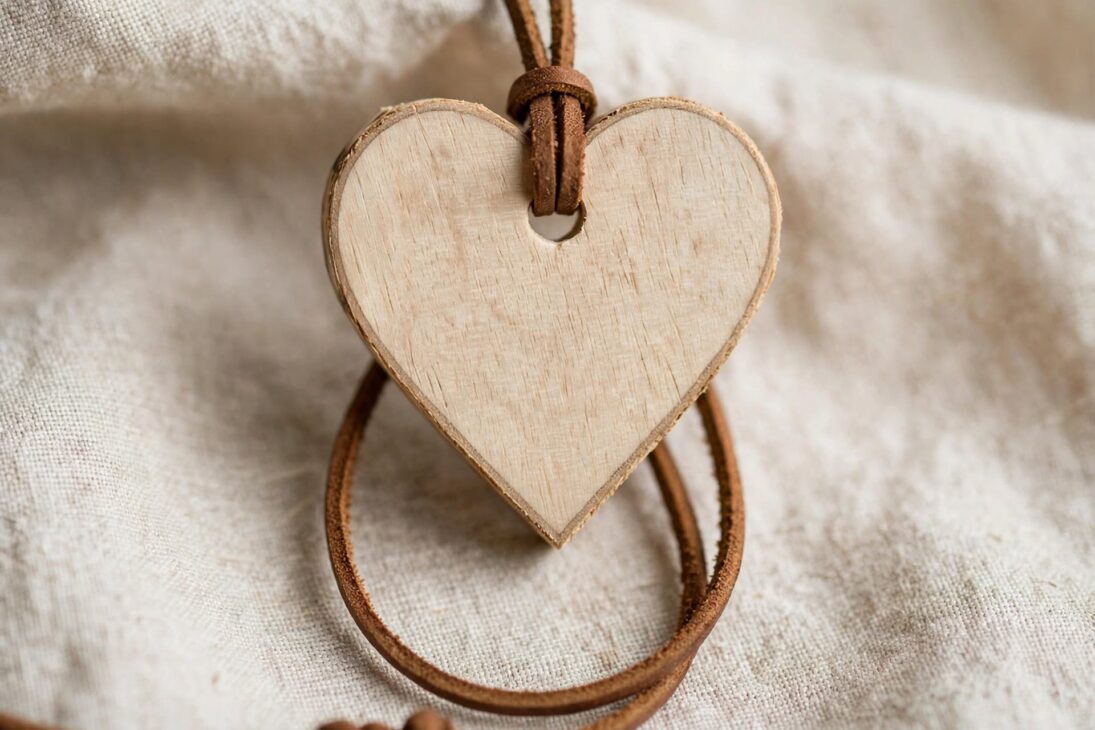
Keep the blank thin so the cuts stay shallow. Sand the edges smooth and apply a light oil. The finished pendant becomes a simple necklace or keychain charm.
5. Blocky Animal Figure
Choose a compact animal such as a bear, owl, or fish. Start with a rectangular blank and round it into a solid body. Add only the largest features first—ears, eyes, or a simple tail. Avoid thin legs or delicate beaks at this stage. Recent animal-carving guides stress starting blocky so the form reads clearly before details appear.
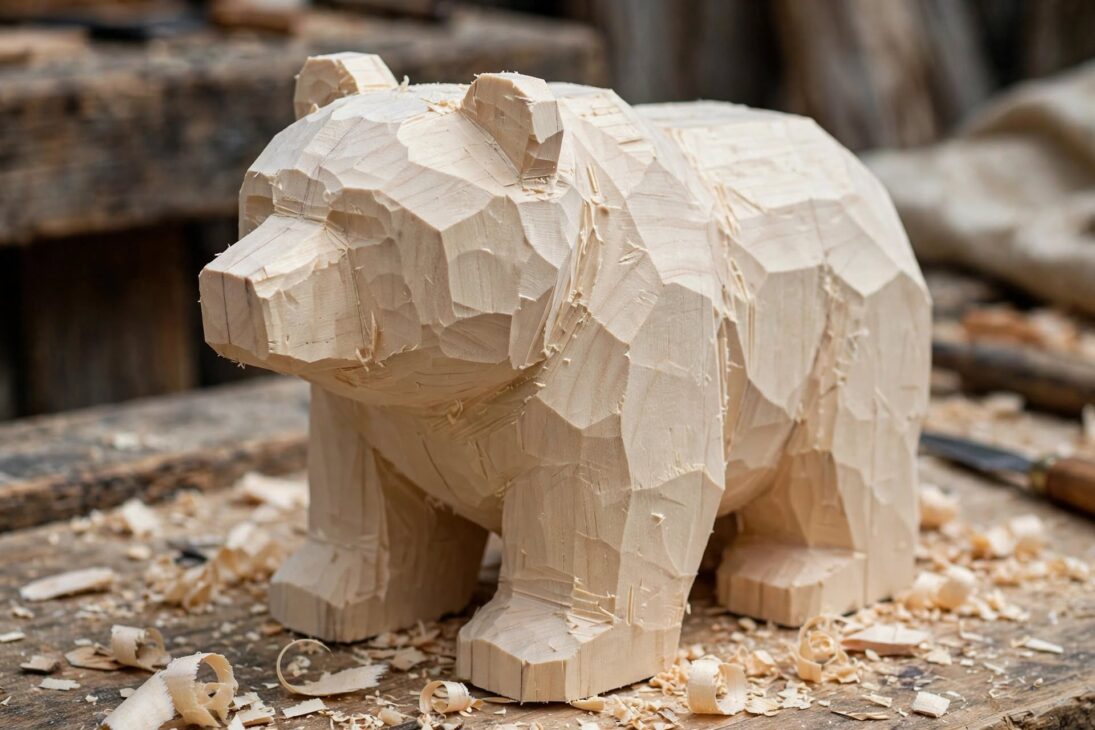
Rotate the piece often so all sides stay balanced. A first animal may look stylized rather than realistic, which is the goal. Oil and display or keep it as practice.
6. Simple Gnome or Wood Spirit
A gnome is mostly a tall cone hat, a round nose, and a beard. Carve the hat first, then the face planes. Wood spirits on a branch or small blank follow the same logic. These faces teach basic feature placement without complex anatomy. Current beginner project lists still place them early because the shapes are geometric and forgiving.

Keep the nose large and the eyes simple. The finished figure sits well on a shelf or desk. A light stain or paint can highlight the beard and hat if desired.
7. Worry Stone or Thumb Depression
Shape a palm-sized piece of basswood into a smooth oval. Carve a shallow depression in the center with scooping cuts. The stone fits the thumb and feels calming to hold. Recent tactile-project lists recommend it for practicing symmetrical shaping and surface finish.
Sand thoroughly so no rough spots remain. Oil brings out the grain and softens the feel. Carry it in a pocket or leave it on a desk.

8. Leaf or Simple Flower
Sketch a basic leaf outline on a thin blank. Carve the outer edge with stop cuts, then add a few veins with a V-tool or the tip of the knife. A simple flower uses the same approach with rounded petals. These flat relief pieces teach clean edges and light texture. Beginner pattern collections still list them as quick wins.
Keep the blank thin so the work stays shallow. Sand the back flat for hanging or magnet mounting. A light oil finish protects the surface.

9. Walking Stick Handle or Spiral
Take a straight branch or dowel and smooth the grip area. Add a simple spiral or a few shallow grooves. The project is low-pressure because the blank is already long and mostly formed. Recent outdoor-carving guides still suggest it for learning longer strokes and consistent depth.
Work with the grain and keep the cuts shallow at first. The finished stick becomes a walking aid or decorative prop. Seal with outdoor-safe oil if it will see weather.
10. Small Pendant or Charm
Carve a simple shape such as a fish, beetle, or abstract form on a small blank. Drill a hole for a cord or jump ring. These pocket-sized pieces practice detail on a reduced scale. Current pendant project lists note that they finish quickly and make personal gifts.
Keep the design bold so thin parts do not break. Sand smooth and oil. Wear it or gift it with a short leather cord.
11. Coffee or Spice Scoop
Shape a short handle and a shallow oval bowl. The scoop is smaller than a full spoon and therefore faster. It teaches the same hollowing skill with less wood removal. Recent kitchen-carving ideas still include scoops as practical early projects.
Keep the walls even so the scoop feels balanced. Finish with food-safe oil. Use it for coffee grounds or dry spices.
12. Rounded Egg or Soap Bar Form
Turn a rectangular blank into a smooth egg or bar shape. The exercise focuses purely on continuous rounding and even surface. No details distract from the basic cuts. Several current starter lists place this pure form early because it builds muscle memory for later projects.
Rotate the piece constantly. Sand until the surface feels uniform. Oil brings out the wood grain and leaves a tactile object that is satisfying to hold.
| Idea | Best Wood | Key Cut | Finish |
|---|---|---|---|
| 1. Comfort Bird | Basswood | Rounding | Oil |
| 2. Spoon | Basswood | Scoop / curve | Food-safe oil |
| 3. Mushroom | Basswood | Dome | Oil or paint |
| 4. Heart / Star | Basswood | Stop cut | Oil |
| 5. Animal | Basswood | Blocky form | Oil |
| 6. Gnome | Basswood | Planes | Oil or stain |
| 7. Worry Stone | Basswood | Scoop | Oil |
| 8. Leaf / Flower | Basswood | Edge & vein | Oil |
| 9. Stick Handle | Branch / pine | Long stroke | Outdoor oil |
| 10. Pendant | Basswood | Detail | Oil |
| 11. Scoop | Basswood | Hollow | Food-safe oil |
| 12. Egg / Bar | Basswood | Full rounding | Oil |
Core supplies for every project: a sharp fixed-blade carving knife, soft basswood blanks, a cutting glove or thumb guard, sandpaper in a few grits, and food-safe or finishing oil. Keep the knife sharp; a dull edge is more dangerous than a sharp one. Work on a stable surface and always cut away from your body. A small strop or sharpening stone keeps the edge ready between sessions.
FAQ
What wood is best for beginners?
Basswood is the top choice. It is soft, even-grained, and cuts cleanly in most directions. Avoid hard woods until you have solid control of the knife.
Do I need many tools to start?
No. One sharp carving knife is enough for the twelve ideas above. A small gouge or hook knife helps with spoons and scoops but is optional at first.
How do I keep the knife sharp?
Use a leather strop with compound after every session. A few strokes restore the edge. A dull knife requires more force and is more likely to slip.
Is wood carving safe for kids?
Only with close adult supervision and cut-resistant gloves. Start with very soft wood and simple shapes. Many instructors wait until the teen years for unsupervised work.
How long before I see progress?
Most beginners finish a comfort bird or mushroom in one or two sessions. Skills improve quickly when you carve regularly and keep the knife sharp.
Conclusion
Easy wood carving starts with soft wood, a sharp knife, and shapes that forgive mistakes. The twelve ideas above—comfort birds, spoons, mushrooms, hearts, simple animals, gnomes, worry stones, leaves, stick handles, pendants, scoops, and pure rounded forms—build the core skills without overwhelm. Each project finishes in a few hours and leaves you with a finished object. Begin with the comfort bird or a heart pendant so you learn the feel of the knife. Keep the edge sharp and cut away from your body. Progress comes from regular short sessions rather than long, frustrated ones. Choose one idea, grab a basswood blank, and make the first cut today. The next project will already feel easier.
References
- Improvewood. “30 Weekend Whittling Projects: Quick, Easy Carving Ideas for Beginners 2026.” 2025. https://improvewood.com/whittling-projects/
- Wood Carving by Hand. “Best Beginner Wood Carving Projects To Start.” 2026. https://woodcarvingbyhand.com/best-beginner-wood-carving-projects-to-start/
- Crafty Twisty. “27 Foolproof Wood Carving Patterns for Beginners (One Knife Is All You Need).” 2026. https://craftytwisty.com/wood-carving-patterns-for-beginners/
- Schaaf Tools. “13 Easy Wood Carving Ideas Perfect for Beginners.” 2025. https://www.schaaftools.com/blogs/project-tutorials/wood-carving-ideas-easy-wood-carving-easy-ideas
- The Wood Meter. “15 simple woodcarving ideas you can do in a weekend – 2026.” 2025. https://thewoodmeter.com/15-simple-woodcarving-ideas-you-can-do-in-a-weekend/
- Crafty Twisty. “25 Tried-and-True Wood Carving Ideas for Beginners (No Fancy Tools Needed).” 2026. https://craftytwisty.com/wood-carving-ideas-for-beginners/
- Asaya Sculpture. “What to Carve Out of Wood: 50+ Creative Project Ideas for Every Skill Level 2025.” 2025. https://www.asayasculpture.com/what-to-carve-out-of-wood

jessy
Jessy Grace has spent over 5 years researching and writing about household energy, covering everything from gas and electricity tariffs to appliance efficiency and smart meter technology. With a background in [energy consulting / utilities journalism / consumer finance], [he/she/they] specializes in breaking down complex tariff structures, regulatory changes, and cost-saving strategies into practical advice homeowners can actually use. [Author Name]'s work draws on data from official regulators, utility providers, and independent consumer bodies to ensure every guide is accurate and up to date. When not writing, [he/she/they] tests energy-saving products firsthand and stays close to industry shifts, from renewable tariffs to price cap changes, to keep readers ahead of the curve.