

Your wedding day moves fast. One minute you are getting your hair pinned, the next you are cutting cake and waving goodbye to guests. Photos are what let you slow all that down and live it again. A good shot list helps your photographer catch the moments that matter most, from the quiet seconds before the ceremony to the messy, joyful chaos of the dance floor. Below are twelve wedding photo ideas worth adding to your list, along with why each one works so well.
Quick Answer
The best wedding photo ideas mix planned portraits with candid, in-the-moment shots. A first look, a confetti toss, a detail flat lay, and a golden hour couple portrait cover the emotional range of the day and give you a varied, meaningful gallery.
| Photo Type | Best Time | Planning Needed |
| First look | Before ceremony | High |
| Confetti exit | After ceremony | Varies |
| Detail flat lay | Morning prep | Standard |
| Golden hour portraits | Sunset | Varies |
| Reception dancing | Evening | Standard |
Typical time couples spend on each photo block
1. The First Look
The first look gives you a private moment together before the ceremony starts. One partner waits in a quiet spot while the other walks up and taps a shoulder to reveal themselves. This works because it captures real, unfiltered reactions away from the crowd. It also frees up your timeline, since portraits can happen before the ceremony instead of after. Pick a spot with good light and few people walking through, like a garden path or a quiet hallway.
Tell your photographer roughly how long you want, ten to fifteen minutes is common, so they can plan a few extra portrait frames right after the reveal while your expressions are still raw. Some couples add a short vow reading here too, which gives the shot an extra layer of emotion beyond the initial reaction.
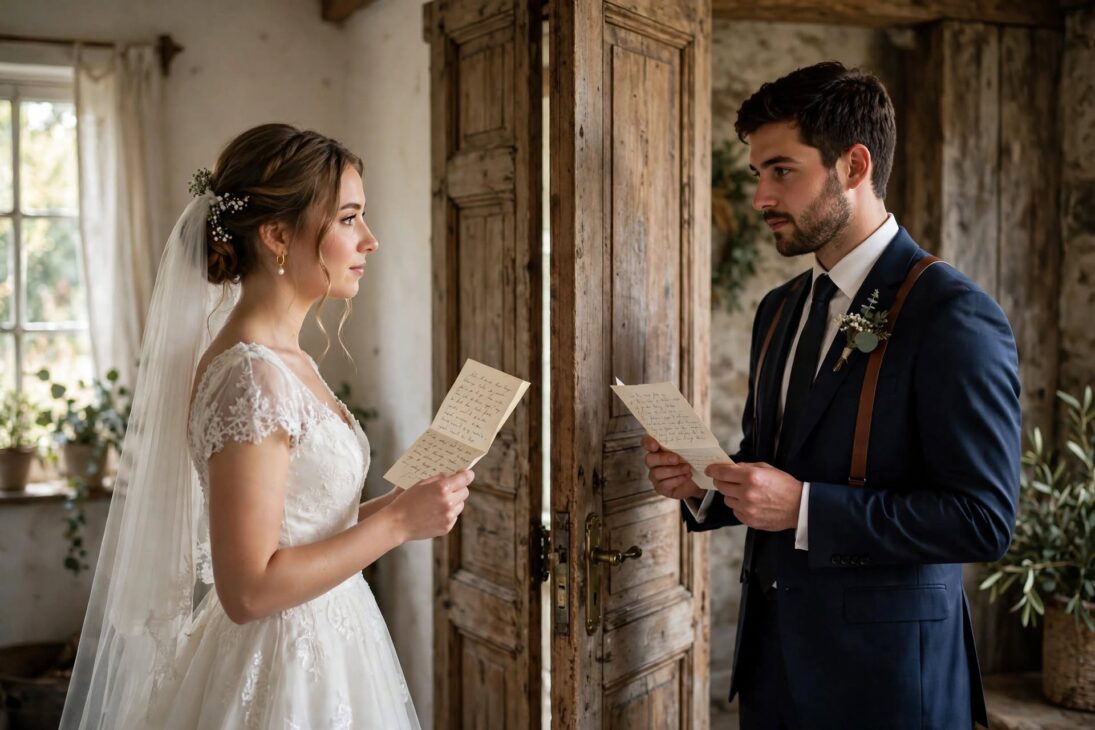
2. Letter Exchange Through A Door
You and your partner each write a letter and read them on opposite sides of a door before the ceremony. It gives you connection without seeing each other yet. The photo shows two hands, two doors, one moment. Ask your photographer to shoot from a slight angle so both of you appear in frame, one on each side of the frame line.
Write your letters a few weeks ahead, not the night before, so the words feel calm rather than rushed. Keep a copy for your wedding album. Years later, that page next to the photo becomes just as meaningful as the picture itself.
3. Getting-Ready Detail Flat Lay
Lay out your rings, invitation suite, perfume, shoes, and bouquet on a clean surface near a window. Soft daylight brings out the texture in fabric and paper. This shot anchors your gallery with all the small objects that took months of planning. Group items by size, largest in the back, smallest up front, so nothing gets lost in the frame.
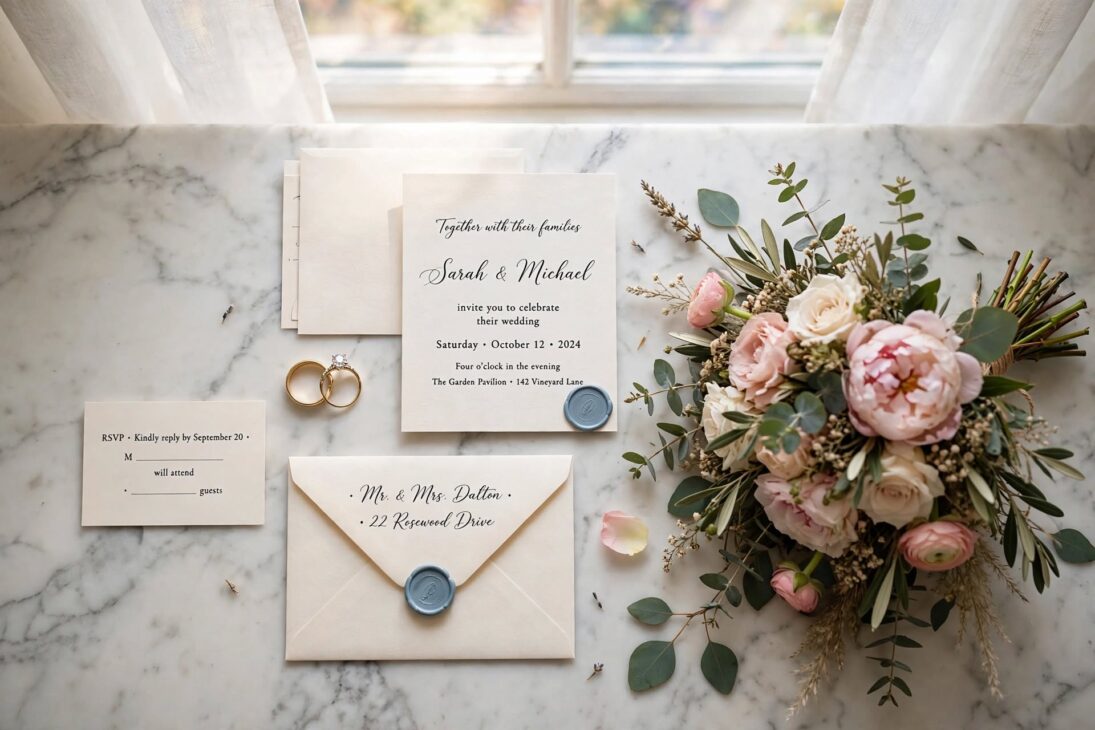
A neutral background works best. A hotel duvet, a wood table, or a plain rug all let the colors of your florals and stationery stand out. Avoid busy patterned surfaces, since they compete with the small details you are trying to highlight.
4. Bridal Party Walking Shot
Line up your whole bridal party and have them walk toward the camera, mid-laugh, mid-stride. Movement photos read as natural rather than staged. Shoot this one twice. Once for a clean, posed version, and once where you tell everyone to just talk and walk, so the candid version has real expressions.
Wide open spaces work better than tight hallways for this shot, since everyone needs room to spread out and still stay in frame. A staircase, a long driveway, or an open lawn all give the photographer options for angle and depth.
5. Confetti Exit
Guests line up outside the ceremony space and toss confetti as you walk through. The color and motion make for one of the liveliest shots of the day. Biodegradable petal or paper confetti works best. Ask your photographer to stand a few steps ahead, facing you, so the confetti frames both your faces as it falls.
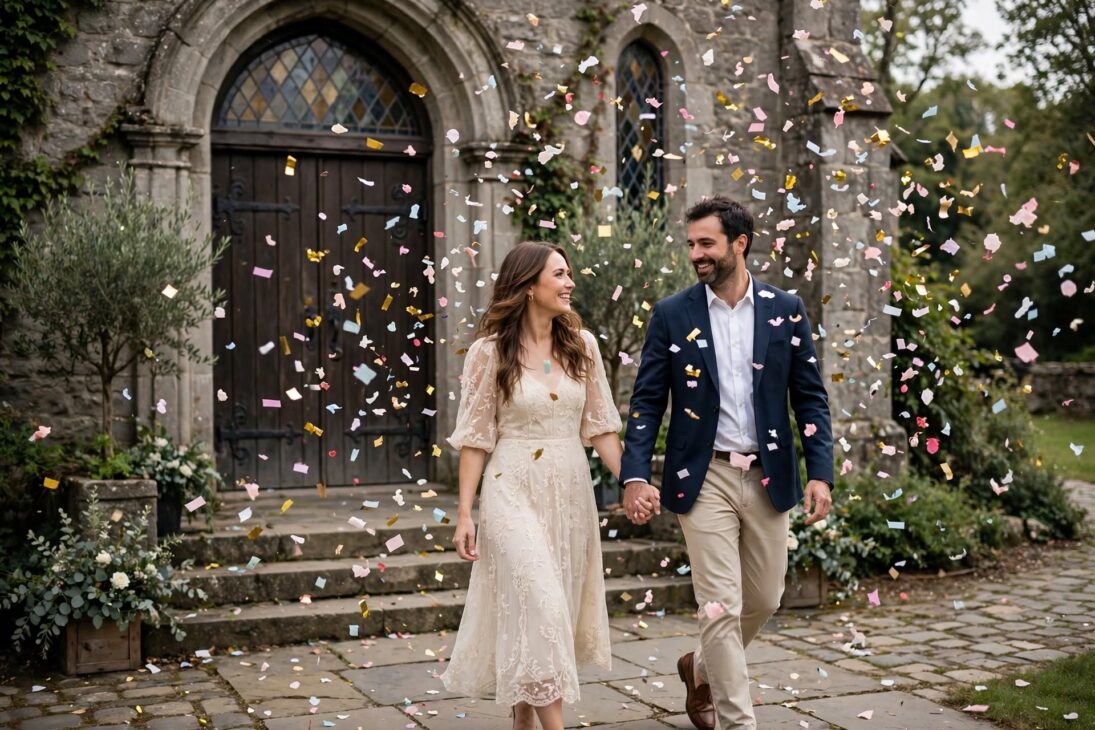
Check your venue’s confetti policy before the day. Some locations ban glitter or plastic confetti because it is hard to clean up off grass and stone paths, so keep a backup like bubbles or dried lavender on hand.
6. Aerial Or Drone Shot
A drone shot from above shows your whole venue, the guest layout, and the shape of the day at once. It works best during the ceremony or right after, when guests are gathered in one spot. Check with your venue first, since some locations restrict drone flights for noise or privacy reasons.
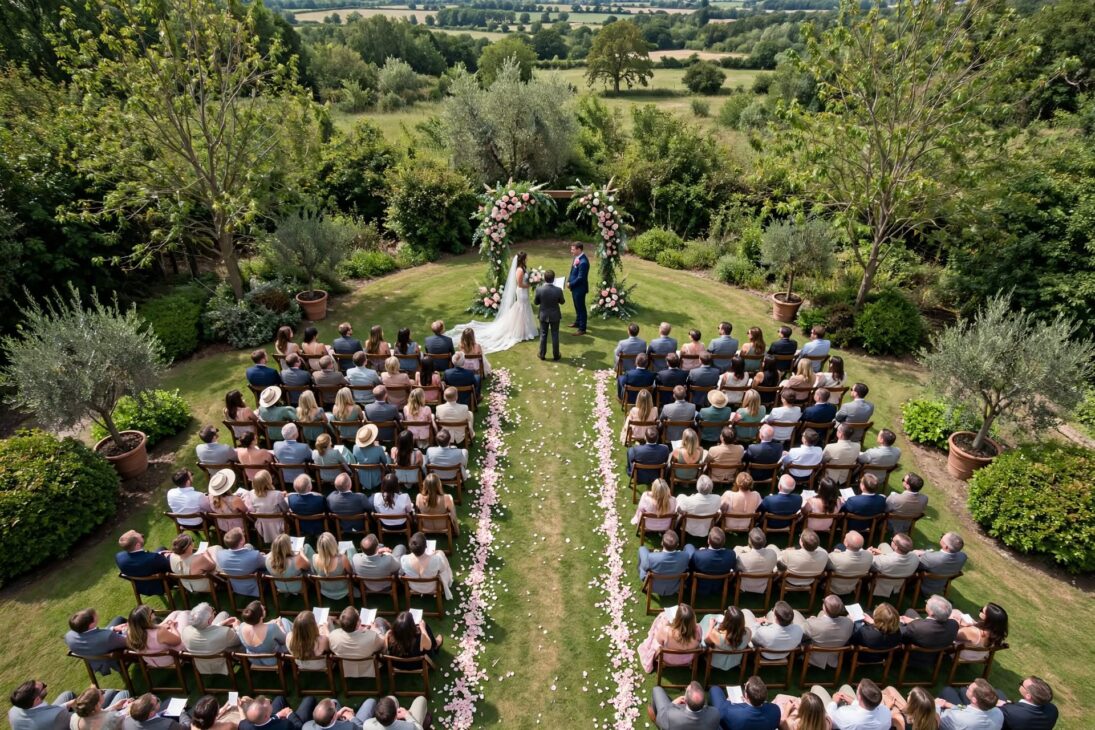
Overcast days actually work in your favor for drone photos, since even cloud cover removes harsh shadows across the ground. If your venue sits near water, a coastline, or a vineyard, this angle can turn into one of the standout images in your final gallery.
7. Golden Hour Couple Portrait
Step away from the reception for ten minutes during golden hour, the stretch right before sunset when light turns warm and soft. This is often the most romantic photo in the whole gallery. Face each other with the sun behind you for a soft glow, or turn toward the light for a warm, even look on your faces.
Check sunset time for your date and venue location ahead of the wedding, and build a fifteen minute window into the timeline just before it. Missing this slot is one of the most common regrets couples mention after looking back at their gallery.
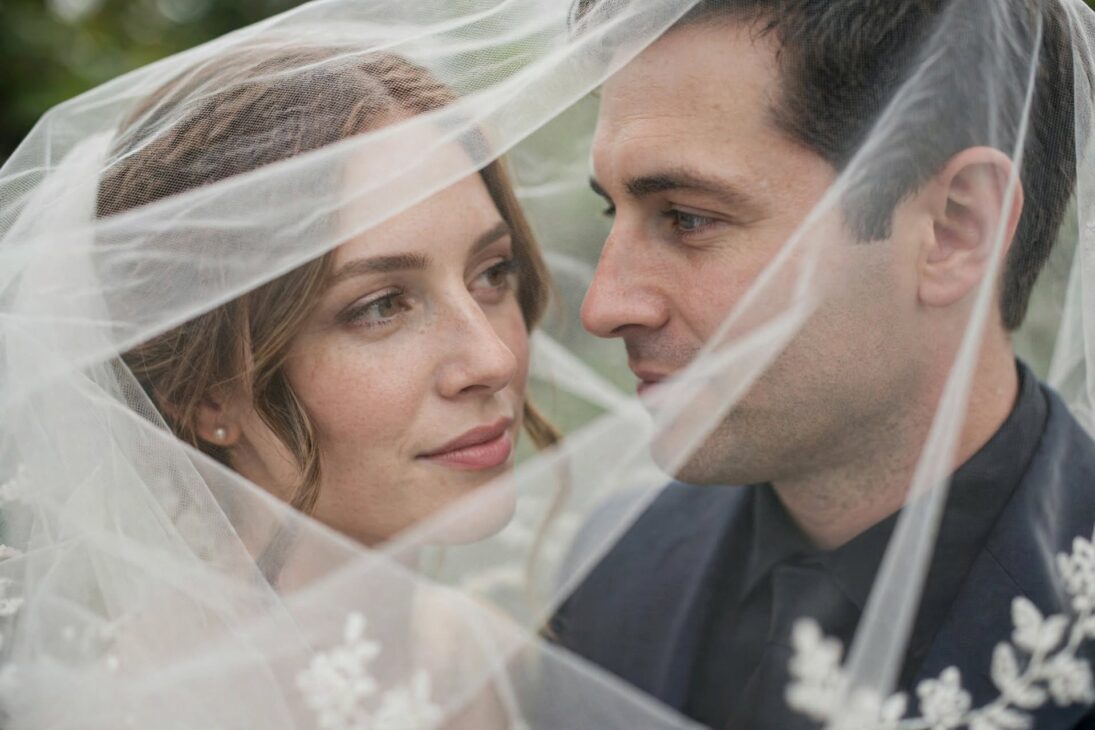
8. Under The Veil
The photographer shoots up close through the fabric of the veil, framing the couple’s faces inside it. The soft blur at the edges gives the photo a dreamy, intimate feel. This shot works well right after the ceremony, when the veil is still in place and emotions are still high.
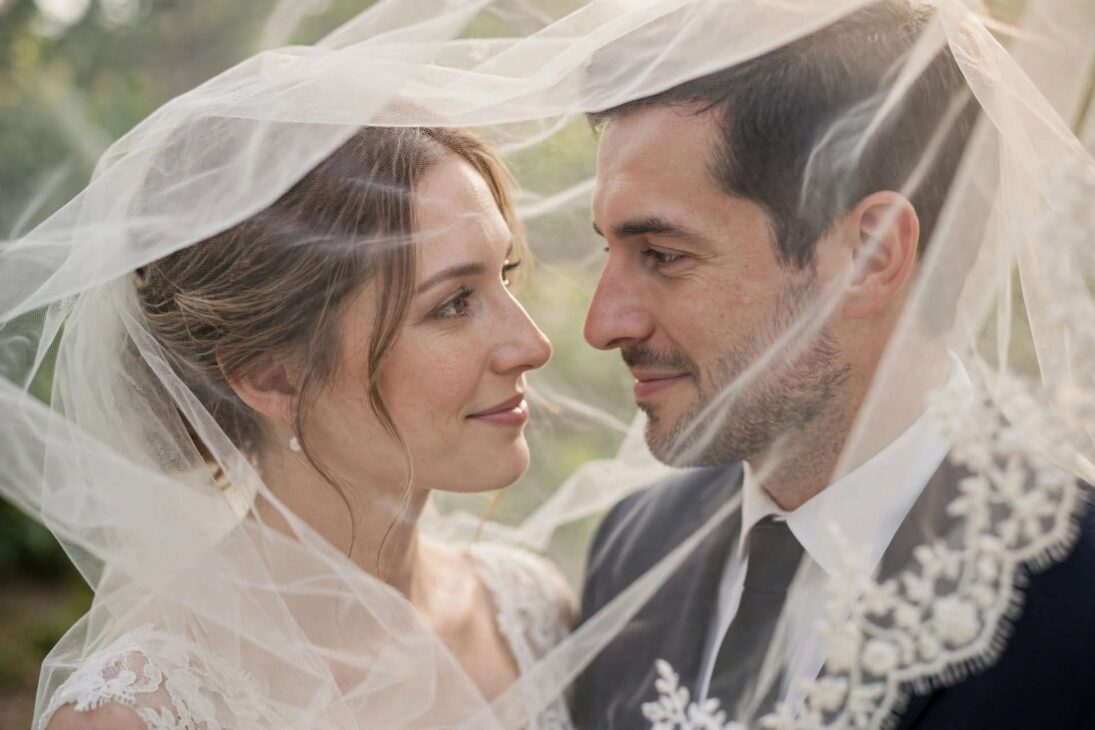
A light breeze helps this shot along, since it lifts the veil slightly and adds gentle movement to the frame. If there is no wind, a bridesmaid off camera can give it a soft toss just as the photographer clicks the shutter.
9. Kids Being Cheeky
If you have young flower girls, ring bearers, or nieces and nephews in the wedding, let the photographer catch them mid-mischief rather than posed. A kid peeking out from behind a curtain or sneaking a bite of cake tells a more honest story than a stiff group photo. These shots often become guest favorites once the album is shared.
Ask your photographer to hang back with a longer lens for a few minutes during the reception rather than directing the kids at all. Unposed moments almost always beat the staged version when children are the subject.
10. Rings On A Textured Surface
Set both rings on a surface with real texture, tree bark, an old book, dried moss, or a stone ledge. The contrast between the smooth metal and the rough surface makes the rings stand out. Shoot from directly above with natural light so no shadow falls across the bands.
This photo takes just a minute or two but pays off well since it works as both a keepsake print and a save-the-date style image for thank you cards. Bring the rings back before the ceremony starts, not after, to avoid last minute panic.
11. First Dance From Above
Shot from a balcony or raised platform, this angle shows the full circle of guests watching you dance. It captures the room, not just the couple. If your venue has a mezzanine or staircase, ask your photographer to grab a few frames from up there during the first dance.
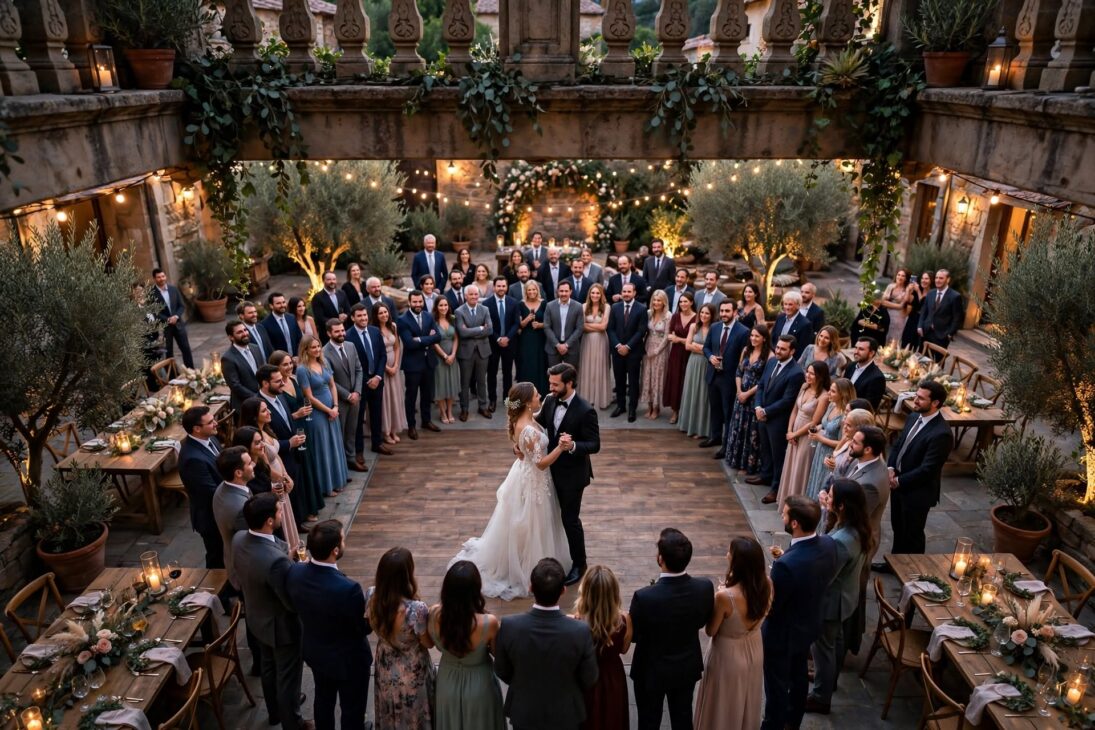
String lights or a lit up dance floor make this angle even stronger after dark. The contrast between the lit center and the darker crowd around it gives the photo a natural spotlight effect without extra equipment.
12. Sparkler Or Night Sky Exit
End the gallery the way you end the night. Guests form two lines with sparklers lit as you walk through, or you step outside for a quiet portrait under string lights. This shot needs a slower shutter speed, so tell your photographer ahead of time if you want this one, since it takes a bit of setup.
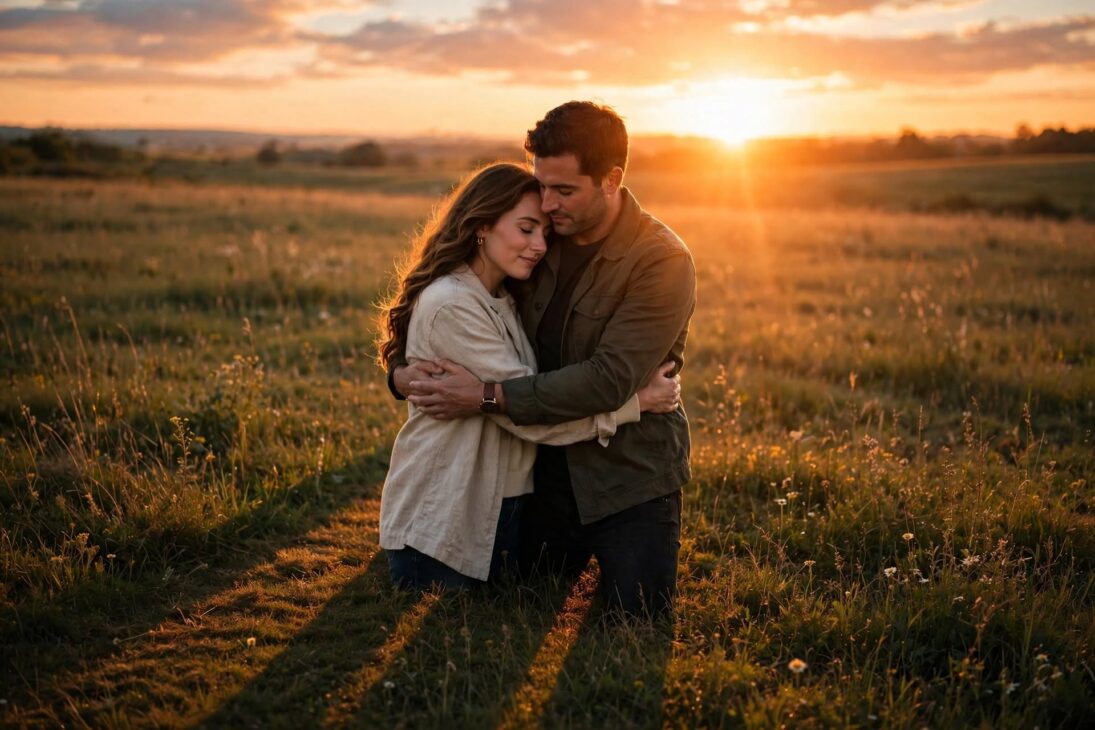
Order sparklers rated for a longer burn time, at least one full minute, so guests have enough time to light theirs before the line starts moving. A designated helper with a lighter keeps the whole thing running smoothly.
FAQ
How many photos should a wedding photographer take?
Most photographers deliver between 400 and 800 edited photos for a full day of coverage. The number depends on how many hours they shoot and how many guests attend.
Should we do a first look?
A first look is optional, not required. Couples who want more time with guests at the reception often choose one, since it moves portraits earlier in the day.
What is the best time of day for wedding portraits?
Golden hour, the hour before sunset, gives the softest and warmest light. Many couples build a short break into their timeline just for this window.
Do we need a shot list for our photographer?
Yes, a short shot list helps your photographer plan the day without missing key moments. Keep it to fifteen or twenty priority shots so they still have room to capture candid ones too.
How long should we set aside for couple portraits?
Plan for thirty to forty five minutes total, split between a few locations. This gives your photographer enough time to change angles and light without rushing you.
References
- Bridebook, “Wedding Photo Ideas: Shot List & Inspiration to Share with Your Photographer” (2026)
- The Canvas Factory, “25 Super Unique Wedding Photo Ideas” (2026)
- Candid Studios, “100 Best Wedding Photo Ideas for 2026” (2026)
- Venue Finder NZ, “10 Must-Have Wedding Photo Ideas to Capture Your Big Day in 2026” (2025

jessy
Jessy Grace has spent over 5 years researching and writing about household energy, covering everything from gas and electricity tariffs to appliance efficiency and smart meter technology. With a background in [energy consulting / utilities journalism / consumer finance], [he/she/they] specializes in breaking down complex tariff structures, regulatory changes, and cost-saving strategies into practical advice homeowners can actually use. [Author Name]'s work draws on data from official regulators, utility providers, and independent consumer bodies to ensure every guide is accurate and up to date. When not writing, [he/she/they] tests energy-saving products firsthand and stays close to industry shifts, from renewable tariffs to price cap changes, to keep readers ahead of the curve.