

A well-planned party food table keeps guests happy and the host free to enjoy the evening. These 14 amazing party food table ideas cover grazing tables, finger-food stations, themed buffets, and easy make-ahead spreads. Each approach focuses on food that travels well, looks inviting, and requires little last-minute work. You can mix and match the ideas to fit the size of your group and the style of your gathering.
Quick answer: The best party food table ideas include large grazing tables, build-your-own stations, finger-food platters, themed buffets, cold appetizer spreads, and dessert tables. Focus on items that hold at room temperature, offer variety in texture and flavor, and allow guests to serve themselves easily.
Current entertaining guides emphasize self-serve formats that reduce host stress. Grazing tables, interactive stations, and abundant finger foods continue to lead because they encourage movement and conversation. Portion planning has become clearer, with simple per-person guidelines that help avoid both shortages and excess. The ideas below follow those practical principles while still looking generous and festive.
| Table Style | Main Format | Best Foods | Guest Count | Host Effort |
|---|---|---|---|---|
| Grazing Table | Large shared board | Meats, cheeses, fruit | 10–30 | Low |
| Build-Your-Own | Stations | Tacos, sliders, bowls | 15+ | Medium |
| Finger Food | Small bites | Skewers, pinwheels | Any | Low |
| Themed Buffet | Full spread | Regional dishes | 20+ | Medium |
| Dessert Table | Sweet focus | Cookies, bars, fruit | Any | Low |
Relative Host Effort
Green = lower effort • Blue = more prep and monitoring
1. Large Grazing Table
A large grazing table spreads meats, cheeses, fruits, crackers, dips, and vegetables across one long surface. Guests walk along and fill small plates at their own pace. The format feels abundant and encourages mingling.
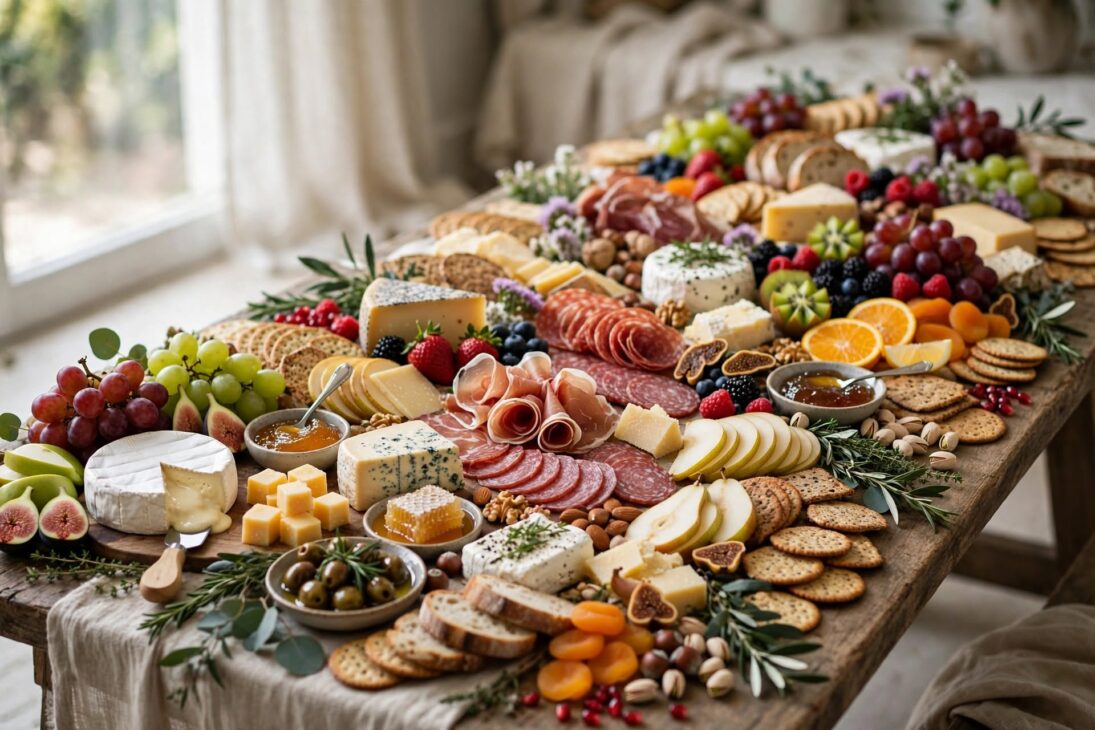
This idea works because it removes the need for formal service. The visual impact of a full table sets a festive tone immediately. It suits groups of ten to thirty people especially well.
Start with a clean tablecloth or large boards. Place the heavier items first, then fill gaps with fruit, nuts, and smaller bites. Keep a few empty spaces so the arrangement does not look crowded. Label any less-familiar items.
Recent entertaining guides highlight grazing tables as a top choice for reduced host stress. Replenish popular items once during the party. The table stays the center of attention without requiring constant attention from the host.
2. Build-Your-Own Taco or Slider Station
A build-your-own station lets guests assemble their own tacos, sliders, or bowls. Set out proteins, toppings, sauces, and bases in separate containers. The interactive format keeps people moving and accommodates many preferences.

This approach reduces the host’s serving work. Guests control their own portions and combinations. It works for casual parties, backyard gatherings, and larger groups.
Keep hot items warm in slow cookers or chafing dishes. Arrange cold toppings in bowls with serving spoons. Provide clear labels and a logical flow from base to protein to toppings. Offer both soft and hard options when possible.
Current party planners note that stations have become standard for good reason. They handle dietary needs without separate dishes and create a lively atmosphere. Prepare extra of the most popular toppings so the station stays fully stocked.
3. Finger-Food Skewer and Pinwheel Platter
Finger-food platters focus on one- or two-bite items such as Caprese skewers, pinwheels, stuffed mini peppers, and antipasto picks. Everything can be eaten standing up with one hand. The format keeps the party flowing.
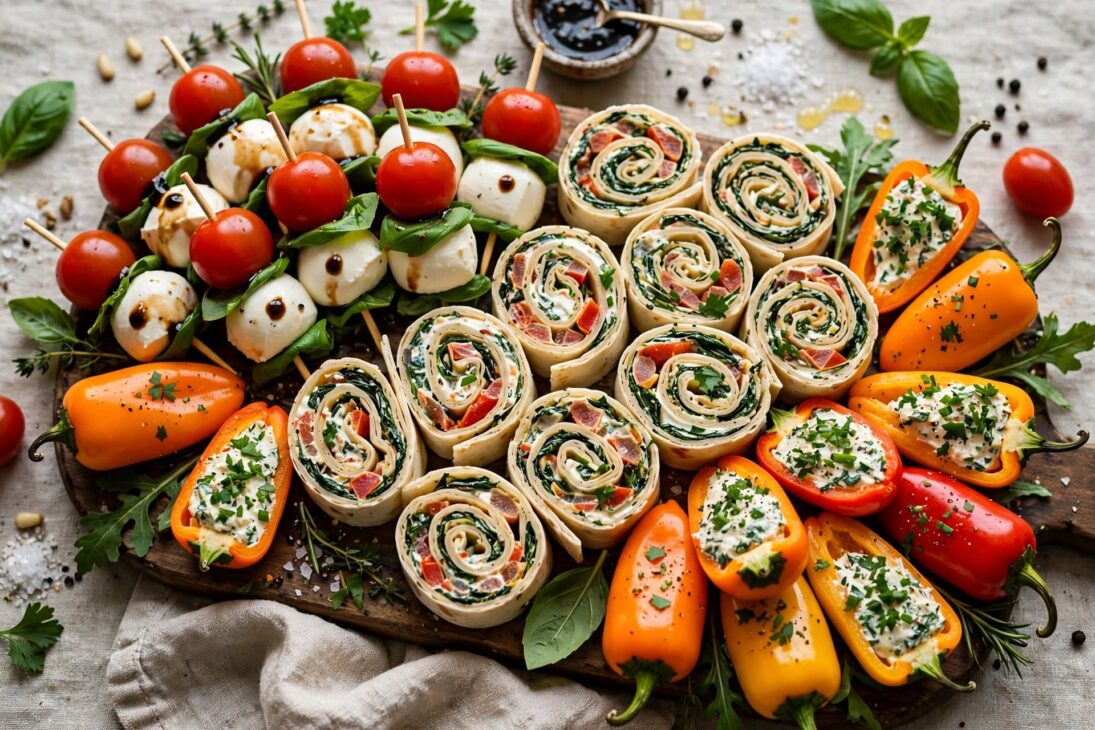
This style is ideal when guests will be moving between rooms or outdoors. Cleanup stays simple and no plates or utensils are required for most items. The colorful arrangement still looks generous.
Thread tomatoes, mozzarella, and basil onto short skewers. Roll tortilla pinwheels tightly and slice them into neat rounds. Arrange everything on large trays with a little space between pieces. Keep a few vegetarian options clearly separated.
Recent finger-food lists continue to feature skewers and pinwheels as reliable crowd-pleasers. Prepare them a few hours ahead and chill until serving. Guests appreciate the ease and the variety of flavors in a small space.
4. Cold Appetizer and Dip Table
A cold appetizer table relies on dips, vegetable sticks, chips, cheese, and ready-to-eat items that need no heating. Whipped feta, hummus, guacamole, and a few composed salads work well. Everything can sit out safely for a reasonable time.
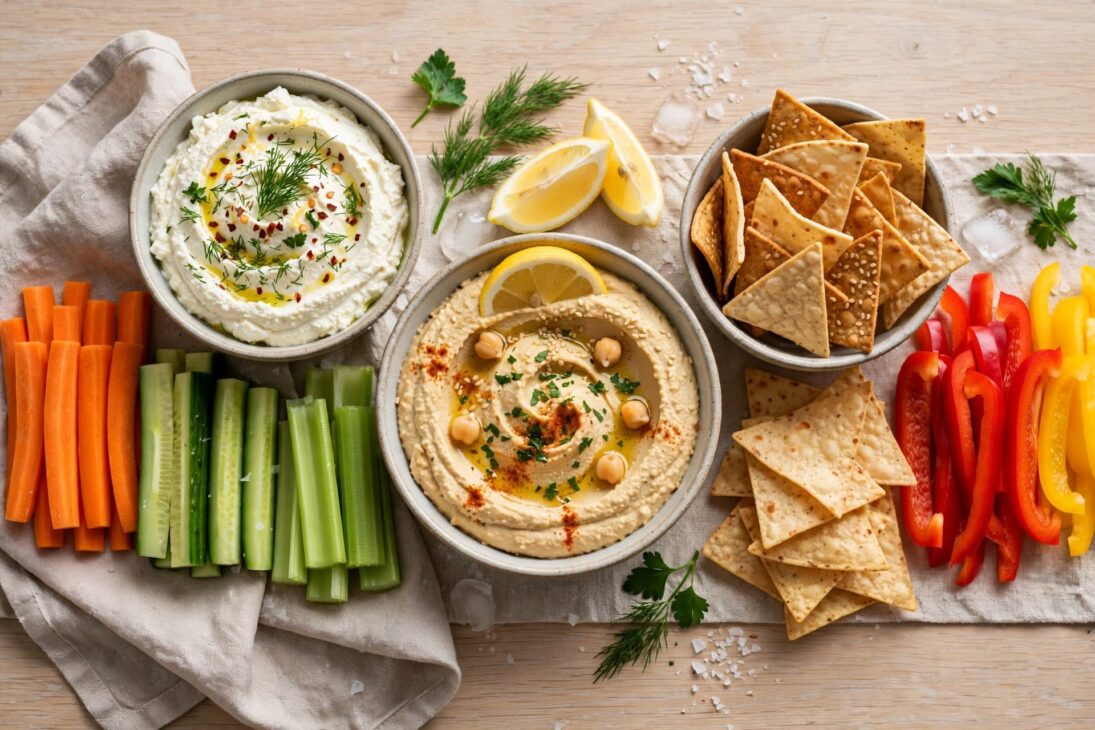
This setup is low-stress for the host and forgiving of timing. It suits daytime parties, outdoor events, and gatherings where kitchen access is limited. The cool temperatures keep food fresh longer.
Place dips in low bowls with spoons. Arrange vegetables in upright containers or neat rows. Add crackers and bread in separate baskets. Keep a few ice packs under the most perishable items if the room is warm.
Entertaining guides often recommend cold spreads for their simplicity and reliability. Choose dips with good holding power and plenty of crunchy vehicles. Guests can return throughout the party without the food looking tired.
5. Themed Regional Buffet
A themed regional buffet gathers dishes from one cuisine or region. Italian, Mediterranean, Mexican, or Scandinavian spreads all work well. The shared theme makes the table feel cohesive and intentional.
This idea adds personality and gives guests a clear story. It also simplifies shopping and prep because the ingredients overlap. Larger groups enjoy the variety within a single style.
Choose four to six dishes that represent the theme. Include at least one vegetarian option and one that can be served at room temperature. Label each dish and provide the right serving tools. Decorate the table with simple elements that support the theme without clutter.
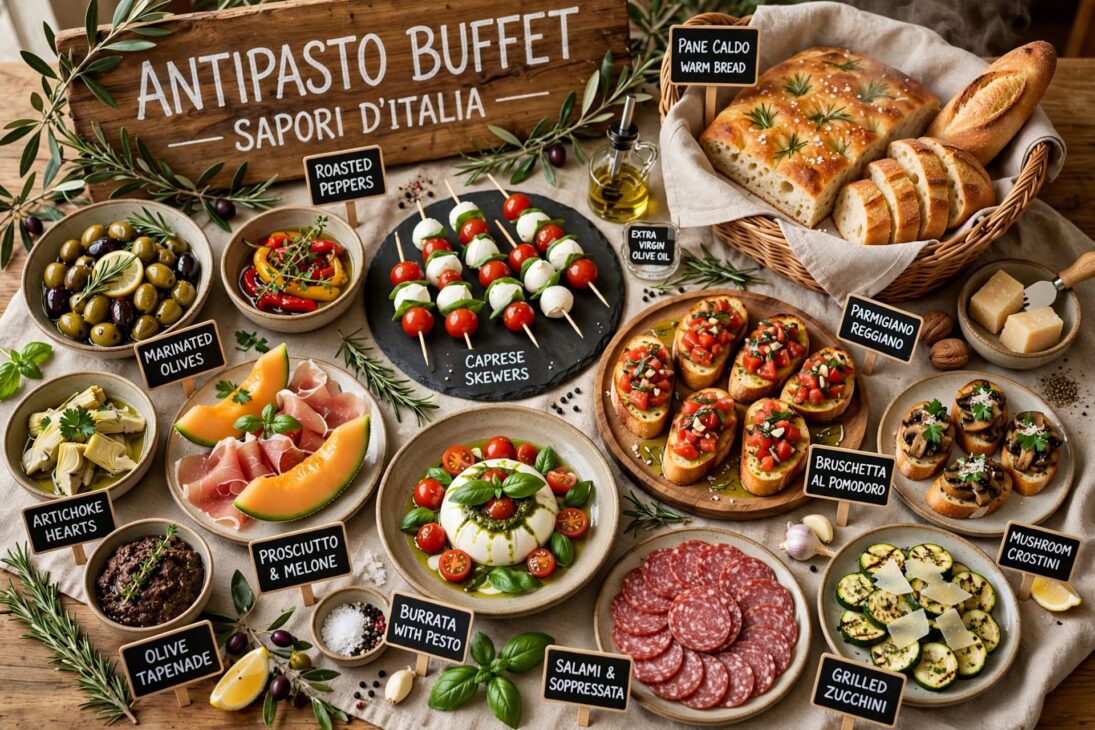
Current party planning sources note that themed tables create stronger visual impact than random collections of food. Keep the number of dishes manageable so the table does not feel overwhelming. Guests often comment on the thoughtful focus.
6. Brunch Grazing Spread
A brunch grazing spread mixes sweet and savory morning foods on one long table. Include soft cheeses, smoked fish or ham, fruit, mini pastries, yogurt, and a few egg-based items. Guests can build a full plate or just nibble.
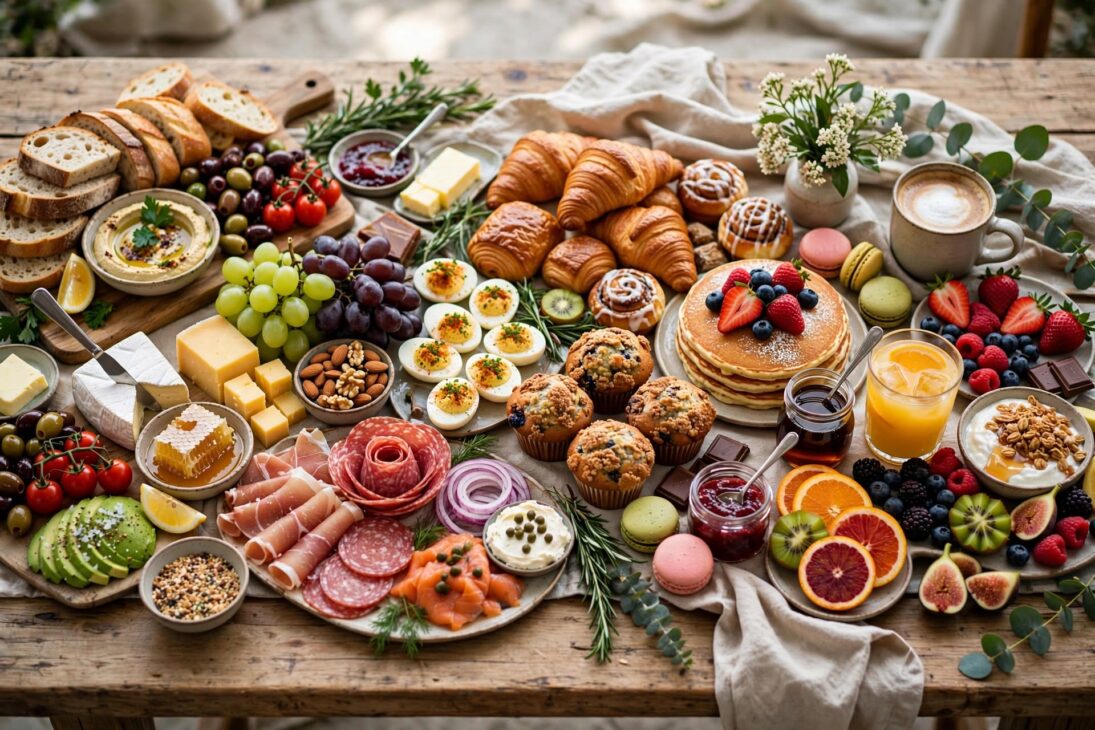
This format turns brunch into a relaxed, social meal. It works for weekend gatherings, baby showers, or holiday mornings. The variety keeps everyone satisfied without a formal sit-down service.
Keep cold items chilled until the last moment. Arrange savory items on one side and sweeter ones on the other. Provide small plates and utensils. A few pitchers of juice or coffee nearby complete the setup.
Brunch boards and tables appear regularly in recent entertaining features. Focus on items that hold their quality for at least an hour. The spread feels special while remaining easy for the host to manage.
7. Dessert and Sweet Table
A dessert table focuses entirely on sweet items such as cookies, bars, small cakes, fruit, chocolate, and candies. Guests finish the evening with a lighter, more playful course. The table can stand alone or follow a savory main spread.
This idea creates a natural endpoint for the party. It photographs well and gives people a reason to linger. Portion sizes stay small so guests can try several things.
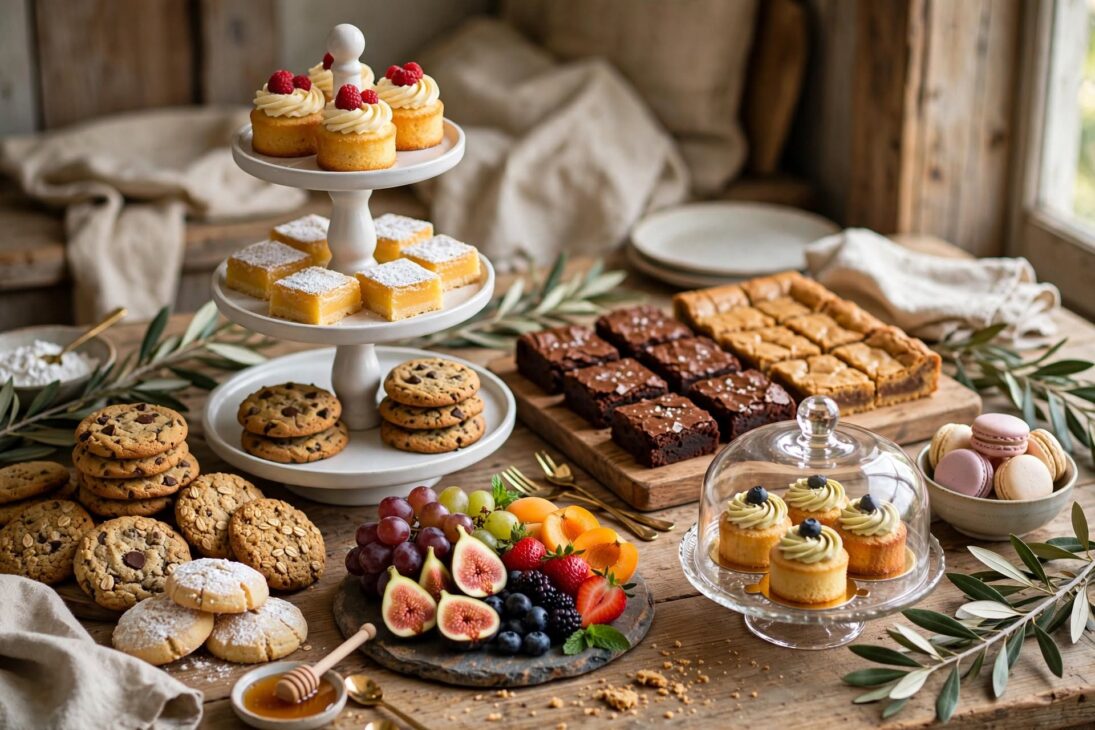
Use different heights with cake stands and boxes. Group similar colors or flavors together. Provide small plates or napkins and a few serving tools. Keep chocolate and delicate items out of direct heat or sun.
Dessert tables remain popular in current event styling. Choose a mix of homemade and good-quality store-bought items if time is short. The visual abundance matters as much as the individual flavors.
8. Outdoor Pool or Patio Snack Zone
An outdoor snack zone uses foods that hold up in heat and require little refrigeration. Think watermelon, grapes, chips and dip kept on ice, nuts, popcorn, and sturdy finger foods. The setup stays practical for sunny or warm settings.
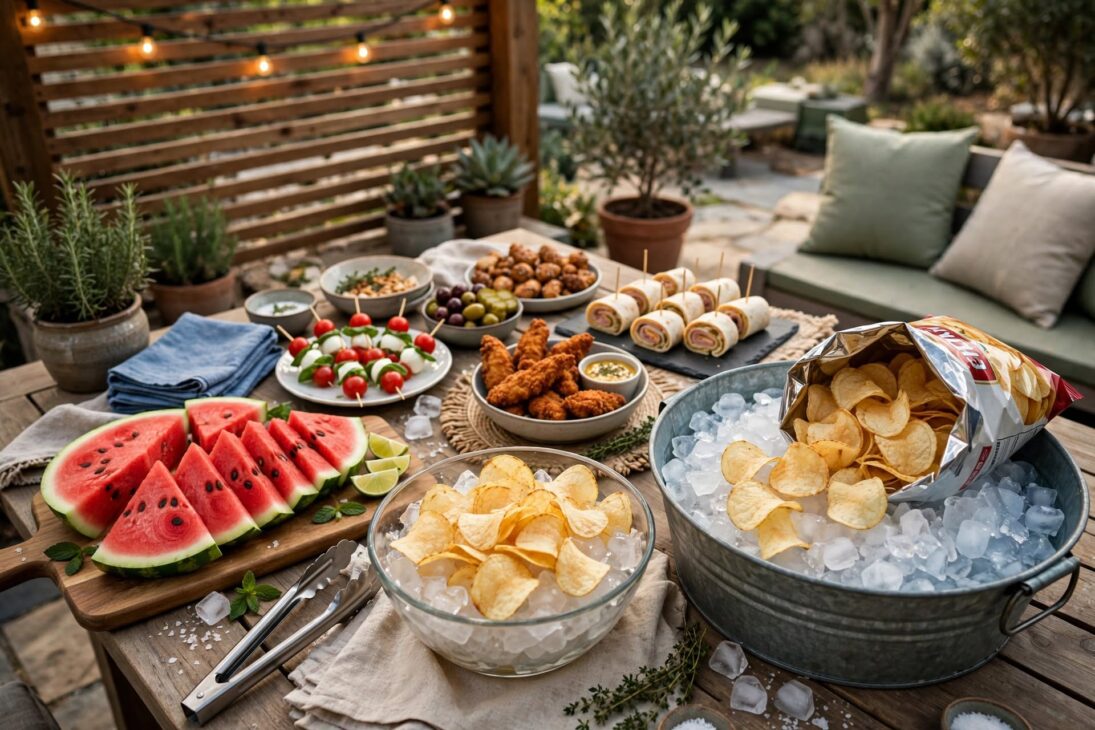
This approach prevents food-safety issues and reduces trips back to the kitchen. Guests can grab a bite without leaving the outdoor area. It works for pool parties, backyard barbecues, and casual daytime events.
Place perishable dips in bowls nested in larger bowls of ice. Choose fruit that stays firm. Keep a few covered containers for items that need protection from insects. Provide plenty of napkins and trash options nearby.
Pool and patio food guides stress ambient-temperature items and smart use of ice. Prepare more of the easiest snacks so you are not constantly restocking. Guests appreciate the convenience and the host stays free to enjoy the outdoors.
9. Antipasto and Cheese Table
An antipasto and cheese table combines cured meats, cheeses, olives, marinated vegetables, and breads. It functions as a substantial appetizer or a light meal. The savory focus pairs well with wine or simple cocktails.
This classic format feels generous and familiar. It requires no cooking beyond basic assembly. Guests can graze over a long period without the food losing quality.
Arrange the meats and cheeses first, then fill spaces with olives, peppers, and artichokes. Offer both soft and firm cheeses. Keep bread and crackers in separate baskets so they stay crisp. Provide small plates and forks.
Antipasto-style tables appear consistently in recent party food advice. Focus on a few high-quality items rather than too many average ones. The table looks abundant when the ingredients are arranged with care and a little height.
10. Interactive Dessert or Topping Station
An interactive dessert station lets guests customize ice cream, sundaes, or yogurt with a range of toppings. Alternatively, a cookie or brownie station with sauces and sprinkles works well. The hands-on element adds fun at the end of the evening.
This idea creates a natural activity and a memorable finish. It works for mixed ages and keeps the energy up. Portions stay under control because guests build their own servings.
Keep the base item (ice cream or yogurt) well chilled. Arrange toppings in small bowls with spoons. Provide clear bowls or cups and plenty of napkins. A simple sign explaining the options helps the flow.
Interactive stations continue to grow in popularity according to recent event reports. Choose toppings that hold well and offer both classic and unexpected choices. Guests enjoy the control and the shared experience.
11. Make-Ahead Finger Food Waves
A make-ahead approach plans two or three waves of finger foods. Prepare a larger batch of sturdier items first, then bring out fresher or warmer pieces later. The table never looks empty and the host is not stuck in the kitchen.
This strategy keeps the food quality high throughout the party. It works especially well for longer events. Guests always find something appealing.
Choose items that reheat well or hold at room temperature. Have the second wave ready in the refrigerator or oven. Swap trays rather than adding to half-empty ones so the presentation stays neat.
Recent party-planning advice emphasizes thinking in waves rather than one large continuous display. The method reduces waste and stress. Guests notice that the food stays inviting from start to finish.
12. Veggie-Forward Crudité and Dip Table
A veggie-forward table centers on a wide range of raw and lightly cooked vegetables with several dips. Include carrots, cucumbers, peppers, radishes, blanched broccoli, and cherry tomatoes. Offer two or three dips with different flavor profiles.
This option feels fresh and light. It balances richer foods elsewhere on the menu and accommodates many dietary preferences. The bright colors make the table look lively.
Cut vegetables into uniform, easy-to-grab pieces. Stand longer items upright in containers for height. Place dips in the center or at both ends of the table. Keep a few herbs for garnish.
Current guides note that upgraded vegetable trays have moved far beyond basic carrot sticks. Guests appreciate the variety and the host gains a reliable, healthy-looking option that requires little last-minute work.
13. Small-Plate Shared Table
A small-plate shared table offers a selection of composed dishes in modest portions. Think mini salads, small pasta or grain bowls, bite-sized proteins, and composed vegetable plates. Guests take a little of several things.
This format feels more refined than a pure grazing board while still remaining self-serve. It works for slightly more formal gatherings. The variety keeps interest high.
Serve each dish in a shallow bowl or on a small platter. Provide serving spoons and small plates. Keep the total number of dishes to five or six so the table stays manageable. Refresh as needed.
Small-plate approaches appear in recent entertaining features for groups that want something beyond pure finger food. The key is consistent portion size and clear labels. Guests enjoy the chance to sample widely without commitment.
14. Hybrid Grazing and Station Table
A hybrid table combines a central grazing area with one or two small stations. The grazing section holds cheeses, meats, and fruit while a nearby station offers a hot or interactive element such as a slider bar or warm dip. Guests move between the two.
This mix delivers both abundance and a point of interest. It works for medium to large groups and keeps the energy dynamic. The host can focus attention on the station while the grazing area runs itself.
Place the grazing board or table in the center of the space. Position the station nearby but with enough room for a short line. Keep the station simple so it does not compete with the main display. Label everything clearly.
Hybrid formats appear in current event advice as a practical way to offer variety without overwhelming the host. The combination feels generous and modern. Guests appreciate having both self-serve options and a small interactive moment.
FAQ
How much food should I plan per person?
For a cocktail-style party plan 10 to 12 pieces of finger food per person for a two- to three-hour event. For a fuller meal increase protein and add sides. Always prepare a little extra of the most popular items.
How do I keep food safe on a long table?
Limit the time perishable items sit at room temperature. Use ice under cold dishes and chafing dishes or slow cookers for hot ones. Replenish rather than leaving the same food out for hours.
What if some guests have dietary restrictions?
Label everything clearly and keep a few dedicated vegetarian, vegan, or gluten-free options in a separate section. Many grazing and station formats make it easy to offer choices without separate full menus.
Can I prepare everything the day before?
Many components can be prepped ahead. Slice cheeses and meats, wash vegetables, and make dips the day before. Assemble the final table closer to serving time so textures and colors stay fresh.
How do I make the table look full without waste?
Start with larger items and fill gaps with smaller ones. Use height with stands or stacked boards. Replenish popular items from a backup supply rather than overloading the table at the start.
What drinks work best with a food table?
Offer a simple selection of wine, beer, sparkling water, and one signature non-alcoholic option. Keep drinks near but not on the food table so the display stays focused on the food.
Conclusion
These 14 amazing party food table ideas give you practical, flexible ways to feed a crowd without constant work. Whether you choose a large grazing table, a build-your-own station, a finger-food spread, or a themed buffet, the goal stays the same. Offer variety, keep the food easy to grab, and plan so the host can join the guests.
Match the format to the size of your group and the style of the event. Prepare as much as possible ahead of time and think in terms of waves or stations rather than one static display. Clear labels and simple serving tools make the table welcoming for everyone.
Select one or two ideas that fit your space and supplies, then build from there. A thoughtful food table becomes both the practical solution and the social heart of the party.
References
- Olive Magazine. “How to create easy party food platters.” 2025. https://www.olivemagazine.com/guides/effortless-party-food-platters/
- Food Drink Life. “19 Summer Appetizer Recipes for a Party Where Nobody Sits Down.” 2026. https://fooddrinklife.com/appetizer-for-a-party/
- Giggster. “Party Food Calculator: How Much Food for Your Event.” 2026. https://giggster.com/guide/portions/food-quantity
- Inspire Captions. “Buffet Table Ideas Decor 2026.” 2026. https://inspirecaptions.com/buffet-table-ideas-decor-2026-44-elegant-and-creative-styling-ideas-for-every-event/
- Pool Party Planner. “Pool Party Food Ideas: The Complete Guide.” 2026. https://poolpartyplanner.com/pool-party-food-ideas/
- A Couple Cooks. “40 Finger Food Ideas for a Party.” Updated 2026. https://www.acouplecooks.com/finger-food-ideas/
- Brides Today. “Grazing table themes that’ll elevate your bachelorette party.” 2026. https://www.bridestoday.in/food-travel/story/grazing-table-themes-thatll-elevate-your-bachelorette-party-1212396-2025-05-12
- The New York Times. “5 Experiential Wedding Food Ideas To Wow Your Guests.” 2026. https://www.nytimes.com/2026/08/08/style/experiential-wedding-food-trends.html

jessy
Jessy Grace has spent over 5 years researching and writing about household energy, covering everything from gas and electricity tariffs to appliance efficiency and smart meter technology. With a background in [energy consulting / utilities journalism / consumer finance], [he/she/they] specializes in breaking down complex tariff structures, regulatory changes, and cost-saving strategies into practical advice homeowners can actually use. [Author Name]'s work draws on data from official regulators, utility providers, and independent consumer bodies to ensure every guide is accurate and up to date. When not writing, [he/she/they] tests energy-saving products firsthand and stays close to industry shifts, from renewable tariffs to price cap changes, to keep readers ahead of the curve.