
Designing custom t-shirts offers an exciting creative outlet whether you are building a clothing brand or printing custom apparel for events. Current apparel graphic trends blend vintage nostalgia with bold modern typography and artistic illustrations. Understanding what visual styles resonate with today’s audience helps you build eye-catching apparel designs that people enjoy wearing daily.
Quick Answer
Quick answer: Cool t-shirt design ideas focus on personality and visual clarity. Popular styles include retro 90s typography, botanical line art, surreal collage graphics, maximalist athletic prints, and minimal text quotes. Focus on clean font pairings and balanced color palettes for strong visual impact.
| # | Design Trend Style | Primary Visual Focus |
|---|---|---|
| 1 | 1. Naive Hand-Drawn Doodles | Naive design features playful sketches, intentionally uneven outlines, and casual handwritten lettering |
| 2 | 2. Surreal Media Collages | Surreal collage designs combine contrasting images like vintage portrait photos, tropical flowers, outer space textures, and torn paper borders into one graphic composition |
| 3 | 3. Retro 90s Vintage Typography | Nostalgic 1990s typography features puffy bubble letters, bold drop shadows, and bright color gradients |
| 4 | 4. Maximalist Athletic Graphic Badges | Maximalist sports graphics use heavy block typography, varsity crests, athletic stripes, and bold numbering reminiscent of classic college sportswear |
| 5 | 5. Botanical Line Art Illustrations | Botanical line art uses delicate single-line drawings of wildflowers, fern fronds, eucalyptus leaves, or celestial moon phases |
| 6 | 6. Food Art Culinary Prints | Culinary graphics display favorite foods, coffee cups, cocktail recipes, or retro pantry cans |
| 7 | 7. Minimalist Quote Typography | Minimal text designs rely on simple, well-spaced typography to deliver a clear message |
| 8 | 8. Acid-Wash Vintage Band Graphics | Classic rock band tee aesthetics use lightning bolts, skull motifs, eagles, and distressed lettering printed over heavy dark garments |
| 9 | 9. Abstract Geometric Pattern Blocks | Abstract geometric designs arrange colorful shapes, arcs, lines, and color blocks into modern artistic compositions |
| 10 | 10. Y2K Metallic Chrome Lettering | Y2K-inspired designs bring back liquid chrome effects, shiny metallic reflections, and futuristic shapes popular in the early 2000s era |
| 11 | 11. Cute Mascot Character Badges | Mascot designs feature friendly illustrated characters like cartoon mushrooms, happy animals, or retro coffee cup mascots with thumbs-up poses |
| 12 | 12. Vintage Travel Poster Graphics | Vintage travel designs feature scenic mountain landscapes, tropical beach horizons, and national park badges styled after classic mid-century travel posters |
| 13 | 13. Cyberpunk Neon Line Art | Cyberpunk graphics blend glowing neon linework, futuristic grid layouts, and Japanese kanji typography for an urban nocturnal vibe |
| 14 | 14. Monochromatic Sketch Portraits | Monochromatic sketch designs feature detailed single-color line drawings of classical statues, architectural arches, or expressive faces |
1. Naive Hand-Drawn Doodles
Naive design features playful sketches, intentionally uneven outlines, and casual handwritten lettering. This art style captures a relaxed, authentic vibe that feels human and personal to the wearer.
Instead of perfect vector shapes, use organic pencil lines, simple smiley motifs, or quirky animal sketches. Paired with soft pastel or earth-tone garments, these illustrations feel cozy and accessible for everyday wear.
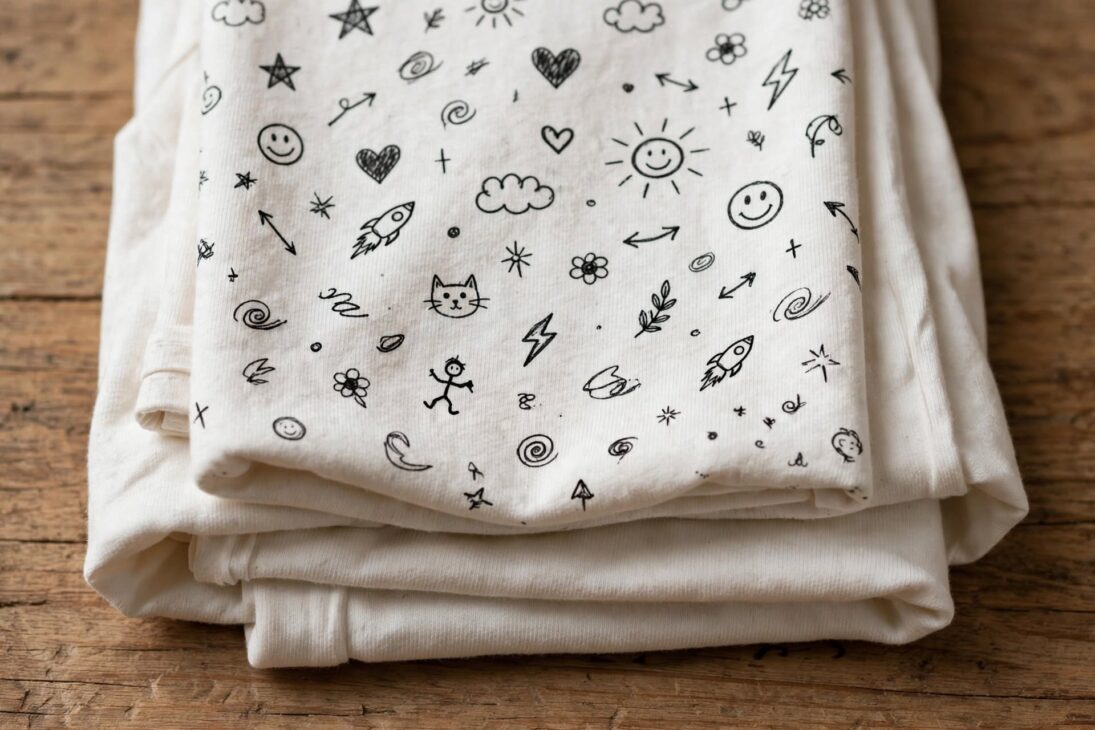
This style appeals strongly to young audiences and lifestyle apparel brands. Keep the layout clean by leaving open space around your central sketch so the garment fabric color breathes naturally.
2. Surreal Media Collages
Surreal collage designs combine contrasting images like vintage portrait photos, tropical flowers, outer space textures, and torn paper borders into one graphic composition.
Layering unexpected visual elements creates a dreamlike graphic that invites viewers to take a closer look. You can mix black-and-white photography with bright accent colors for strong visual contrast.
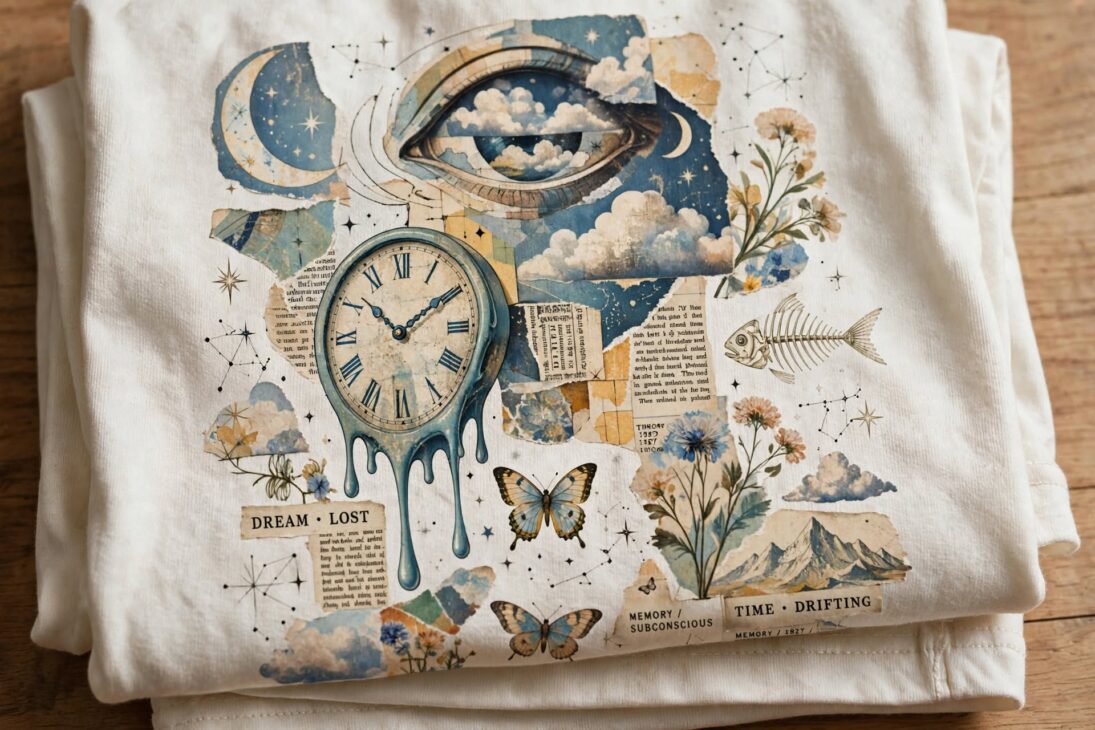
Use digital design tools to blend photographic textures with vector shapes. This editorial style works exceptionally well for music merchandise and street fashion apparel lines looking for an artistic edge.
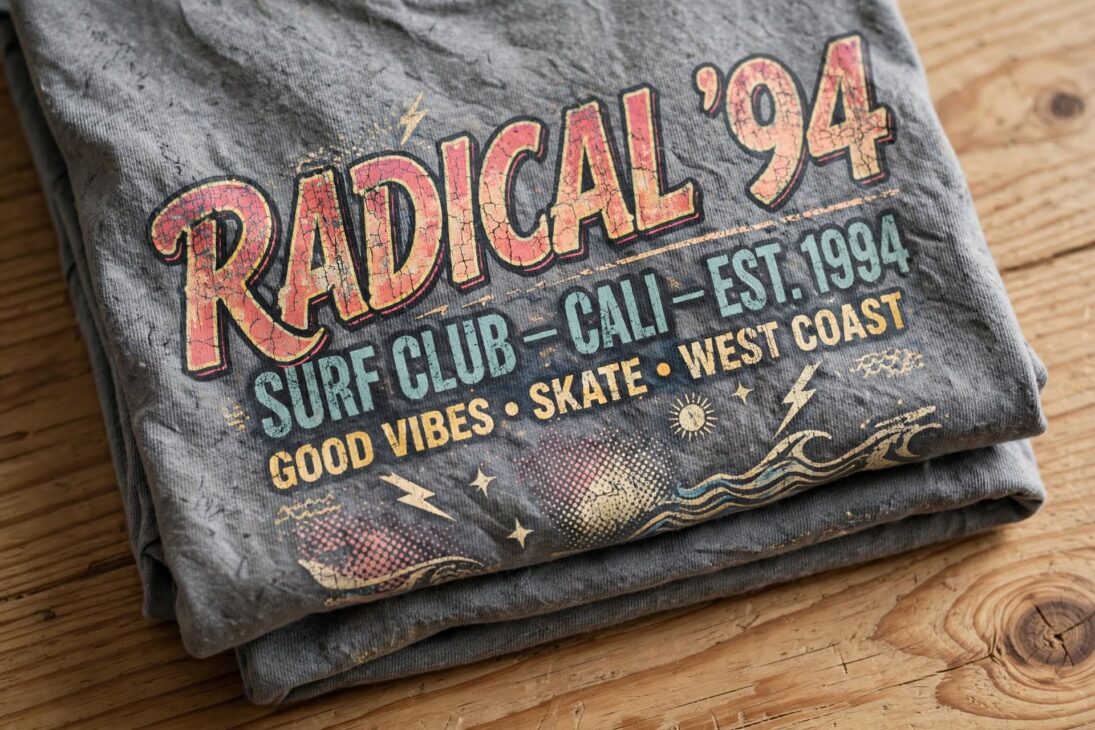
3. Retro 90s Vintage Typography
Nostalgic 1990s typography features puffy bubble letters, bold drop shadows, and bright color gradients. These retro lettering styles evoke warm feelings of classic street culture and throwback athletic wear.
Choose thick serif or wavy display fonts and curve the text along an arch above a central graphic element. Adding distressed grunge textures makes the print look like an authentic thrift store find.
Pair retro typography with washed neutral shirt colors like heather gray, faded black, or washed navy to complete the authentic vintage appearance.
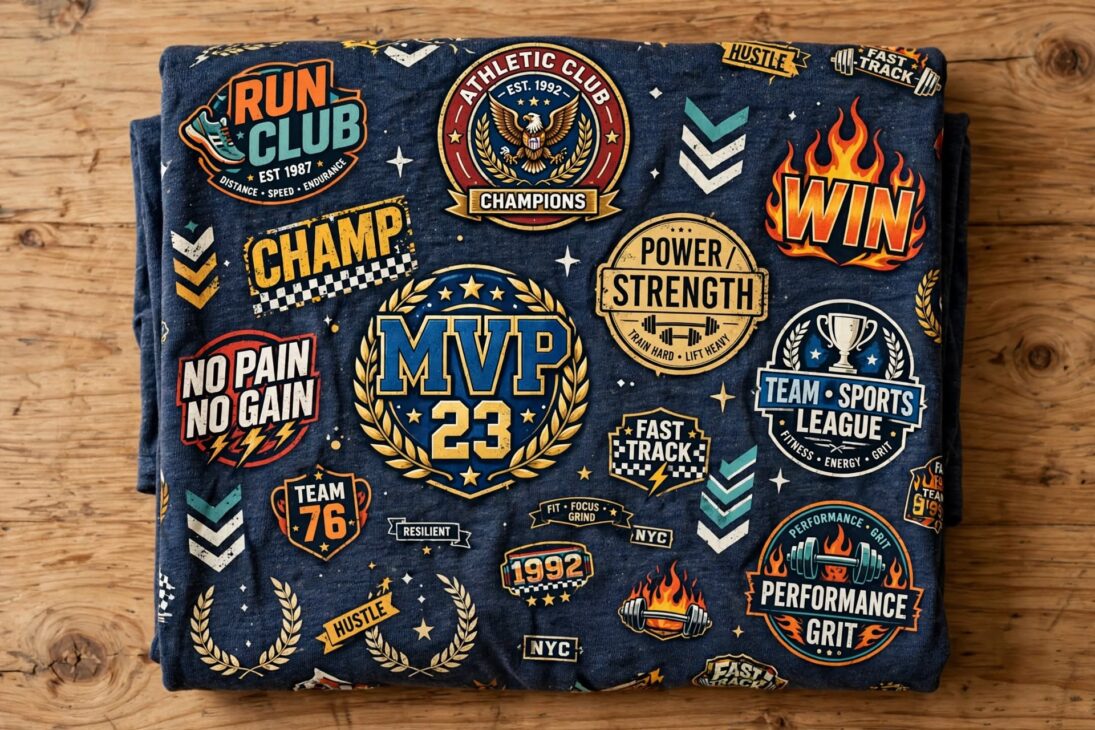
4. Maximalist Athletic Graphic Badges
Maximalist sports graphics use heavy block typography, varsity crests, athletic stripes, and bold numbering reminiscent of classic college sportswear.
Unlike subtle minimalist prints, this trend fills the chest area with oversized crests and stacked text blocks. High-contrast color combinations like forest green with gold or navy with cream demand attention.
Print these high-energy graphic badges across heavyweight cotton tees for a modern streetwear look that feels athletic and bold.
5. Botanical Line Art Illustrations
Botanical line art uses delicate single-line drawings of wildflowers, fern fronds, eucalyptus leaves, or celestial moon phases.
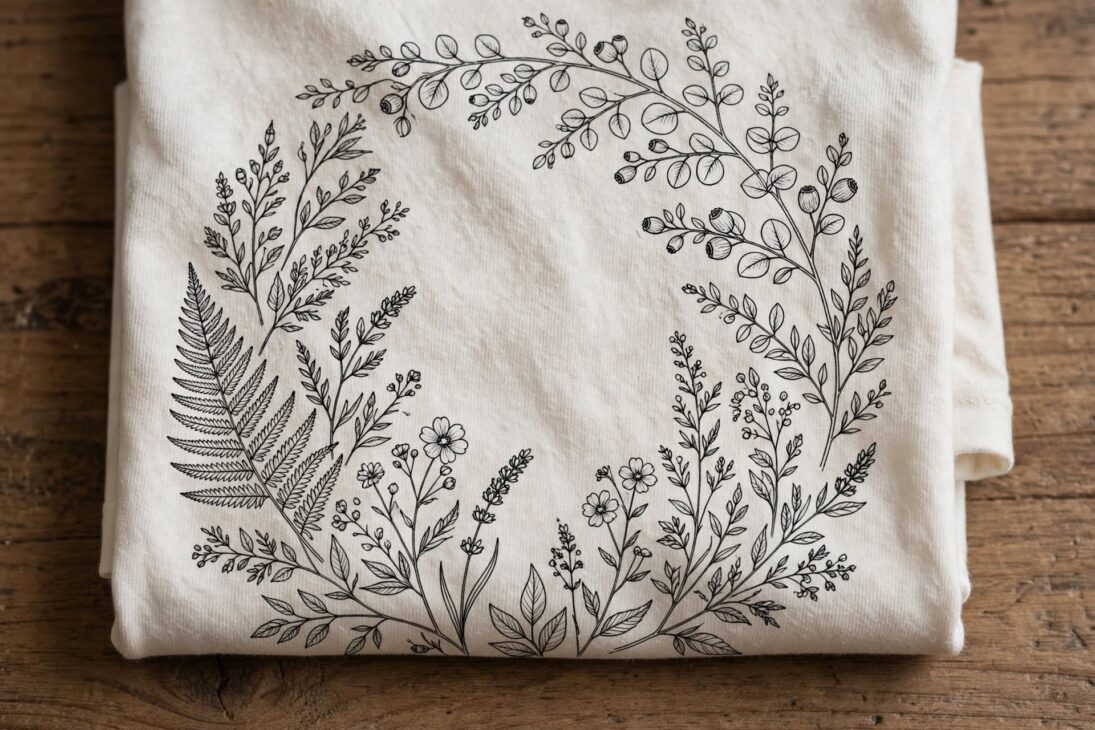
Fine black line work printed on cream, sage green, or muted terracotta fabric creates a refined botanical style. The simplicity of thin lines allows for clear detail without feeling cluttered.
This minimalist approach is ideal for eco-friendly clothing lines, wellness brands, and casual everyday wear that values subtle elegance.
6. Food Art Culinary Prints
Culinary graphics display favorite foods, coffee cups, cocktail recipes, or retro pantry cans. Food art brings a playful sense of fun to graphic tees.
Detailed illustrations of espresso cups, ramen bowls, or sardine tins pair warm nostalgic colors with clever caption text.
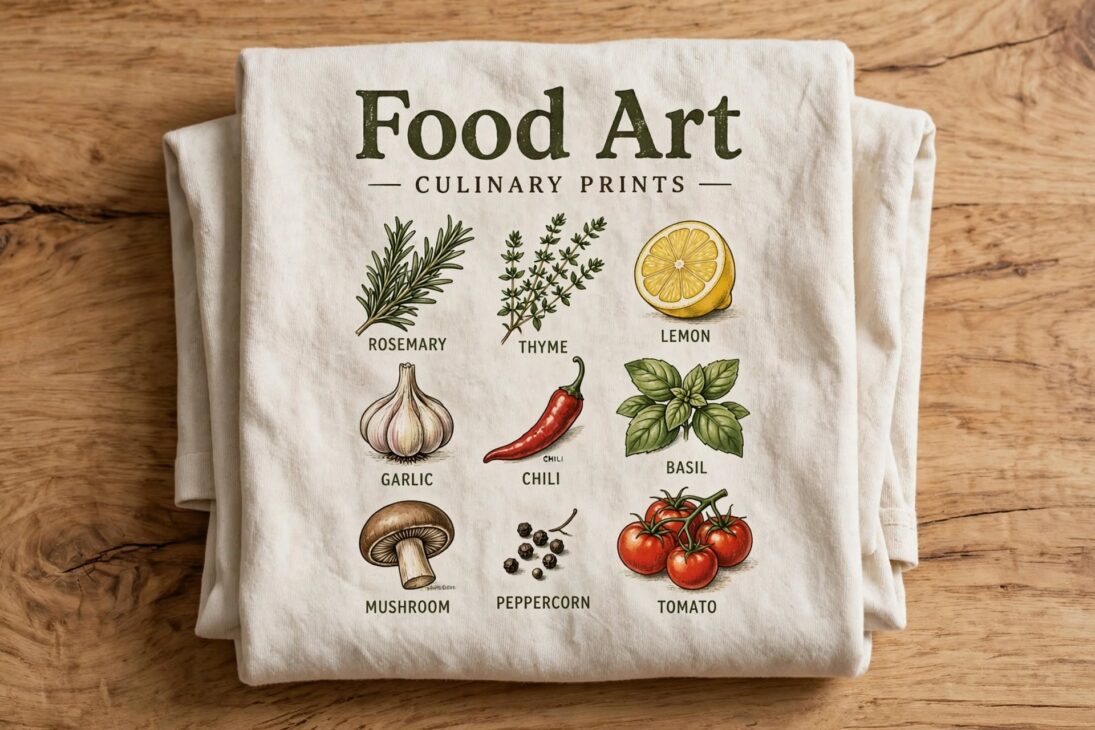
Food-themed designs make great conversation starters and gifts for food lovers. Stick to three or four main print colors to keep production costs manageable while maintaining crisp contrast.
7. Minimalist Quote Typography
Minimal text designs rely on simple, well-spaced typography to deliver a clear message. A single meaningful phrase printed in a clean sans-serif font makes a quiet statement.
Placement plays a major role in minimalist text design. Positioning small text on the left chest pocket area or vertically along the spine gives the shirt a contemporary boutique finish.
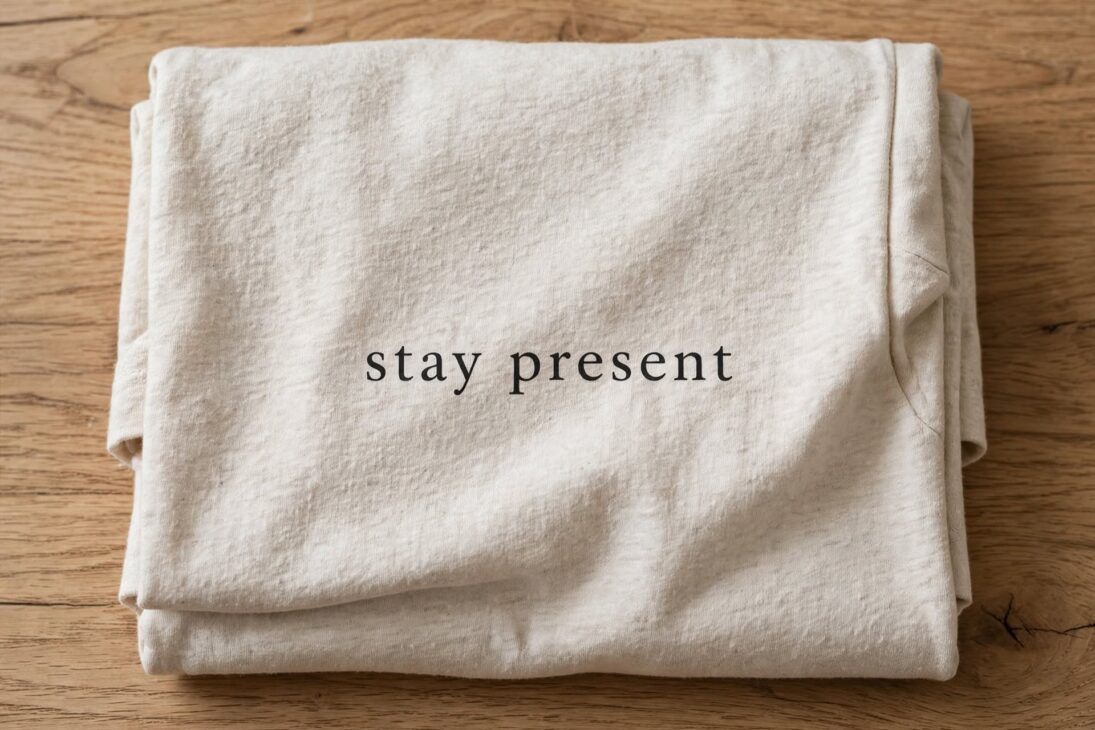
Focus on clear typography hierarchy, generous letter spacing, and crisp contrast between ink color and fabric color for maximum legibility.
8. Acid-Wash Vintage Band Graphics
Classic rock band tee aesthetics use lightning bolts, skull motifs, eagles, and distressed lettering printed over heavy dark garments.
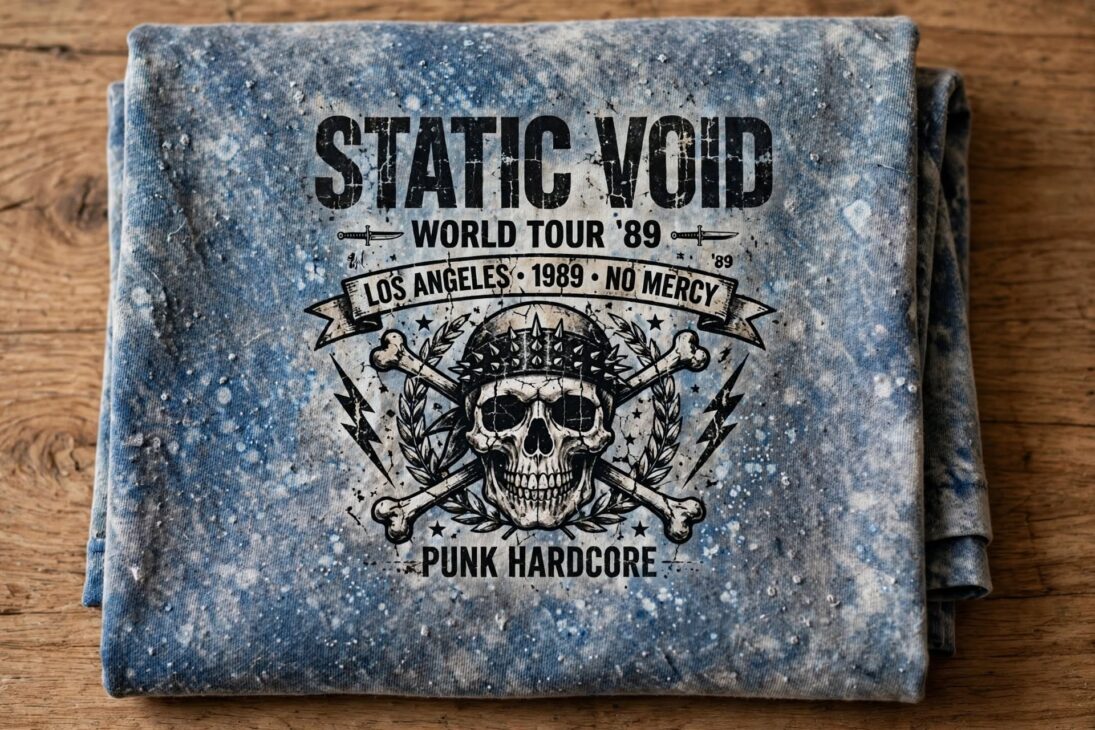
Applying simulated distress filters softens the ink print, giving new custom shirts a broken-in, comfortable look right out of the box.
These bold graphic styles look best when printed on acid-wash, mineral-wash, or garment-dyed cotton shirts for an authentic worn-in feel.
9. Abstract Geometric Pattern Blocks
Abstract geometric designs arrange colorful shapes, arcs, lines, and color blocks into modern artistic compositions.
Mid-century modern art and Bauhaus architecture heavily inspire this style. Combining muted mustard yellow, dusty blue, and terracotta red creates a balanced visual palette.
Abstract patterns appeal to design enthusiasts looking for wearable art that avoids traditional logo branding while looking modern and creative.
10. Y2K Metallic Chrome Lettering
Y2K-inspired designs bring back liquid chrome effects, shiny metallic reflections, and futuristic shapes popular in the early 2000s era.
Render your text with realistic silver glints, glass reflections, and three-dimensional bevels to make the graphic jump off the fabric.
Metallic chrome graphics pair well with dark black tees, night-out streetwear, and electronic music event merchandise.
11. Cute Mascot Character Badges
Mascot designs feature friendly illustrated characters like cartoon mushrooms, happy animals, or retro coffee cup mascots with thumbs-up poses.
Adding a cheerful character badge to your brand gives your apparel instant personality and charm. Outline the mascot with bold black lines and clean fill colors.
Mascot tees are popular across youth brands, casual coffee shops, and creative studios building recognizable merchandise with broad appeal.
12. Vintage Travel Poster Graphics
Vintage travel designs feature scenic mountain landscapes, tropical beach horizons, and national park badges styled after classic mid-century travel posters.
Layering sunburst gradients, palm silhouettes, and retro typography creates an adventurous aesthetic that appeals to outdoor enthusiasts.
Use muted retro color schemes like sage, ochre, and warm rust on washed cotton fabric to evoke nostalgic vacation memories.
13. Cyberpunk Neon Line Art
Cyberpunk graphics blend glowing neon linework, futuristic grid layouts, and Japanese kanji typography for an urban nocturnal vibe.
Printing bright magenta, cyan, and electric violet inks onto pitch-black cotton tees generates dramatic visual contrast.
This futuristic aesthetic is widely popular among gaming apparel brands, night events, and tech enthusiasts seeking bold graphic clothing.
14. Monochromatic Sketch Portraits
Monochromatic sketch designs feature detailed single-color line drawings of classical statues, architectural arches, or expressive faces.
Using one ink color, such as deep charcoal on off-white cotton, delivers a fine-art look while keeping screen printing setup simple.
This sophisticated graphic style bridges high-art concepts with everyday wearable streetwear, making it a flexible option for modern brands.
Frequently Asked Questions
What is the best file format for printing t-shirt designs?
High-resolution PNG files with translucent backgrounds (at least 300 DPI) are standard for direct-to-garment and screen printing.
How many colors should I use in a t-shirt graphic?
For screen printing, limiting your design to 1 to 4 solid colors reduces setup costs. For direct-to-garment (DTG) printing, you can use unlimited colors and gradients.
Where is the best placement for a t-shirt graphic?
The most popular placements are full center chest (10×12 inches), left chest pocket (3.5×3.5 inches), center back, and sleeve prints.
Conclusion
Creating memorable t-shirt designs comes down to matching the right visual style with your audience’s personal taste. Whether you embrace hand-drawn doodles, bold vintage 90s typography, or botanical line art, keeping your layouts clean and intentional ensures your apparel stands out. Experiment with font pairings, color palettes, and garment colors until you find a winning combination. With print-on-demand technology readily available, bringing your custom t-shirt ideas to life has never been easier.
References
- Printful. “15 T-Shirt Design Trends for 2026.” 2026. https://www.printful.com/blog/design-trends
- Tapstitch. “Best T-Shirt Design Ideas for 2025.” 2025. https://www.tapstitch.com/blog/post/t-shirt-design-ideas
- Graphic Design Junction. “Modern Graphic Apparel and Print Trends.” 2025. https://www.graphicdesignjunction.com/tshirt-design-trends
- Canva Design School. “T-Shirt Design Tutorial for Beginners.” 2026. https://www.canva.com/learn/t-shirt-design-guide

jessy
Jessy Grace has spent over 5 years researching and writing about household energy, covering everything from gas and electricity tariffs to appliance efficiency and smart meter technology. With a background in [energy consulting / utilities journalism / consumer finance], [he/she/they] specializes in breaking down complex tariff structures, regulatory changes, and cost-saving strategies into practical advice homeowners can actually use. [Author Name]'s work draws on data from official regulators, utility providers, and independent consumer bodies to ensure every guide is accurate and up to date. When not writing, [he/she/they] tests energy-saving products firsthand and stays close to industry shifts, from renewable tariffs to price cap changes, to keep readers ahead of the curve.