

Quick answer: The 2026 Ford F-250 diesel runs the 6.7L Power Stroke, rated at 475 horsepower and 1,050 lb-ft of torque, or the High Output version at 500 horsepower and 1,200 lb-ft. It holds about 13 quarts of oil (15 quarts on 2023-and-newer trucks), needs an oil change every 7,500 to 10,000 miles, and can tow up to 23,000 pounds with the right setup. Staying ahead of oil, fuel filter, and DEF service is what keeps these engines running past 300,000 miles.
The Power Stroke diesel in the F-250 is built to work hard, but it still needs the right care to hold up. Skip an oil change or ignore a fuel filter warning, and you can turn a million-mile engine into a shop visit. Here’s what actually matters: the real capacities, the maintenance intervals Ford recommends, and the towing numbers you can count on.
| Spec | Detail (2026 F-250, 6.7L Power Stroke) |
| Horsepower | 475 hp (standard) / 500 hp (High Output) |
| Torque | 1,050 lb-ft / 1,200 lb-ft |
| Max conventional towing | Up to 20,000-22,000 lb |
| Max 5th-wheel/gooseneck towing | Up to 23,000 lb (High Output) |
| Max payload (diesel) | Up to 4,048 lb |
| Transmission | TorqShift 10-speed automatic |
| Fluid or Filter | Capacity / Interval |
| Engine oil (2011-2022 trucks) | ~13 quarts, change every 7,500-10,000 miles |
| Engine oil (2023-and-newer trucks) | ~15 quarts, same interval |
| Engine oil spec | Must meet Ford WSS-M2C171-F1 (API CJ-4 minimum) |
| Fuel filters (chassis + engine) | Replace every 10,000-15,000 miles, or sooner if warned |
| DEF (diesel exhaust fluid) | Refill when the dash warns you; running dry limits engine power |
| Crankcase ventilation (CCV) filter | Every 30,000-40,000 miles |
| Transmission fluid (TorqShift 10-speed) | Check per dipstick range; use Mercon ULV, don’t mix Mercon types |
Power Stroke torque climb by generation (F-250/F-350)
7.3L
500 lb-ft
6.0L
570 lb-ft
6.4L
735 lb-ft
6.7L Early
800 lb-ft
6.7L HO Now
1,200 lb-ft
How much oil does the F-250 diesel take?
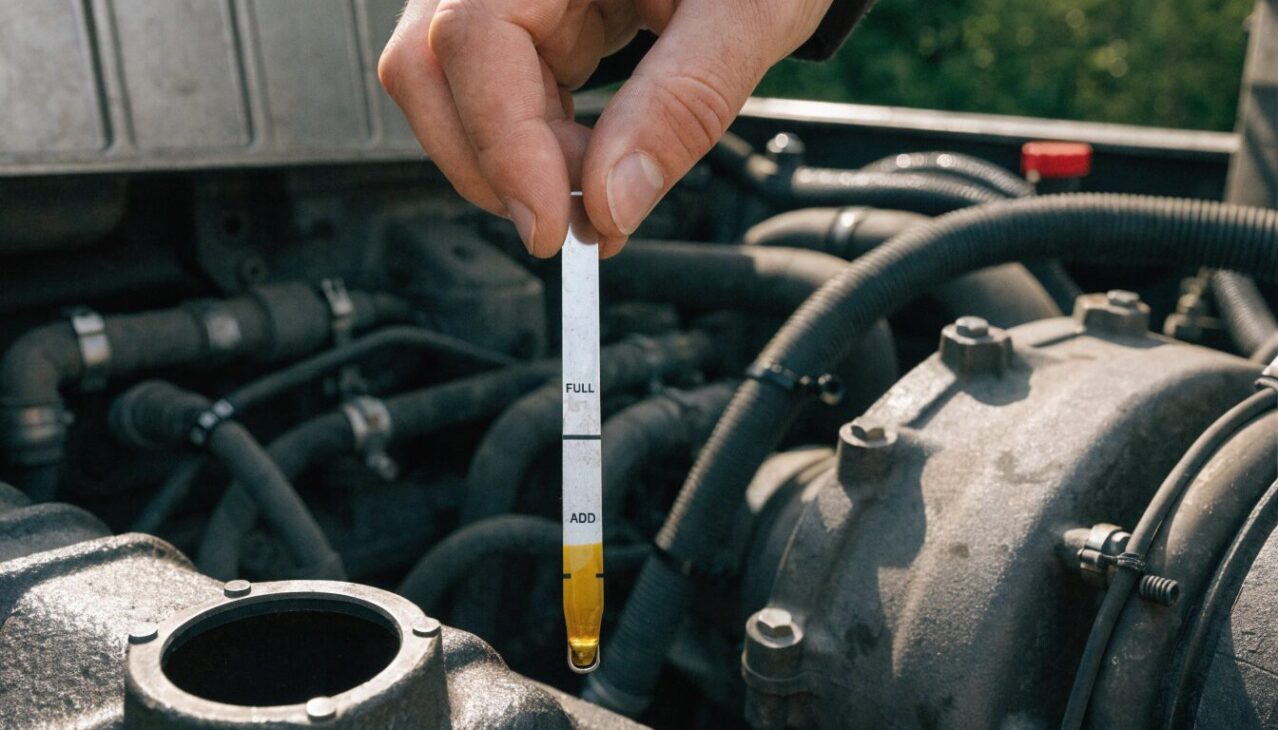
The 6.7L Power Stroke holds about 13 quarts of oil in trucks built from 2011 through 2022, and about 15 quarts in 2023-and-newer models. That’s a lot more than a gas engine, mostly because the 6.7L uses a bigger sump to handle sustained towing heat. Ford requires oil that meets the WSS-M2C171-F1 spec, at minimum API CJ-4. Not every oil labeled API CK-4 actually meets that Ford spec, so check the bottle carefully instead of assuming any diesel-rated oil will do. Using the wrong oil can lead to faster wear, fuel dilution, and a clogged diesel particulate filter (DPF), which is an expensive problem to fix.
How often should you change the oil on a 6.7L Power Stroke?
Ford says not to exceed 10,000 miles between oil changes under normal driving. But most Power Stroke owners and shops recommend 5,000 to 7,500 miles if you tow often, make lots of short trips, idle a lot, or drive in dusty or mountain conditions. Those situations count as “severe duty,” and they wear oil out faster than the dashboard’s oil-life monitor always accounts for. If you want to know exactly where your oil stands, an oil analysis is the most reliable way to check for fuel dilution and contamination before it becomes a real problem.
What maintenance does the fuel system need?
The 6.7L Power Stroke uses two fuel filters, one at the engine and one closer to the tank, and both should be replaced roughly every 10,000 to 15,000 miles. Water is the real enemy here. Diesel fuel picks up condensation over time, and if enough water reaches the injectors, it can cause serious damage fast. That’s why the truck has a “water in fuel” warning light. Don’t ignore it. Drain the fuel-water separator as soon as you see that message, not on your next scheduled visit. If you run biodiesel blends, keep in mind they don’t store well past three months, so don’t let biodiesel sit in the tank for a long stretch of time.
What happens if you let the DEF tank run dry?
Running out of diesel exhaust fluid (DEF) will cut your engine’s power and eventually limit your top speed until you refill it. DEF is part of the emissions system that turns harmful exhaust gases into nitrogen and water vapor. The truck starts warning you well before the tank runs empty, so top it off as soon as the dash tells you to. It’s a cheap fluid and an easy top-off, but ignoring the warning can leave you stuck with a truck that won’t go faster than a walking pace until you add more.
How much can a Ford F-250 diesel actually tow?
The standard 6.7L Power Stroke tows up to 20,000 pounds conventionally, and the High Output version pushes that to around 22,000 pounds. With a fifth-wheel or gooseneck setup, the High Output engine can reach a maximum of 23,000 pounds, which is the top towing rating in the whole F-250 lineup. Torque is what makes this possible more than horsepower. The High Output engine hits its full 1,200 lb-ft at just 1,600 RPM, so it pulls hard right from a stop instead of needing to rev up first. Keep in mind these are maximum ratings tied to a specific cab, bed, and axle setup, so your actual truck’s number could be lower. Always check the yellow towing sticker inside your driver’s door for the real figure that applies to your exact configuration.
Does towing more mean less payload?
Yes, in a sense. The diesel engine itself weighs more than the gas V8 options, so the max diesel payload tops out around 4,048 pounds, compared to as much as 4,246 pounds with the gas 7.3L V8. If you mostly haul heavy gear in the bed rather than tow a trailer, a gas engine might actually carry more weight for you. But if long-distance towing is your priority, the diesel’s torque advantage usually wins out, since it pulls big loads with far less strain on the engine.
What are the best habits for keeping a Power Stroke running long-term?
Stick to the oil and filter schedule, use fluids that meet Ford’s exact specs, and don’t ignore dashboard warnings. Those three habits cover most of what keeps a 6.7L Power Stroke running past 300,000 miles. On top of that, let the engine warm up before towing heavy loads, and let the turbo cool down for a minute after a hard pull before shutting the engine off. Also give the DPF (diesel particulate filter) a chance to complete its regeneration cycle instead of shutting the truck off mid-cycle, since interrupting regen too often can lead to buildup and costly filter replacement down the road.
Frequently Asked Questions
Which Power Stroke engine has the best reputation for reliability?
The 6.7L Power Stroke, built since 2011, is widely seen as the most reliable modern Power Stroke, far more dependable than the 6.0L or 6.4L that came before it. It doesn’t need an expensive “bulletproofing” kit to hold up long-term the way those earlier engines often did.
Can I mix different transmission fluid types in the TorqShift transmission?
No, Mercon, Mercon V, and Mercon SP or LV are not interchangeable and should never be mixed. Always check your owner’s manual for the exact fluid your specific model year calls for before adding or changing transmission fluid.
What counts as “severe duty” for maintenance purposes?
Severe duty includes frequent towing, lots of idling, short trips where the engine never fully warms up, off-road or 4-wheel-drive use, and running biodiesel blends. If any of those describe your driving, shorten your maintenance intervals instead of sticking to the standard schedule.
Is the High Output Power Stroke worth the extra cost?
It depends on how you use the truck. The High Output engine makes the most sense for serious towing, like large fifth-wheels or horse trailers, or for commercial and ranch use where the truck works hard every day. If you tow occasionally and lighter loads, the standard 6.7L Power Stroke already offers plenty of torque for most needs.
References
- DieselHub. (2026). 6.7 Power Stroke maintenance schedule & service info.
- DieselHub. (2026). 6.7 Power Stroke oil change guide.
- Sinister Diesel. (2025). Oil maintenance on a 6.7 Powerstroke.
- Hotshot’s Secret. (2026). Ford 6.7 diesel Powerstroke oil, coolant & other capacities.
- Ron Tirapelli Ford. (2026). 2026 Ford Super Duty F-250 engine & towing options.
- J.C. Lewis Ford. (2026). 2026 Ford F-250 Super Duty diesel overview.
- Santa Maria Ford. (2026). Ford Super Duty F-250 towing and payload guide.
- Jay Malone Ford. (2026). 2026 Ford Super Duty engines explained.
- Wikipedia. (2026). Ford Power Stroke engine

jessy
Jessy Grace has spent over 5 years researching and writing about household energy, covering everything from gas and electricity tariffs to appliance efficiency and smart meter technology. With a background in [energy consulting / utilities journalism / consumer finance], [he/she/they] specializes in breaking down complex tariff structures, regulatory changes, and cost-saving strategies into practical advice homeowners can actually use. [Author Name]'s work draws on data from official regulators, utility providers, and independent consumer bodies to ensure every guide is accurate and up to date. When not writing, [he/she/they] tests energy-saving products firsthand and stays close to industry shifts, from renewable tariffs to price cap changes, to keep readers ahead of the curve.