

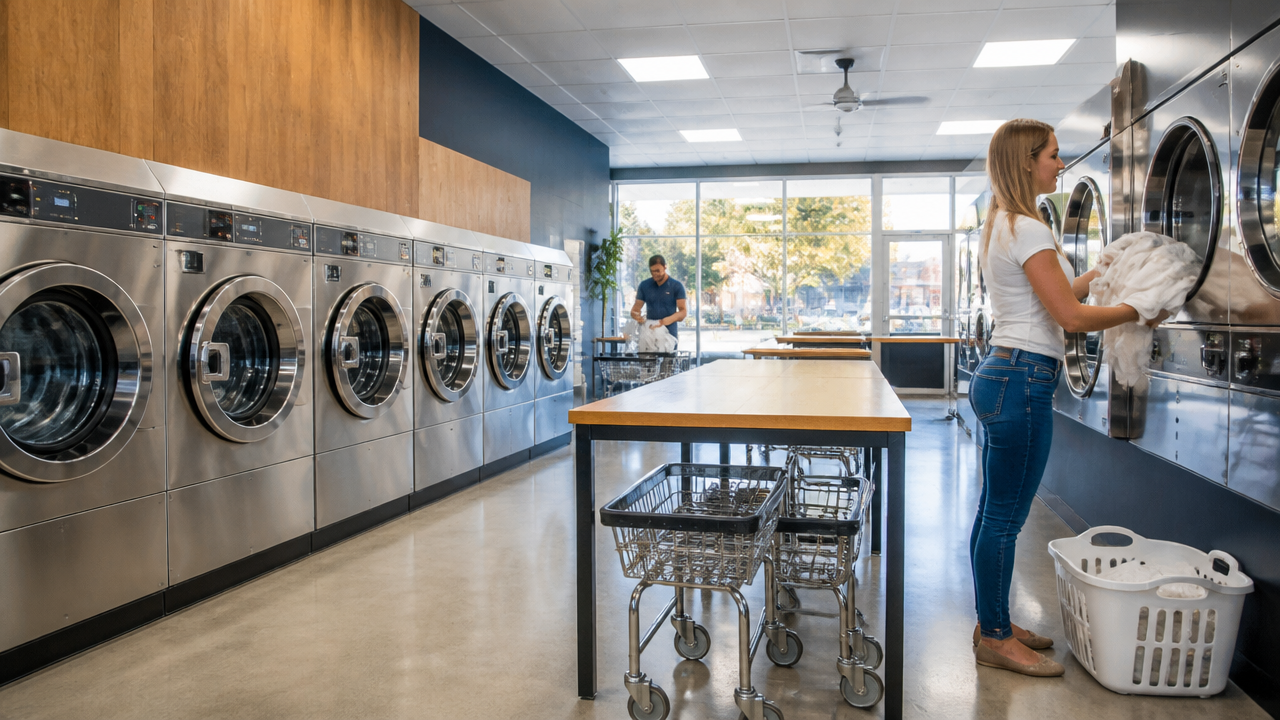
What makes a truly great self-service laundry business stand out from every other neighborhood laundromat you have visited? You need a clear plan to launch a self-service laundry business effectively, whether you are preparing for a busy summer season or just want a steady stream of local income. Starting a laundry business requires careful attention to detail, from selecting the right equipment to understanding local zoning laws. Whether you are aiming for a compact setup or a larger facility, this guide helps you build a solid foundation. Let’s get your project moving in the right direction.
Quick Questions and Answers
Question: What is a self-service laundry business in 24 hours? Answer: It is best understood as a fast-start tutorial for planning and launching a self-service laundromat, not a literal one-day construction project. The core idea is to define the business model, pick a location, secure legal setup, buy the right machines, and open with a simple, customer-friendly operating system.
Question: Can you start a laundromat business in 24 hours? Answer: Not from scratch in a literal sense, because the common startup estimates and launch steps show that laundromats usually require major capital, permits, location work, and equipment installation. In practice, 24 hours is enough time to build a launch checklist, research the market, and prepare the first version of your business plan.
Question: What tools are needed for a self-service laundromat? Answer: The main equipment is high-efficiency washers and dryers, plus coin- or card-operated payment systems and vending machines for detergent or related supplies. For 24/7 operation, security tools such as cameras, exterior lighting, controlled door access, and emergency contact signage are also recommended.
What You Need to Start
| Item | Purpose | Notes |
|---|---|---|
| Capital | Startup funding | Most setups require $200,000 to $500,000. |
| Commercial Property | Location | Must have industrial-grade zoning. |
| Heavy-Duty Machines | Core service | Include varied drum sizes for different loads. |
| Payment Systems | Revenue collection | Coin or card-operated tech is essential. |
| Security Gear | Safety | Cameras and bright lighting are mandatory. |
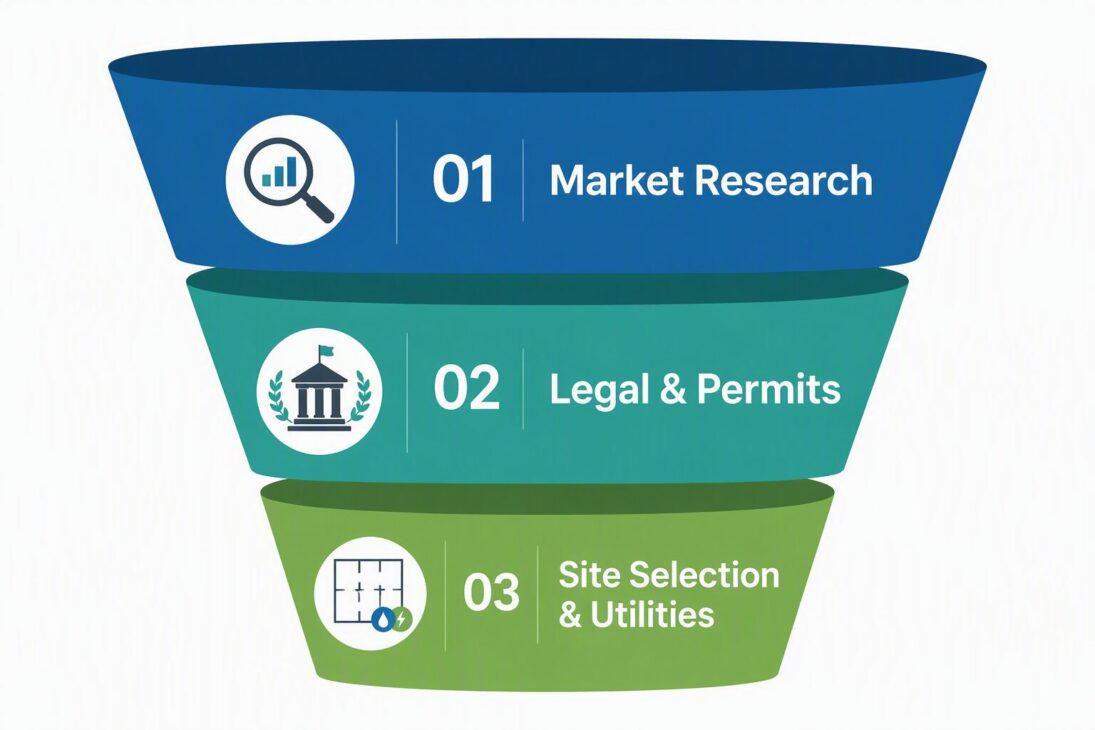
Step 1: Market Research and Machine Planning
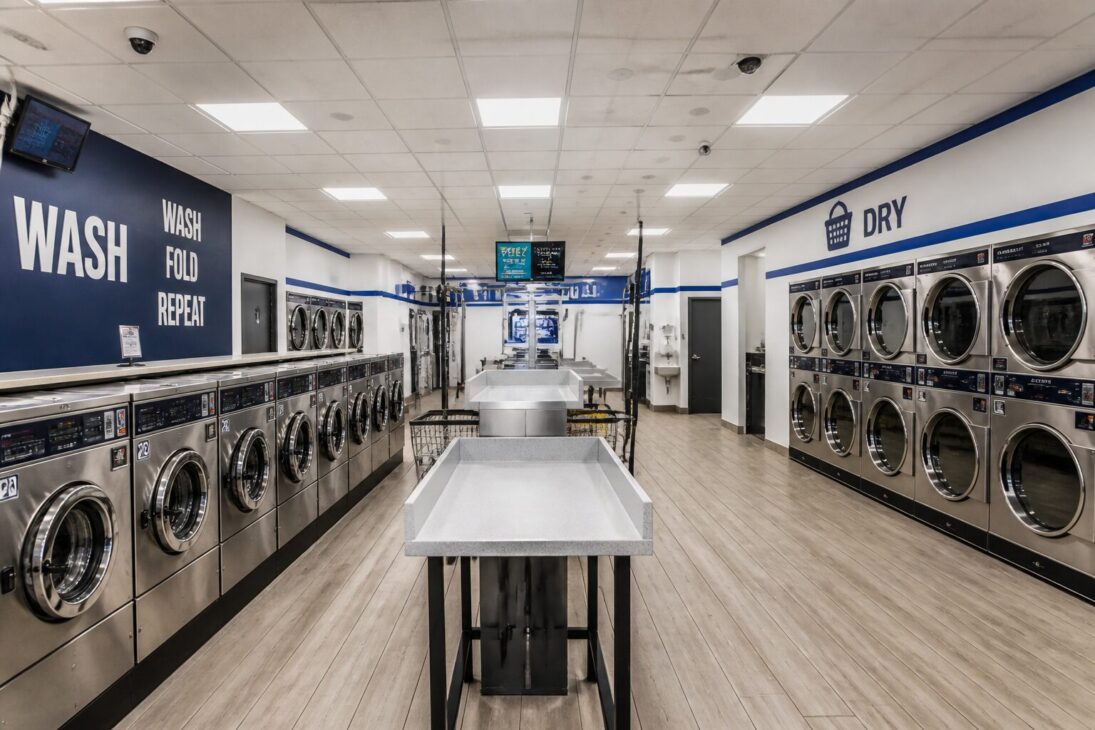
Success begins with knowing who will use your machines. PayRange notes that you should identify the top 2–3 customer segments in your area, such as busy families or students who need faster solutions for daily chores. Matching your machine mix to these groups prevents wasted space.
You want a variety of drum sizes. Small machines handle individual loads, but large-capacity units are vital for blankets and comforters. If you ignore the specific needs of local households, you risk losing customers to competitors who offer better options.
Step 2: Administrative and Legal Setup
Legal structure defines your liability. Many owners choose an LLC or a corporate structure like an SASU in France to protect personal assets. Register your business name and secure your Employer Identification Number (EIN) through the Internal Revenue Service website.
Research local permits early. You will likely need specific licenses for commercial laundry operations and wastewater management. Costs for these filings can range from $200 to $900 depending on your region. Do not skip this; operating without proper permits can lead to immediate shutdowns.
Step 3: Site Selection and Utility Verification
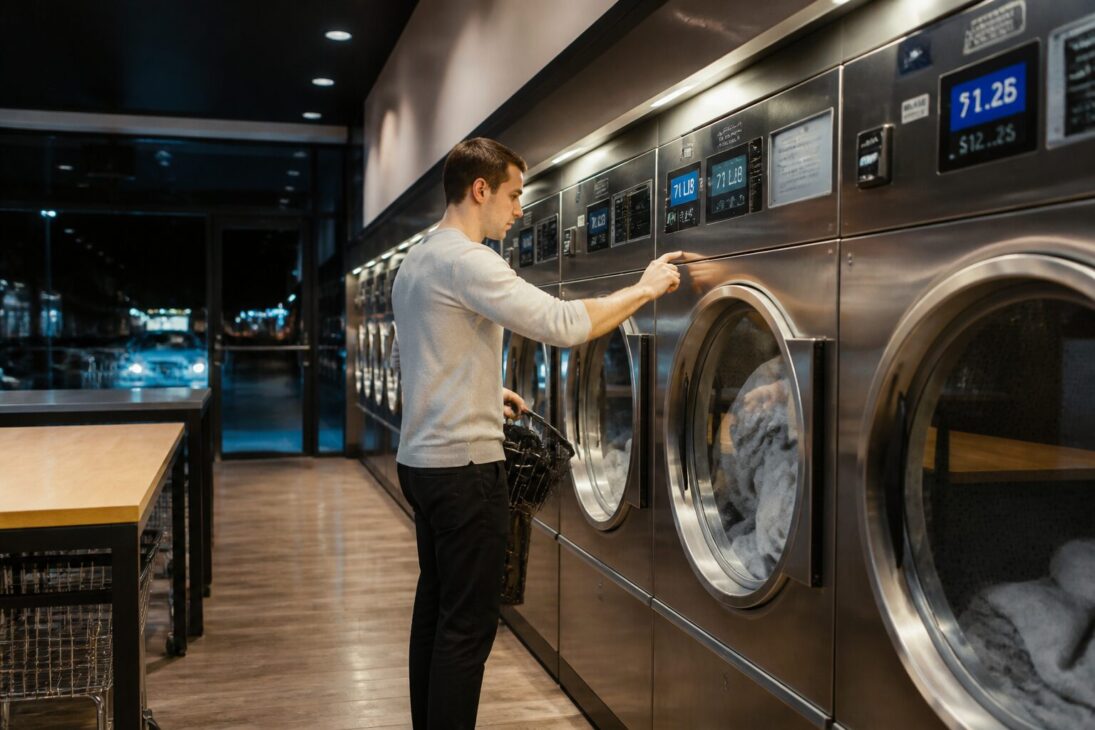
Location is your biggest profit lever. You need a space in a high-traffic zone to generate steady monthly revenue. Research suggests potential income can range from 3,000 € to 30,000 € monthly, but that depends on visibility.
Utility infrastructure is just as important as location. Your building must support high electrical loads, industrial water pressure, and complex dryer ventilation. If a landlord tells you the space is ready for a café, verify if it can handle the heavy-duty drainage and gas lines needed for commercial dryers.
Mistakes to Avoid
Security is non-negotiable for 24/7 operations. If you fail to install visible cameras covering entrances, machine rows, and parking lots, you invite trouble. Motion-activated lighting is another basic requirement to keep the area feeling safe at all hours.
Location blindness is another common trap. Picking a cheap site because of low rent often results in poor traffic and margins below 30%. Finally, do not undersize your equipment. Failing to provide enough large machines to match the needs of your neighborhood leads to quick customer churn.
Troubleshooting Common Operational Issues
If you notice usage is low, check your machine mix. You might have too many small washers while your customers really need large capacity units for bedding. Adjusting this can turn a slow month around.
Security complaints require quick action. Ensure your emergency contact numbers are prominently displayed and that cameras are in working order. If maintenance costs seem high, invest in management software to track usage. This allows you to schedule preventative maintenance before a costly breakdown stops your machines during a peak time. Sometimes, you just need a simple fix for your daily routine to keep things running.
FAQ
Q: How do you choose a location for a laundromat?
You must find a high-traffic commercial site with enough local demand to justify your machine mix. It is critical that the space is zoned correctly and can support your specific electrical, water, drainage, and ventilation requirements.
Q: Why is security important in a 24/7 laundromat?
Security is non-negotiable because your store operates when staff are not present. Essential measures include visible cameras, motion-activated lights, and controlled door access to keep customers safe and deter vandalism.
Q: Do self-service laundromats need licenses or permits?
Yes, you must choose a business structure, register it, get an EIN, and secure all local permits. This often includes specific licenses for commercial laundry operations and handling wastewater disposal.
Q: How much money does a laundromat business cost?
Startup costs for a 24/7 model usually range from $200,000 to $500,000 in the U.S. In some European markets, a first location might start for as little as 20,000 € to 40,000 €, depending on equipment quality and renovations.
Q: What should the workflow be for opening a laundromat?
Follow a logical sequence: research the market, write your plan, secure funding, pick a location, handle permits, buy gear, renovate, and conduct a soft opening. This structured approach helps you catch errors before your grand opening.
Q: What are common mistakes when starting a laundromat?
Most people fail because they underestimate capital, pick a poor site, or ignore technical utility needs. Others fail by miscalculating the machine mix, which leaves them unable to handle the actual demand of the neighborhood.
Q: What is the expected result after opening a self-service laundry?
You should expect a functioning, low-staff business that generates steady local revenue. Well-located stores with the right equipment can reach profit margins of 30% to 50% in stable markets.
My Experience With How to Start a Self-Service Laundry Business at Home
When I first looked into this, I was struck by how much of the work happens before a single machine arrives. You spend all your time in spreadsheets, zoning codes, and utility maps. It feels less like laundry and more like urban engineering. The real expert insight I discovered is that you aren’t just selling clean clothes; you are selling time and convenience to people who value their weekends. If you neglect the “human” experience—like keeping the place bright, safe, and clean—the machines won’t matter. I once visited a shop that had top-tier machines but burned-out lights in the back. Customers felt uneasy and simply didn’t return. It’s a harsh reminder that operational excellence is a daily chore, not a one-time setup. My biggest takeaway? Treat the location hunt like a detective mission; don’t just look for an empty storefront, look for a place where people already congregate. It makes the marketing work for you. Have you ever considered how much the layout of a space dictates where people spend their money?
Next Steps
Finalize your formal business plan to show lenders. Begin your equipment procurement, focusing on high-efficiency models that save on utility costs over time. Plan a ‘soft opening’ to test your workflow—let a few neighbors test the machines so you can iron out any technical bugs before your grand launch.
References
- PayRange. (n.d.). 24/7 Laundromat Business: Start & Scale with PayRange. PayRange. https://payrange.com/24-7-laundromat-business/
- LinkedIn. (2024). Starting a Coin or Self-Service Laundry Business in 2024. LinkedIn. https://www.linkedin.com/pulse/starting-coin-self-service-laundry-business-2024-what-you-need-hu1kc
- Turnsapp. (n.d.). Guide to Starting a Laundromat Business: Self-Service, Full-Service, and Hybrid Models. Turnsapp. https://www.turnsapp.com/blog/essential-guide-to-starting-a-laundromat-business-self-service-full-service-and-hybrid-models
- Businessforts. (n.d.). Self-Service Laundromat Startup Guide: Costs, Gear & Profit. Businessforts. https://businessforts.com/blog/how-to-start-a-self-service-laundry-business/
- YouTube. (n.d.). How to Start a Laundromat Business with No Money. YouTube. https://www.youtube.com/watch?v=YFaDGCTkdr8
- YouTube. (n.d.). Guide de A à Z pour ouvrir une laverie automatique. YouTube. https://www.youtube.com/watch?v=hqSsj71ZLMs
- Pulserevops. (2027). How to Start a Laundry Pickup and Delivery Service Business in 2027. Pulserevops. https://pulserevops.com/knowledge/q9738
- Arrow Machinery. (n.d.). The Complete Guide to Opening a Wash Dry Fold Laundry Business in 12 Easy Steps. Arrow Machinery. https://www.arrowmachinery.org/knowledge-base/the-complete-guide-to-opening-a-wash-dry-fold-laundry-business-in-12-easy-steps

jessy
Jessy Grace has spent over 5 years researching and writing about household energy, covering everything from gas and electricity tariffs to appliance efficiency and smart meter technology. With a background in [energy consulting / utilities journalism / consumer finance], [he/she/they] specializes in breaking down complex tariff structures, regulatory changes, and cost-saving strategies into practical advice homeowners can actually use. [Author Name]'s work draws on data from official regulators, utility providers, and independent consumer bodies to ensure every guide is accurate and up to date. When not writing, [he/she/they] tests energy-saving products firsthand and stays close to industry shifts, from renewable tariffs to price cap changes, to keep readers ahead of the curve.