

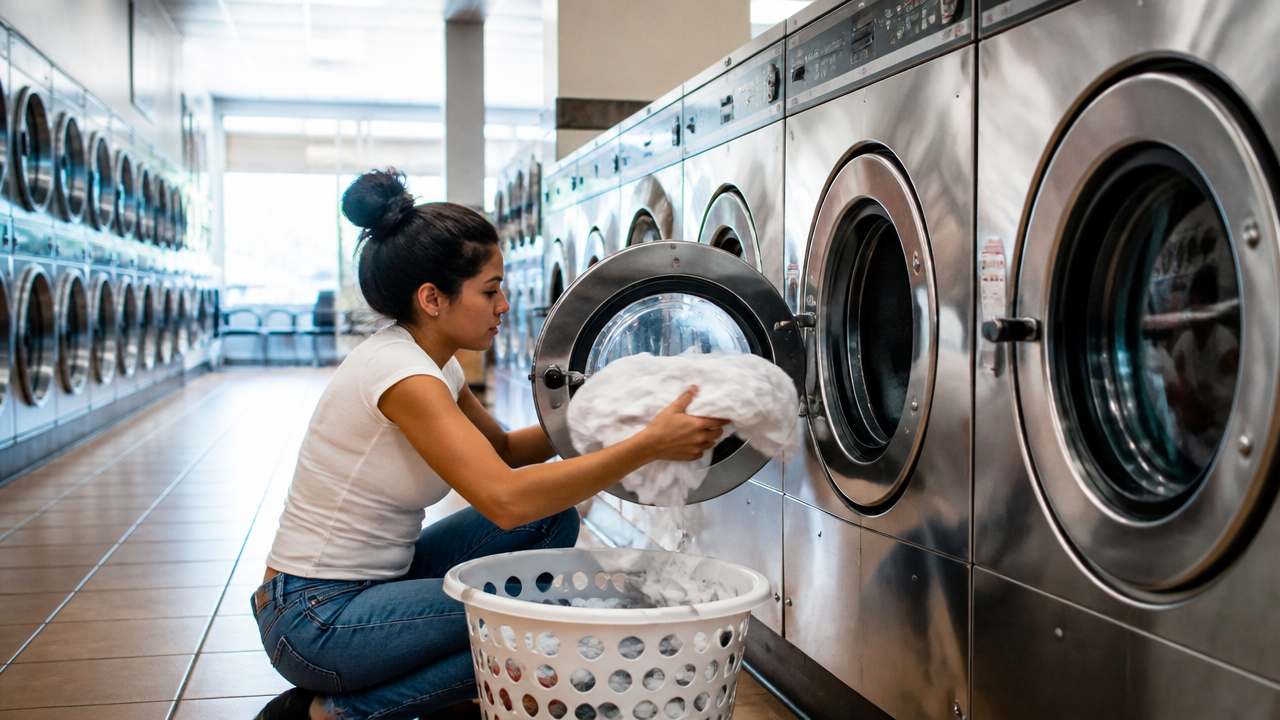
Have you ever wondered why we use the specific term laundromat for the local spot where you wash your sheets, towels, and clothing? Whether you are prepping your linens for a busy holiday season or just tackling a massive pile of socks, understanding how these facilities function makes the process feel much less like a chore. The word itself carries a history that stretches back decades. While you might visit a facility for a quick load, the business model behind the scenes is fascinating.
Quick Questions and Answers
Question: What does laundromat mean in English? Answer: A laundromat is a self-service laundry where people pay to use washing and drying machines. In American English, the word most often refers to a public place with coin-operated or pay-per-use washers and dryers. Several dictionaries also note that British English usually uses launderette or laundrette instead.
Question: Why is it called a laundromat? Answer: Dictionary sources say the word comes from a blend of laundry and automatic. Vocabulary.com and Wiktionary both connect the term to a 1940s trademark used for washing machines, which later became the common name for the type of laundry business. The name reflects the idea of automatic, machine-based laundry service.
Question: Is laundromat the same as laundrette? Answer: Yes, they usually mean the same kind of place: a public self-service laundry. The main difference is regional usage, because Collins and Dictionary.com note that launderette/laundrette is the common British term, while laundromat is standard in the United States. The service model is essentially the same.
Key Takeaways
- A laundromat is a public, self-service facility intended for those without home laundry appliances.
- The term carries a mid-20th-century history tied to Westinghouse electric innovations.
- Users should distinguish between the household laundry usage and the rare, unrelated slang usage involving illegal financial activities.
Laundromat Meaning: Core Definitions and Concepts
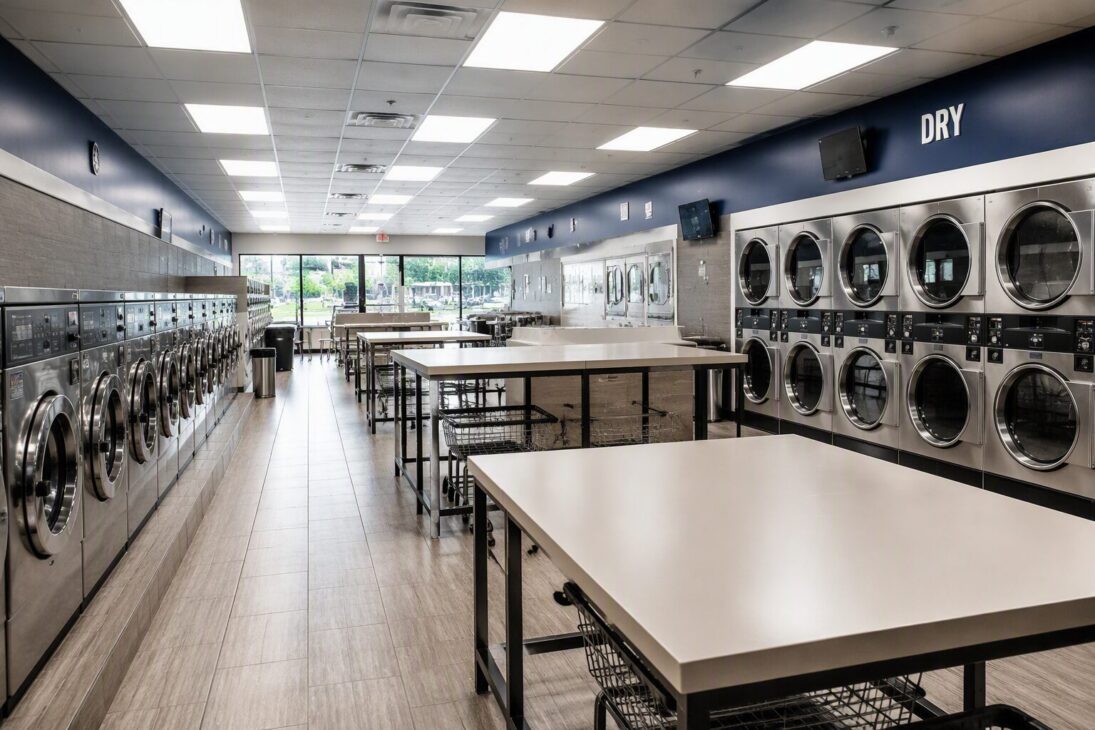
A laundromat is formally defined as a commercial, self-service establishment where the public can wash and dry clothing, towels, sheets, and other textiles. When you step inside one, you enter a space designed for efficiency. Most facilities house rows of industrial-grade machines capable of handling much larger loads than standard home units.
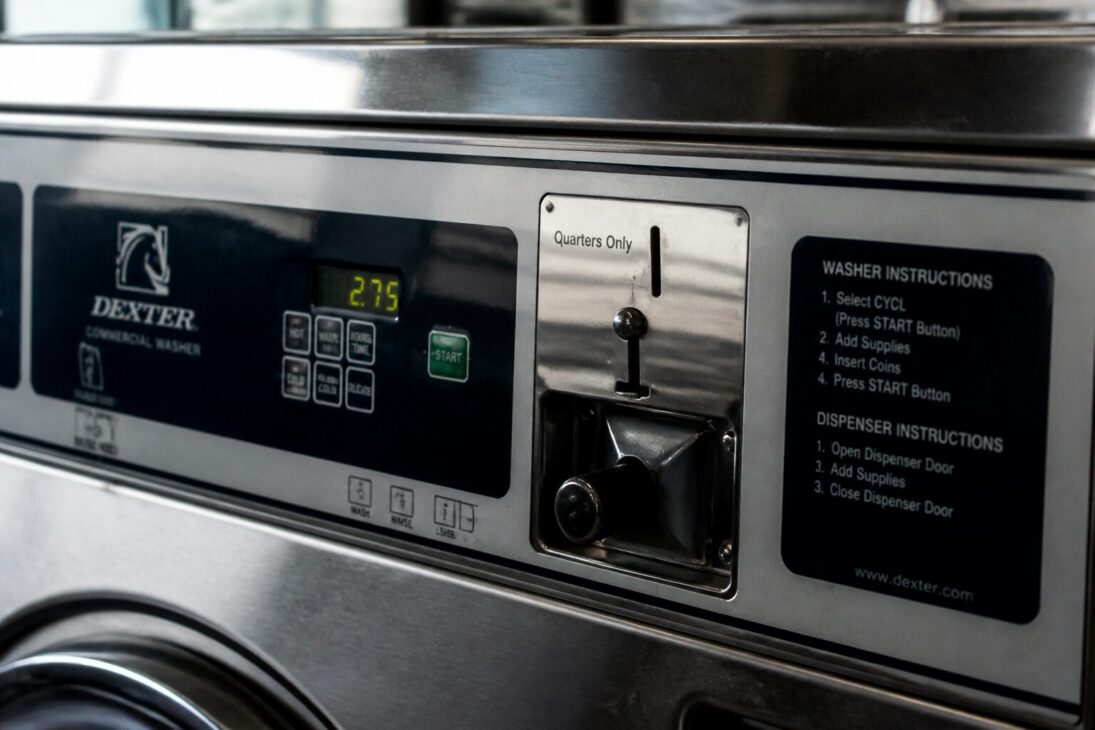
The operational core of a laundromat relies on pay-per-use machines. Traditionally, these systems required coin-operation, often demanding a specific number of quarters to start the cycle. Many modern locations have moved toward digital infrastructure. You might now use a pre-loaded card or a smartphone app to activate the machines. This shift keeps the business moving without the hassle of a heavy coin bin.
The term serves as a necessity for individuals who lack private access to washing machines or dryers at home. If you live in an apartment building without in-unit hookups, the laundromat acts as your primary laundry room. It provides the water, power, and drainage you cannot manage yourself. For those who enjoy easy recipes like egg soup while waiting for a cycle to finish, the local facility provides a brief pause in a hectic week.
Historical Origins and Etymology of the Term
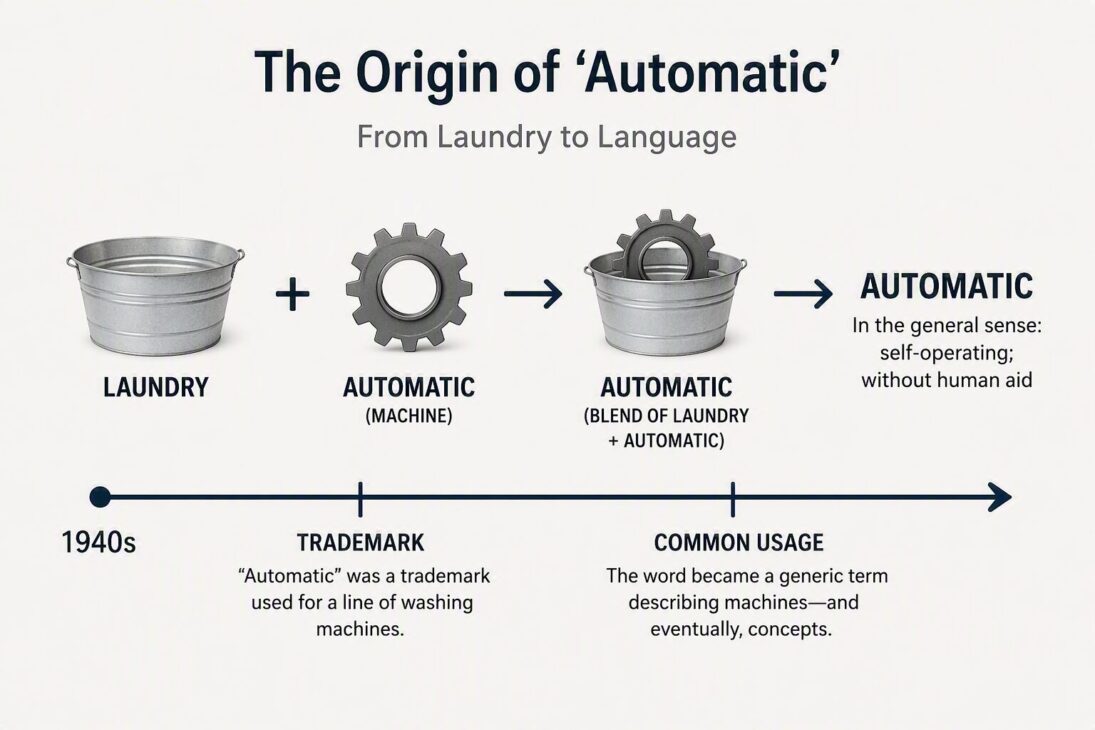
The word was created as a blend of the terms laundry and automatic to describe new self-service technology in the 1940s. It felt modern and clean. It captured the excitement of a decade defined by rapid technological change. People were eager to outsource the labor of hand-scrubbing fabrics, and these new machines provided the perfect solution.
It originated as a registered trademark of the Westinghouse Electric Corporation. Publicist George Edward Pendray is widely credited with coining the term. He wanted a name that sounded both professional and descriptive. It succeeded perhaps too well.
Like many successful product names of the era, it transitioned from a protected brand name into a genericized trademark. People stopped seeing it as a specific Westinghouse service and started calling any similar shop a laundromat. Language has a way of absorbing brand names into the common lexicon once they become ubiquitous.
Regional Differences in Terminology
While laundromat is the standard American English identifier for a public self-service laundry, this usage is not universal. Language evolves based on geography. What you call a shop in one country might sound entirely foreign in another.
In British English, the equivalent establishment is almost exclusively referred to as a launderette or laundrette. You will rarely hear a local in London say they are headed to the laundromat. They go to the launderette instead.
Despite the difference in naming conventions, the business model remains consistent across these regional variations. You pay for the temporary use of commercial-grade washers and dryers. Whether the sign says laundromat or launderette, the experience inside remains the same. You sort your colors, add your soap, and wait for the buzzer.
Semantic Context and Potential Ambiguity
While the primary meaning refers to a place for cleaning fabrics, the word has a distinct, unrelated secondary usage. Context is everything. If someone mentions a laundromat in a crime novel, they might not be talking about socks and towels at all.
In slang and criminal contexts, laundromat may be used to describe a front for money-laundering operations. This refers to the process of filtering illegal funds through a cash-heavy business to make them appear legitimate. This usage is purely metaphorical. It plays on the idea of cleaning dirty money.
Contextual awareness is required when you hear the term. The professional, civic definition is strictly tied to household maintenance and laundry services. Unless you are watching a thriller, you can safely assume the person is just trying to get their jeans clean.
My Experience With What Is a Laundromat and How Do They Work?
I remember my first time in a true commercial laundromat. I had just moved into an apartment that felt more like a broom closet, and my tiny bathroom sink was not cutting it. Walking into the local spot, I felt like a novice stepping onto a professional playing field. The noise level alone was a shock; twenty dryers humming at once creates a hum that shakes the floor.
I learned quickly that loading a machine halfway is a rookie mistake. You want that drum packed just right to be efficient, but not so full that the clothes never actually get clean. It’s a delicate balance. I also found that the “high heat” setting is not a suggestion—it is a promise. I once accidentally shrunk a favorite wool sweater, which was a painful, expensive lesson in laundry physics.
Even with the occasional mishap, I grew to appreciate the ritual. It’s one of the few places left where you can just sit, read a book, and wait for the machines. Do you have a favorite memory or a specific laundry struggle from your time spent in a local laundromat?
FAQ
Q: Are laundromats coin operated?
Traditionally, yes. Dictionary.com describes laundromats as having coin-operated washers and dryers, and Cambridge says the machines operate when coins are put in them. Some modern laundromats may use card or app payments, but the classic definition is coin-operated self-service laundry.
Q: Can laundromat mean something else?
Yes. Wiktionary lists an unrelated slang sense meaning a money-laundering operation. In normal everyday English, though, laundromat almost always means a public laundry facility. Context makes the intended meaning clear.
Q: How old is the word laundromat?
Vocabulary.com says the word was first used in the 1940s. Wiktionary also ties it to a 1940s Westinghouse trademark, which helps explain how the term spread into general use. The laundry meaning is the standard modern sense today.
Q: Is a laundromat a store or a service?
It can be described as both, depending on context. Dictionaries define it as a place or commercial establishment where people pay to wash and dry clothes, so it is a business that provides a service at a physical location. The key feature is self-service access to machines.
Q: What do people wash at a laundromat?
Britannica says laundromats are used for washing and drying clothes, towels, sheets, and similar items. In practice, people often go when they need larger-capacity machines or when they do not have a washer and dryer at home. The term is not limited to clothing alone.
Q: What is the difference between laundromat and laundry?
A laundromat is the place or business where people use machines to wash and dry clothes. Laundry is broader and can mean the clothes themselves, the act of washing clothes, or the laundry business in general. So laundromat is a specific kind of laundry facility.
Q: Where is the word laundromat used most?
The word is especially common in American English, according to Collins and Cambridge. British English more often uses launderette or laundrette. That regional difference is one of the clearest usage patterns tied to the term.
| Feature | Traditional Laundromat | Modern Laundromat | Home Laundry |
|---|---|---|---|
| Payment | Coins/Quarters | App/Card/Coins | Electricity/Water |
| Capacity | Industrial/Large | Industrial/Large | Standard/Small |
| Convenience | Travel required | Travel required | High (in-home) |
| Speed | High (many machines) | High (many machines) | Lower (one load) |
References
- Britannica Dictionary. (n.d.). Laundromat. Britannica. https://www.britannica.com/dictionary/Laundromat
- Cambridge Dictionary. (n.d.). Laundromat. Cambridge University Press. https://dictionary.cambridge.org/us/dictionary/english/laundromat
- Collins English Dictionary. (n.d.). Laundromat definition in American English. Collins. https://www.collinsdictionary.com/us/dictionary/english/laundromat
- Dictionary.com. (n.d.). Laundromat. Dictionary.com. https://www.dictionary.com/browse/laundromat
- Merriam-Webster. (n.d.). Laundromat. Merriam-Webster. https://www.merriam-webster.com/dictionary/Laundromat
- Vocabulary.com. (n.d.). Laundromat. Vocabulary.com. https://www.vocabulary.com/dictionary/Laundromat
- Wiktionary. (n.d.). Laundromat. Wiktionary. https://en.wiktionary.org/wiki/laundromat
- YourDictionary. (n.d.). Laundromat Definition. YourDictionary. https://www.yourdictionary.com/laundromat
Conclusion
- Understanding the meaning of a laundromat clarifies more than just a dictionary entry. It reveals how household routines, https://gasnas.com/how-to-make-a-5-ingredient-trader-joe-s-dinner-even-on-your-busiest-weeknights/, integrate with the public infrastructure we use every day. While the technology changes from coins to apps, the core need remains constant. You have fabrics, they need cleaning, and you need a space to get the job done. That is the essence of the laundromat.

jessy
Jessy Grace has spent over 5 years researching and writing about household energy, covering everything from gas and electricity tariffs to appliance efficiency and smart meter technology. With a background in [energy consulting / utilities journalism / consumer finance], [he/she/they] specializes in breaking down complex tariff structures, regulatory changes, and cost-saving strategies into practical advice homeowners can actually use. [Author Name]'s work draws on data from official regulators, utility providers, and independent consumer bodies to ensure every guide is accurate and up to date. When not writing, [he/she/they] tests energy-saving products firsthand and stays close to industry shifts, from renewable tariffs to price cap changes, to keep readers ahead of the curve.