


Have you ever wondered how the Social Security 2100 Act attempts to balance long-term financial stability with the need for immediate, improved retirement support? Whether you are planning your golden years or managing a household budget during the holidays, understanding how major reform proposals shape the Social Security system makes all the difference. This legislative package aims to protect our Social Security system and improve benefits for current and future generations. The Social Security 2100 Act serves as a comprehensive roadmap for updating the program for a new century. Let’s see how these proposed changes might influence your future financial security.
Quick Questions and Answers
Question: What is the Social Security 2100 Act? Answer: The Social Security 2100 Act is a proposed U.S. bill to improve Social Security benefits and strengthen program financing. Congress.gov describes it as changing benefit calculations, trust-fund administration, and beneficiary resources, while the bill text says its purpose is “to protect our Social Security system and improve benefits for current and future generations.”
Question: Who introduced the Social Security 2100 Act? Answer: The proposal is associated with Rep. John Larson of Connecticut, and later versions were introduced in the House under different Congresses. The sources identify the bill as Larson’s Social Security 2100 Act and list H.R. 4583 in the 118th Congress and H.R. 9519 in the 119th Congress.
Question: Why was the Social Security 2100 Act created? Answer: The act was created to address concerns about benefit adequacy and Social Security’s long-term financing. Supporting materials say it would increase benefits, improve the COLA, and add revenue by taxing earnings above $400,000, while Boston College’s CRR says the 2019 version was designed to cover the program’s 75-year deficit.
Key Takeaways
- The proposal introduces a 2% across-the-board benefit increase for current beneficiaries.
- It shifts payroll tax burdens by applying taxes to annual earnings exceeding $400,000.
- Key administrative reforms include eliminating the 5-month disability waiting period.
- The bill aims to repeal the Windfall Elimination Provision and Government Pension Offset temporarily.
- Supporters estimate the changes extend trust fund solvency by four years.
Social Security 2100 Act: Core Definition and Purpose
The Social Security 2100 Act is a recurring legislative proposal—seen in the 118th Congress as H.R. 4583 and in the 119th Congress as H.R. 9519—designed to protect the system and improve benefits for everyone. It functions as a multi-pronged reform package that combines direct benefit increases, revenue generation through new taxation, and administrative rule changes to address the program’s long-term solvency.
Many proponents characterize the legislation as a Sacred Trust. It focuses on keeping beneficiaries out of poverty and ensuring the long-term health of the Social Security Trust Fund. By adjusting how the program handles income and calculations, the authors intend to provide a more reliable safety net for aging Americans. You might think of it as a significant attempt to modernize a program that has not seen major structural overhauls in decades.
Benefit Expansion and Income Protections
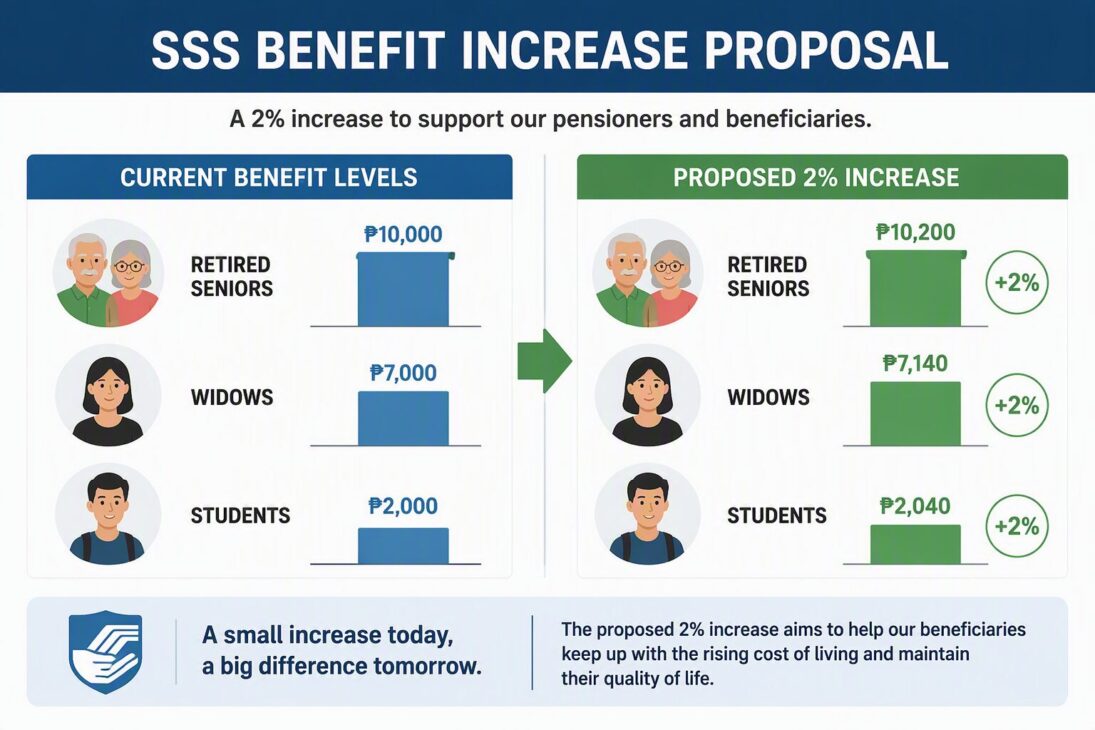
A core feature of the act is an across-the-board increase in benefits of 2% for all Social Security beneficiaries. This move aims to provide immediate financial relief to millions of retirees. The bill also looks to improve the primary insurance amount formula, temporarily raising the first tier of average indexed monthly earnings from 90% to 93%.
To combat old-age poverty, the bill targets an increase in the special minimum benefit. It sets a goal for long-serving, low-wage workers with 30 years of work to receive at least 125% of the federal poverty level. New protections for two-income households and public-service employees are also part of the plan. This includes the temporary repeal of the Windfall Elimination Provision and Government Pension Offset for the period of 2025–2034.
Disability and family support are enhanced through the elimination of the 5-month waiting period for disability benefits. Furthermore, the act restores student benefits for dependents up to age 26. These changes help families manage unexpected life transitions more effectively.
| Feature | Current Law | Social Security 2100 Act |
|---|---|---|
| Payroll Tax Cap | Applied to earnings up to a set limit | Applied to earnings over $400,000 |
| Disability Waiting Period | 5 Months | 0 Months (Eliminated) |
| Min. Benefit | Based on earnings/years | 125% of Poverty Level (for 30yr workers) |
| WEP/GPO | Applied to certain pensions | Temporarily Repealed (2025–2034) |
Financing Mechanisms and Revenue Generation
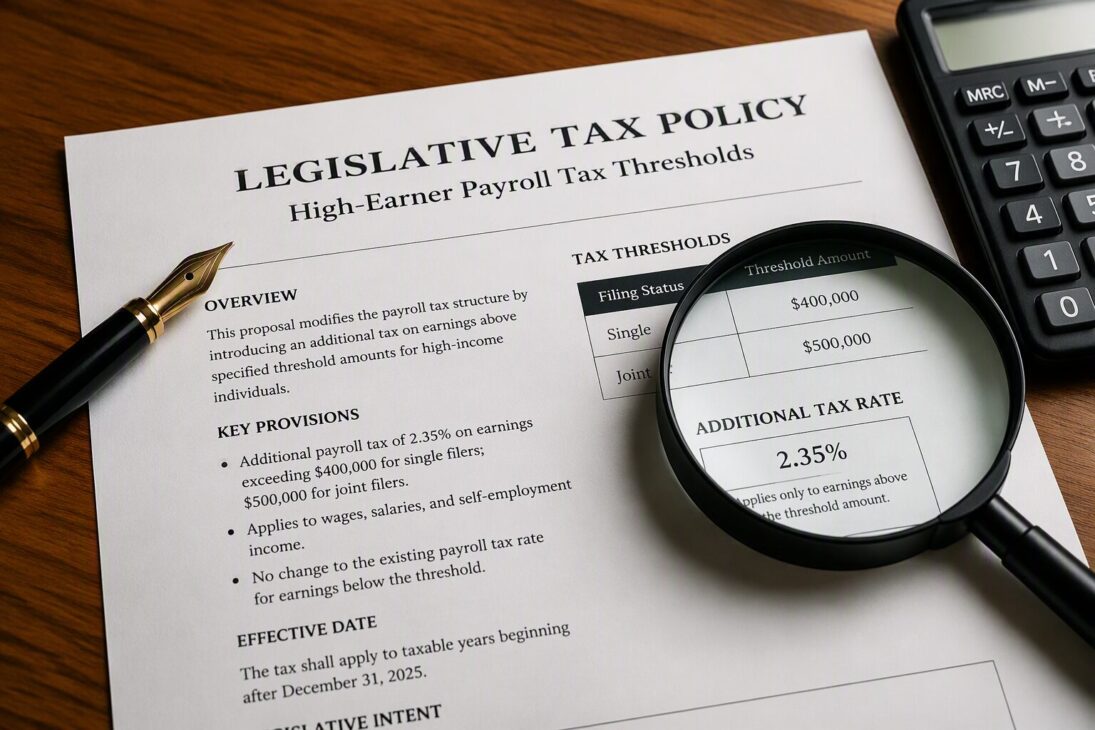
The central revenue strategy involves applying Social Security payroll taxes to annual earnings above $400,000. This ensures high-earners contribute a larger portion of their income to the system. While the current model focuses on this $400,000 threshold, historical versions, such as the 2019 iteration, proposed a gradual payroll tax increase of 0.1 percentage point per year.
That approach aimed to reach a 14.8% rate by 2043. Proponents argue these tax measures allow the program to close more than half of its long-term funding shortfall. They estimate these steps add four years of trust fund solvency. It is a balancing act between bringing in new funds and keeping the tax burden manageable for working families. You can compare this to what is a laundromat and how do they work? in terms of needing a steady, reliable flow of inputs to ensure the whole system runs without breaking down.
Administrative Reforms and Access Improvements
Beyond financial adjustments, the bill mandates improvements in program administration. It includes protections against the closure of local Social Security field offices without public hearings. This ensures that beneficiaries who rely on face-to-face assistance retain access to local support services.
The legislation also integrates caregiver credits into the benefit formula. This acknowledges the unpaid time taken out of the workforce for family caregiving duties, which often penalizes career earnings. It is a policy shift that recognizes the modern realities of caregiving in America. For those navigating complex government assistance, understanding these administrative shifts is as important as knowing how to apply for Ohio Medicaid step by step.
Challenges and Policy Debates
While supporters emphasize the benefit boosts and solvency extension, critics and research organizations like the Center for Retirement Research at Boston College highlight the shifting design of the bill across different legislative sessions. The debate over the act centers on the balance between substantially increasing revenues and the potential economic impact of raising payroll taxes.
A recurring challenge involves managing the long-term 75-year deficit while maintaining political support for tax modifications that reach into high-income brackets. Opponents often point to the potential for lower economic growth when taxes rise on high earners. Meanwhile, supporters argue the social costs of poverty among the elderly far outweigh the economic impact of these tax adjustments. It remains a polarizing topic in Congress.
My Experience With What Is the Social Security 2100 Act?
Getting into the weeds of the Social Security 2100 Act is like reading a manual for an engine that hasn’t had a tune-up since the eighties. I’ve spent time looking at the various House versions, and it’s honestly a bit dizzying to see how the numbers shift from one session to the next. One year, you’re looking at a gradual tax increase; the next, you’re staring at a flat threshold at $400,000. It’s a bit like trying to hit a moving target while wearing a blindfold.
What I find most interesting is the focus on the disability waiting period. Most people don’t realize how brutal that five-month gap is for someone who suddenly loses their ability to work. Removing that barrier feels like a no-brainer for anyone who has seen a family member struggle through it. Still, the math is the math. Can you really close a massive funding gap with a single tax bracket adjustment? The experts seem split right down the middle, which is usually the sign of a complicated, high-stakes bill. Do you think raising the tax cap is the fairest way to save the program?
FAQ
Q: How would the Social Security 2100 Act raise benefits?
The bill increases benefits through an across-the-board 2% boost for all beneficiaries. It raises the first formula factor from 90% to 93% and implements a more accurate cost-of-living adjustment. It also aims to improve minimum benefits for long-term low-wage earners and provides better support for widows and widowers. Additionally, it restores student benefits for dependent children up to age 26 and eliminates the waiting period for disability applicants.
Q: How would the Social Security 2100 Act be paid for?
The primary financing strategy involves extending payroll taxes to earnings exceeding $400,000 annually. Previous versions of the proposal included a gradual increase in the total payroll tax rate, suggesting a rise to 14.8% by 2043 to help cover the program’s long-term deficit. Supporters claim these revenue changes, combined with other adjustments, allow the trust fund to maintain solvency for a longer period.
Q: Does the Social Security 2100 Act repeal WEP and GPO?
Yes, the proposed legislation includes a provision to temporarily repeal the Windfall Elimination Provision and the Government Pension Offset. These rules often reduce Social Security benefits for individuals who also receive pensions from public-sector jobs where they did not pay Social Security taxes. The proposal suggests suspending these offsets for a ten-year period, specifically from 2025 through 2034, to provide relief to affected retirees.
Q: Will the Social Security 2100 Act change disability benefits?
It would significantly change disability benefits by eliminating the current 5-month waiting period that applicants must endure before receiving payments. By removing this gap, eligible disabled workers could start receiving financial assistance much sooner. The bill also includes mechanisms to account for disability beneficiaries who have some earnings, attempting to make the transition back to work or the management of disability benefits more flexible.
Q: How does the Social Security 2100 Act help low-income workers?
The proposal aims to reduce poverty by increasing the special minimum benefit for workers with long careers. Specifically, it intends to ensure that a retiree who has worked for 30 years receives a benefit equal to at least 125% of the federal poverty level. This is designed to create a stronger safety floor for those who worked for low wages their entire lives but still contributed consistently to the system.
Q: What are the drawbacks of the Social Security 2100 Act?
The primary critique involves the reliance on increased payroll taxes for high-earning individuals, which some argue could negatively impact economic growth. Critics also point out that the legislative details change across different sessions, making it difficult to achieve long-term consensus. Others argue that despite the tax changes, the bill does not fully resolve every long-term solvency concern without potentially needing further adjustments later in the century.
Q: Is the Social Security 2100 Act the same in every Congress?
No, the specific mechanics of the bill change with each new Congress. While the overarching goal of improving benefits and securing the trust fund remains constant, the specific funding proposals, the duration of tax changes, and the extent of benefit boosts fluctuate. Legislators update these details based on current economic projections and changing political priorities, leading to slightly different versions being introduced in the House.
References
- Congress.gov. (2023). H.R. 4583 – Social Security 2100 Act. https://www.congress.gov/bill/118th-congress/house-bill/4583
- Congress.gov. (2023). Text – H.R. 4583 – 118th Congress. https://www.congress.gov/bill/118th-congress/house-bill/4583/text
- Rep. John Larson Office. (n.d.). The Social Security 2100 Act. https://larson.house.gov/sites/evo-subsites/larson.house.gov/files/evo-media-document/overall-one-pager_0.pdf
- Center on Budget and Policy Priorities. (n.d.). Social Security 2100: An Overview. https://www.cbpp.org/research/social-security/social-security-2100-an-overview
- Center for Retirement Research. (2023). The 2023 Social Security 2100 Act Is a Bad Version of a Great Bill. https://crr.bc.edu/the-2023-social-security-2100-act-is-a-bad-version-of-a-great-bill/
- GovInfo. (n.d.). H.R. 9519 (IH) – Social Security 2100 Act. https://www.govinfo.gov/app/details/BILLS-119hr9519ih
- AFSCME. (2026). Social Security 2100 Act: A Sacred Trust. https://afscme.org/wp-content/uploads/2026/03/social-security-2100-act-a-sacred-trust.pdf
- Social Security Administration. (2023). Solvency material for J. Larson proposal. https://www.ssa.gov/oact/solvency/JLarson_20230712.pdf

jessy
Jessy Grace has spent over 5 years researching and writing about household energy, covering everything from gas and electricity tariffs to appliance efficiency and smart meter technology. With a background in [energy consulting / utilities journalism / consumer finance], [he/she/they] specializes in breaking down complex tariff structures, regulatory changes, and cost-saving strategies into practical advice homeowners can actually use. [Author Name]'s work draws on data from official regulators, utility providers, and independent consumer bodies to ensure every guide is accurate and up to date. When not writing, [he/she/they] tests energy-saving products firsthand and stays close to industry shifts, from renewable tariffs to price cap changes, to keep readers ahead of the curve.