


Finding the best deal on fuel requires more than just luck during your weekend errands or upcoming summer road trips. Understanding current national averages and how specific locations compare helps you secure cheaper gas prices consistently. Whether you drive a daily commuter or a heavy-duty truck, knowing where to get cheap gas prices in the US keeps your wallet fuller. Smart habits, such as checking regional data or using mobile apps, make every fill-up a bit easier on your budget. Learning how gas pricing works in 2026 is the most effective way to manage your transportation costs throughout the year.
Quick Questions and Answers
Question: Where is gas cheapest in the US right now? Answer: Current 2026 sources point to several Southern and Midwestern states as the cheapest places for gas, especially Indiana, Texas, Oklahoma, Mississippi, and Louisiana. Exact rankings vary by source and date, but AAA, Motor1, LendingTree, Forbes, and USA TODAY all show those states near the bottom of national price lists.
Question: Which state has the lowest average gas price in 2026? Answer: The answer depends on the exact date and source. Motor1 reported Indiana at $3.262 per gallon as of July 10, 2026, while LendingTree reported Texas at $3.60 as of Aug. 3, 2026, and USA TODAY reported Oklahoma at $3.89 on May 5, 2026.
Question: What is the best source for current cheap gas prices? Answer: AAA is one of the best live sources for national and state averages because it updates frequently and lists multiple fuel grades. GasBuddy is also useful because it focuses on live station and station-level comparisons, which is often what drivers need when looking for the cheapest local fill-up.
Key Takeaways
- National averages fluctuate based on supply, location, and reporting methods.
- Southern and Midwestern states consistently rank lower in price than coastal areas.
- Tracking live data helps you identify temporary local price dips.
- Sunday is widely considered the most cost-effective day to refuel.
- Warehouse clubs often offer competitive pricing compared to standard stations.
Gas Prices in the US: Current National Averages and Market Context
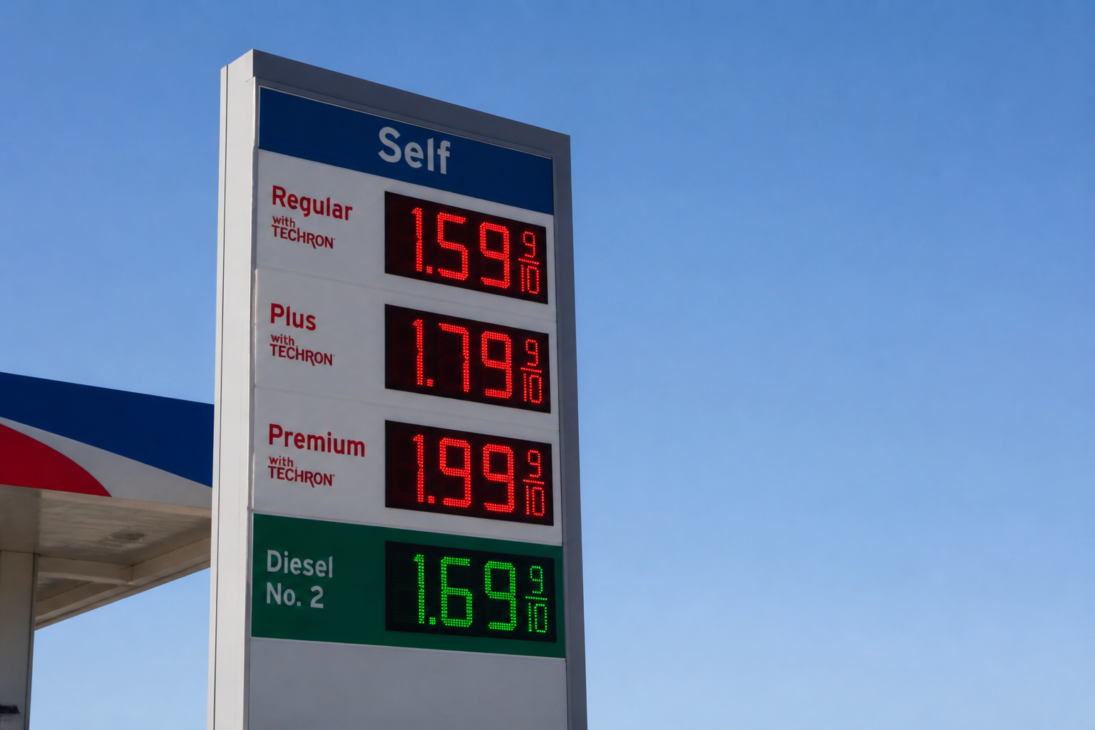
As of August 10, 2026, the official AAA national average for regular gasoline stands at $4.0091 per gallon. This figure serves as a vital benchmark for drivers across the country. It helps you understand if the station on your corner is charging a fair rate or a premium.
Prices for other fuel types are equally important for specific vehicle needs. On August 10, 2026, mid-grade gasoline averaged $4.4997, while premium fuel reached $4.8900. Diesel fuel costs remain higher at $5.2996 per gallon, and E85 sits at a more affordable $3.0645. If you are curious about how these prices affect high-performance machinery, checking the specs for a Ford F-250 Diesel Engine: Maintenance Tips, Oil Capacity, and Towing Specs can be helpful.
Forbes Advisor reports that while the $4.01 national average is down $0.09 from the previous week, it remains up $0.13 from the prior month. This shows how quickly trends can shift. Volatility is common in the fuel market. According to the U.S. Energy Information Administration, monthly retail prices climbed significantly earlier this year. Prices rose from $2.936 in January to $3.771 in March, reflecting the broader economic shifts that impact every driver.
Regional Price Disparities and the Cheapest States for Fuel
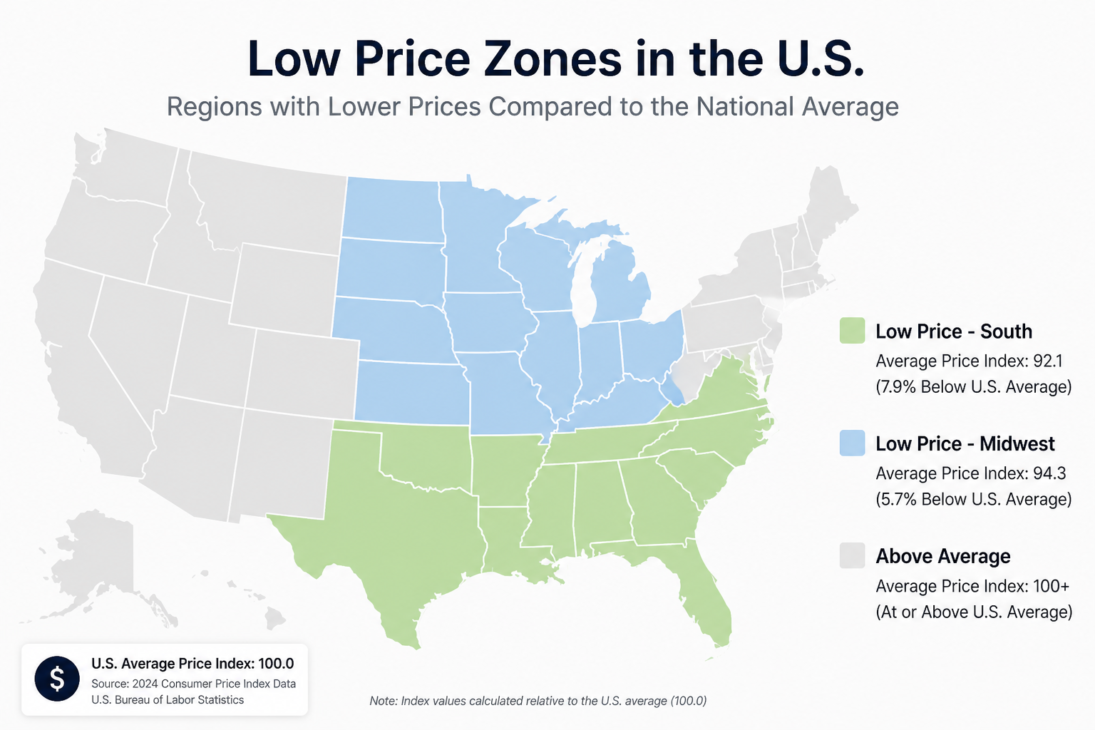
Geography plays a massive role in what you pay. Southern and Midwestern states typically remain the cheapest places to fill up. Data from Motor1 confirms this trend, ranking Indiana as the lowest-cost state as of July 10, 2026, at just $3.262 per gallon. Oklahoma, Mississippi, Texas, and Louisiana follow closely, providing consistent savings for drivers in those regions.
LendingTree corroborated these findings in an August 3, 2026, study. They reported Texas at $3.60, Indiana at $3.61, and Mississippi at $3.65. While the exact numbers shift, the regional pattern stays stable. States like these often have lower taxes or closer proximity to distribution hubs.
Coastal regions face a different reality. California and Hawaii consistently report the highest price averages in the country. If you happen to be in Alaska, you might see prices as high as $4.7809 for regular gas. This extreme variation is why relying on a national average alone can be misleading. You should look at state-specific averages to understand your local market. Understanding the history of your engine type, such as Cummins Diesel Engines: The Full History and Facts You Should Know, can also provide context on why fuel choice matters for efficiency.
| State/Region | Typical Price Trend | Primary Factor |
|---|---|---|
| Indiana | Low | Regional Supply |
| Texas | Low | Proximity to Refineries |
| California | High | Taxes & Regulations |
| Hawaii | High | Import Logistics |
| Alaska | High | Remote Distribution |
Timing Your Fill-Up: When to Buy Gas for the Lowest Cost
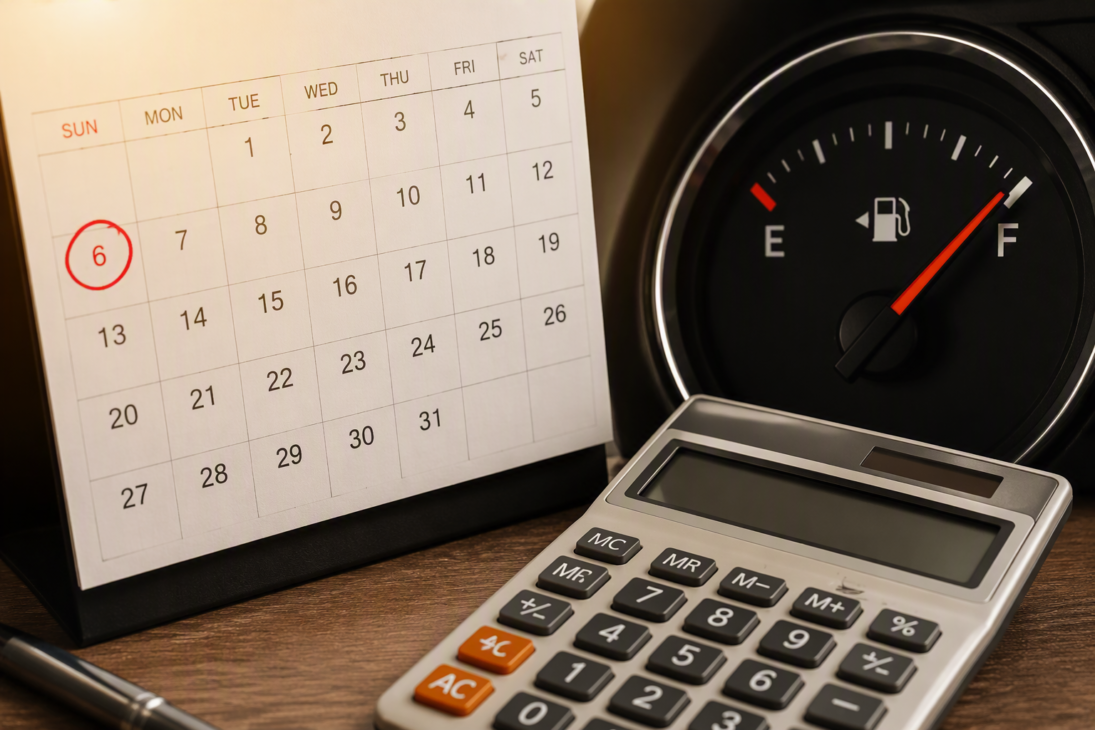
Waiting for the right day saves real money. A 2026 survey conducted by GasBuddy reveals that gasoline prices are generally at their lowest on Sunday. Many stations reset their pricing structures to start the week, often favoring the consumer early on.
Midweek is usually the wrong time to pull into a gas station. Prices tend to climb from Wednesday through Friday as demand increases for weekend travel. If you can manage your errands to avoid these peak days, you might keep a few extra dollars in your pocket.
Short-term spikes happen often, as seen on May 5, 2026. The national average surged to $4.48 during that period. Even during such spikes, savvy shoppers find relief by monitoring local trends rather than watching national headlines alone. Identifying these patterns requires a little patience, but the cumulative savings over a year are substantial.
Tools for Real-Time Price Tracking
State rankings shift frequently, so you should rely on live tracking tools. AAA’s state average pages offer a quick, reliable snapshot of current conditions. GasBuddy provides a more granular comparison, showing you which specific stations in your zip code currently offer the best deals.
Warehouse-club stations often provide prices below the standard average. These locations, such as Costco or Sam’s Club, prioritize high-volume turnover. This often results in lower markups for members. You should also check prices in nearby metro areas if you live on the edge of a city. Prices can vary by several cents just by crossing a county line.
Be aware that financial outlets report different national figures. The variance between AAA’s $4.0091 on August 10 and LendingTree’s $4.10 on August 3 exists because of their sampling methods and dates. Use these tools as a guide rather than absolute law. The most successful strategy involves checking a trusted app right before you drive to the station.
My Experience With How to Find Cheap Gas Prices in the US
I’ve learned the hard way that fueling up on a Friday afternoon is a mistake. I used to pull into the nearest station on my way home from work, only to realize I was paying a “convenience tax” by waiting until the end of the week. My biggest insight? Treat gas like a grocery item. You wouldn’t buy milk at a premium convenience store if you knew a cheaper market was just two miles away.
I started checking my local GasBuddy map before heading out for errands. Honestly, it’s a game-changer. Sometimes, the station two blocks over is ten cents cheaper than the one on the main drag. It seems small, but it adds up during a month of heavy commuting. I also started keeping my tank at least a quarter full. This gives me the luxury of waiting a day or two for the price to drop on a Sunday. It’s funny how much control you feel when you aren’t forced to pay whatever price the station sign is flashing. Do you track your local prices before you drive, or do you wait until the gauge hits empty?
FAQ
Q: Why do gas prices vary so much between different states?
Gas prices differ largely due to state-specific taxes, local environmental regulations, and proximity to major refineries or pipelines. States with higher taxes or stricter fuel quality requirements often see higher prices at the pump. Distance from oil distribution centers also adds logistical costs that get passed down to you as a driver.
Q: Can I always rely on the national average gas price?
No, the national average is merely a baseline that smooths out extreme highs and lows across the country. It does not account for the specific station or neighborhood pricing near your home. Always check local data sources instead of assuming the national number represents what you will pay today.
Q: Do warehouse clubs really save me money on fuel?
Yes, warehouse clubs frequently offer lower fuel prices because they operate on a high-volume, low-margin business model. They use gas as a way to drive foot traffic to their stores. However, you must factor in the cost of your membership to determine if the savings are truly worth it.
Q: Are there specific times of day that are best?
Most industry data suggests that the day of the week matters far more than the specific hour of the day. Sunday is often the cheapest day, while midweek peaks are standard. You will likely find better prices by choosing your day wisely rather than worrying about morning or evening shifts.
Q: Does premium fuel actually make a difference for my engine?
Premium fuel is only necessary if your car manufacturer explicitly requires it for high-compression engines. Using premium in a standard vehicle that runs on regular gas provides no performance or fuel efficiency benefits. You are simply paying more for fuel that your engine cannot effectively utilize for extra power.
Q: Will using a fuel card help me save more money?
Fuel cards or loyalty programs can provide small discounts per gallon if you visit a specific brand of station. These rewards accumulate over time for frequent drivers. Always compare these potential savings against the base price of the gas, as sometimes an independent station is cheaper without any reward.
Q: What is the biggest mistake people make at the pump?
The biggest mistake is filling up on impulse when the tank is nearly empty, especially during the middle of the week. This lack of planning forces you to accept whatever price is available at the closest station. Maintaining a buffer in your tank gives you the freedom to shop around.
Q: Is there a way to predict future gas price trends?
Predicting exact prices is difficult, but monitoring EIA reports can give you an idea of monthly supply and demand shifts. Macro-level economic data provides context for whether prices are trending up or down. For individual drivers, focusing on local, real-time data from tracking apps is far more practical.
Q: Should I buy gas if I see a low price?
You should definitely stop and fill up if you see a price significantly lower than what you have been paying lately. Prices often jump back up quickly, especially if there is regional demand or supply issues. If the price is abnormally low, top off your tank to protect your budget.
Q: Who controls the gas prices that I see daily?
Station owners generally set the final retail price based on their own profit margins, local competition, and current wholesale costs. While the global oil market sets the base commodity price, the local station owner has the final say on the markups you see on the big electronic sign.
References
- AAA. (2026, August 10). State gas price averages. AAA Gas Prices. https://gasprices.aaa.com/state-gas-price-averages/
- AAA. (2026, August 10). National average gas prices. AAA Gas Prices. https://gasprices.aaa.com/
- GasBuddy. (2026). U.S. average regular gas price comparison by state. GasBuddy. https://www.gasbuddy.com/usa
- Forbes Advisor. (2026, August 10). Today’s gas prices by state: Gas tops $4 nationwide. Forbes. https://www.forbes.com/advisor/personal-finance/gas-prices-by-state/
- U.S. Energy Information Administration. (2026). U.S. all grades all formulations retail gasoline prices. U.S. EIA. https://www.eia.gov/dnav/pet/hist/leafhandler.ashx?f=m&n=pet&s=emm_epm0_pte_nus_dpg
- Motor1. (2026, July 10). Highest and lowest gas prices: July 2026. Motor1. https://www.motor1.com/features/773137/highest-lowest-gas-prices-usa/
- LendingTree. (2026, August 3). Gas prices up in every state from a year ago. LendingTree. https://www.lendingtree.com/credit-cards/study/us-gas-prices/
- USA TODAY. (2026, May 5). Which states have the cheapest gas as national average nears $5?. USA TODAY. https://www.usatoday.com/story/cars/shopping/2026/05/05/states-with-cheapest-gas-prices/89943236007/

jessy
Jessy Grace has spent over 5 years researching and writing about household energy, covering everything from gas and electricity tariffs to appliance efficiency and smart meter technology. With a background in [energy consulting / utilities journalism / consumer finance], [he/she/they] specializes in breaking down complex tariff structures, regulatory changes, and cost-saving strategies into practical advice homeowners can actually use. [Author Name]'s work draws on data from official regulators, utility providers, and independent consumer bodies to ensure every guide is accurate and up to date. When not writing, [he/she/they] tests energy-saving products firsthand and stays close to industry shifts, from renewable tariffs to price cap changes, to keep readers ahead of the curve.