


Ever wonder why the cost to fill your tank seems to change every time you pull into the supplier, or why neighbors in different states pay vastly different rates for the same propane? You aren’t alone. Tracking propane gas prices per gallon requires looking at everything from federal energy surveys to the specific logistics of your local region. Whether you are prepping for a cold winter season or planning a summer cookout, understanding these fluctuations helps you plan better. Let’s look at what actually moves these numbers.
Quick Questions and Answers
Question: What is the current propane price per gallon in 2026? Answer: The latest U.S. residential propane price is $2.674 per gallon for the week ending March 30, 2026. This EIA-style residential benchmark acts as the standard during the heating season. Because the weekly federal survey pauses from April through September, this remains the most cited national figure until the autumn, even though local summer prices often drift higher.
Question: Why do propane prices per gallon vary so much by state? Answer: Costs differ by state because delivery distance, local storage availability, and market competition change significantly by region. The latest EIA-derived state readings show a massive spread, ranging from $1.642 per gallon in Nebraska to $4.706 per gallon in Florida. Local logistics often matter more for your final bill than the national average does.
Question: How often does the EIA update propane prices per gallon? Answer: The EIA Weekly Heating Oil and Propane Survey publishes fresh residential prices every Monday throughout the October-to-March heating season. This survey goes off-season from April through September, meaning no weekly residential updates arrive during warmer months. During that gap, wholesale benchmarks provide the only live, daily indicators of market movement.
Propane Gas Prices: National Benchmarks and Regional Variations
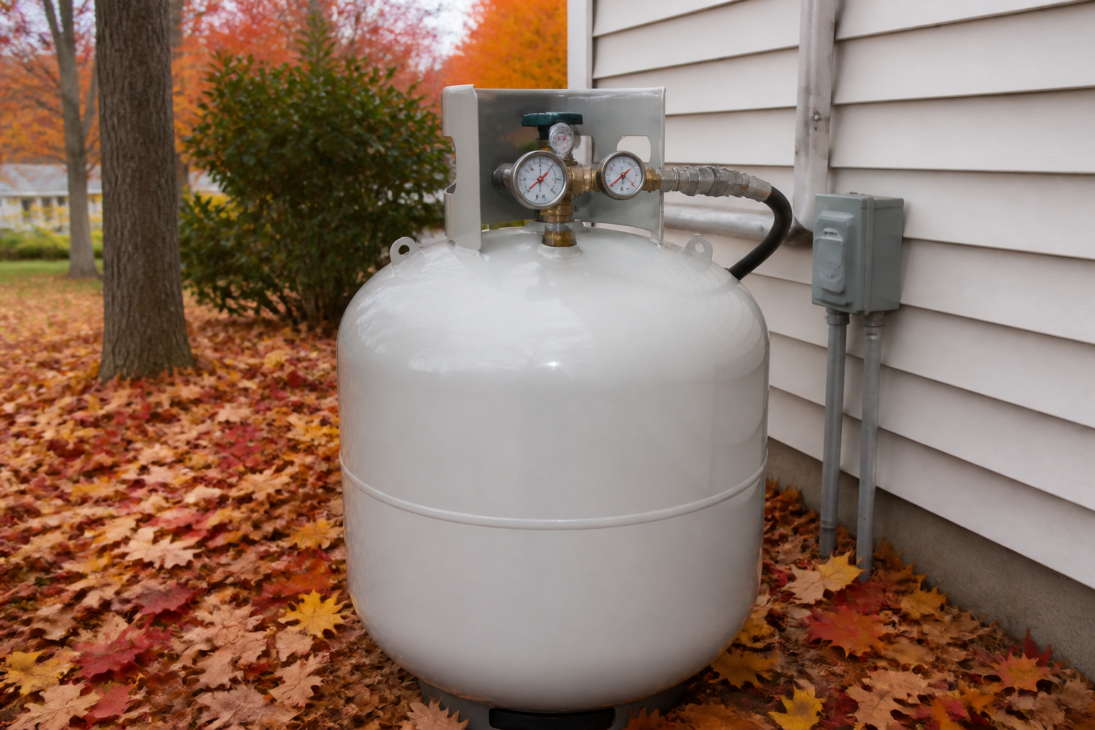
The most recent official U.S. residential propane average hit $2.674 per gallon for the week ending March 30, 2026. This figure marks the final reading of the 2025-2026 heating season from the U.S. Energy Information Administration. It serves as a static federal anchor while the survey remains off-season.
Geographic variance remains the most confusing part for homeowners. EIA-derived data shows states like Nebraska sitting at $1.642 per gallon, while Florida reaches highs of $4.706 per gallon. This massive gap illustrates how local supply chains and state-specific tax structures dominate the final price tag.
Localized surveys offer a much clearer picture during the off-season than national averages do. For example, the Maine Energy Office reported a regional price of $3.20 per gallon on August 3, 2026. This proves that regional supply issues and transportation logistics create a price environment that ignores federal data until the winter cycle begins again.
Understanding the Difference Between Residential and Wholesale Propane
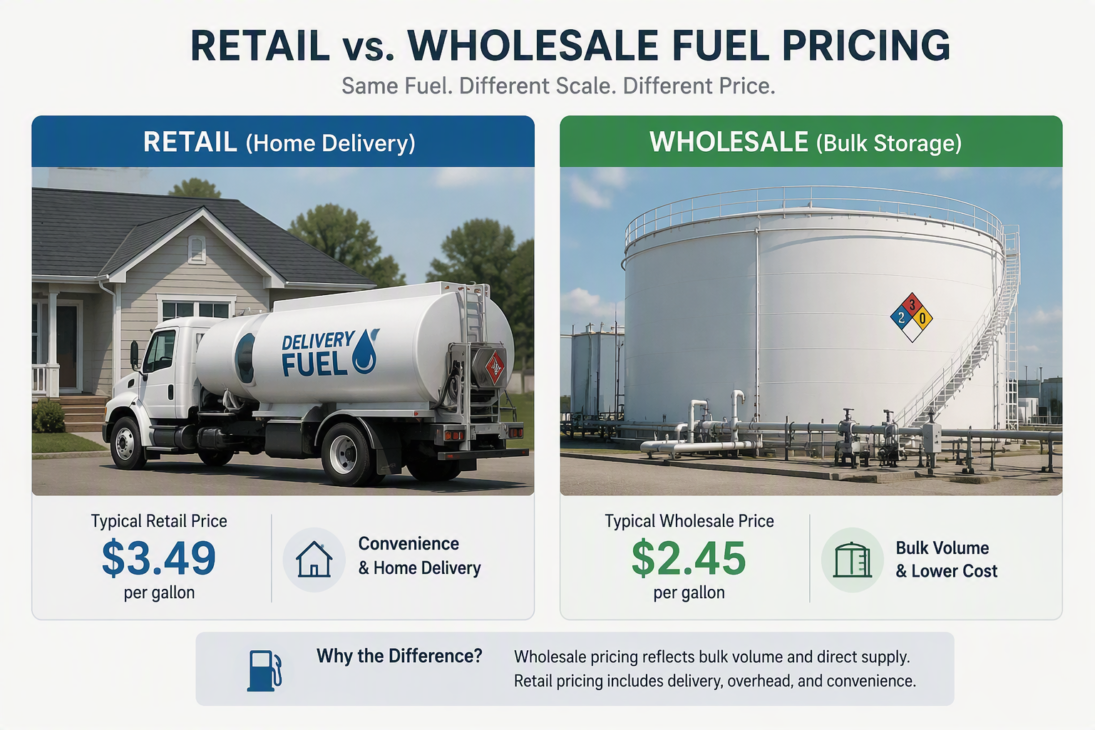
Residential retail pricing covers much more than just the fuel itself. When you see a price on your delivery invoice, that number includes transportation costs, storage fees, dealer overhead, and a retail margin. You are paying for the service of having fuel brought to your home tank.
Wholesale spot benchmarks work on a completely different scale. The Mont Belvieu, Texas, market acts as the primary hub for pricing, recording a spot price of $0.655 to $0.66 per gallon on August 3, 2026. This price is what large distributors pay before they add their markup for local delivery.
Different hubs also influence costs based on their physical location. Wholesale hubs like Mont Belvieu often trade at a 4-cent-per-gallon premium compared to hubs like Conway, Kansas. Factors like pipeline access and regional storage capacity dictate these wholesale premiums, which eventually ripple down to the retail consumer. If you maintain heavy machinery that uses larger fuel systems, like some Cummins Diesel Engines: The Full History and Facts You Should Know, you might already be familiar with how wholesale pricing cycles differ from pump prices.
Seasonal Trends and EIA Reporting Cycles
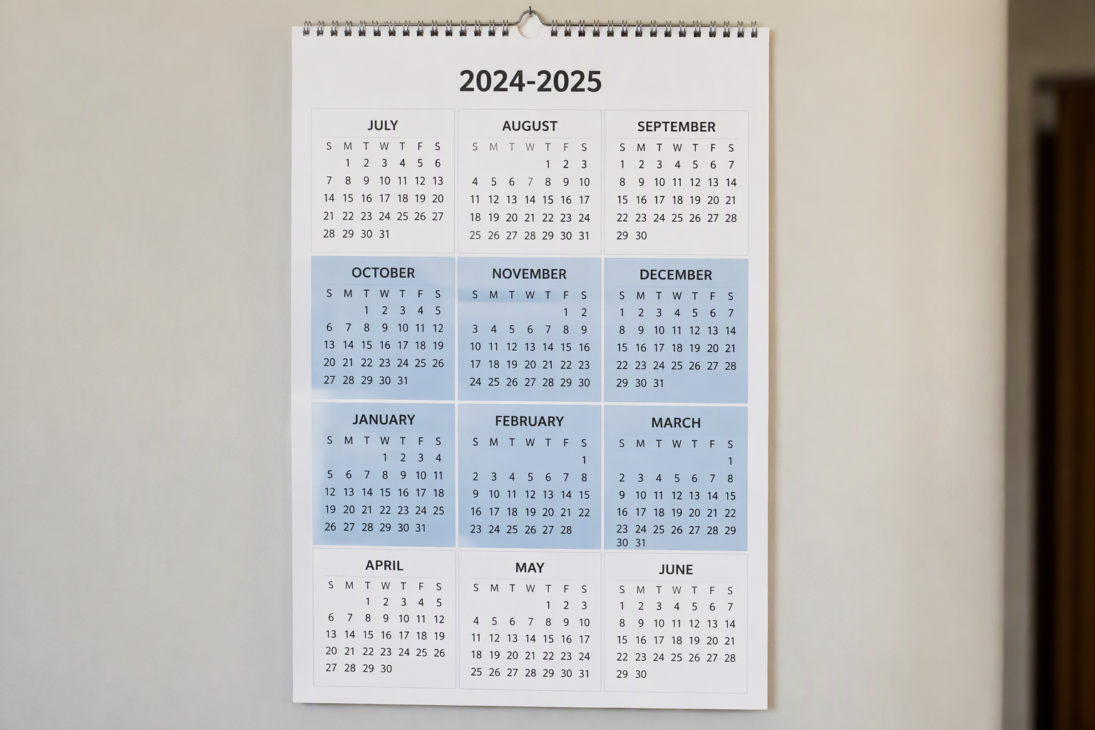
The EIA restricts its Weekly Heating Oil and Propane Survey to the peak heating months of October through March. This creates a six-month window where official federal retail data stays frozen. During this period, the final spring reading becomes the default reference point for most industry analysts and consumers.
Historical patterns provide context for these seasonal swings. The 2025-2026 heating season actually kicked off at a lower rate of $2.554 per gallon for the week ending January 5, 2026. Prices trended upward as demand grew throughout the winter. Understanding this cycle helps you anticipate when to potentially lock in rates before the next season hits.
Propane in the Context of Broader Fuel Markets
Comparing propane to other fuels helps show its relative value in the current energy market. The Alternative Fuels Data Center reported a national average propane price of $3.59 per gallon for early April 2026. In that same report, gasoline averaged $4.09 and diesel reached $5.55 per gallon.
Commodity markets operate under different rules than local retail delivery. Indices like Trading Economics track daily financial movements, which show a different side of the market. Propane prices there fluctuate daily, reaching 0.68 USD per gallon on August 7, 2026. This is a far cry from the record high of 1.67 USD recorded in February 2014.
These commodity indices provide a look at global supply rather than local availability. While gasoline and diesel often mirror crude oil fluctuations, propane follows its own path tied to natural gas processing and refinery output. Just as you monitor your Ford F-250 Diesel Engine: Maintenance Tips, Oil Capacity, and Towing Specs for peak performance, tracking the right propane indicator is vital for cost efficiency.
Factors Driving Price Volatility
Winter heating demand remains the largest driver of price instability. When the thermometer drops across the northern states, residential inventory depletes quickly. This surge in demand during the October-to-March window exerts immediate pressure on supply lines, leading to the price spikes many homeowners dread.
Logistics and local market density play a huge role in the wide price spread seen between states. Rural areas with fewer delivery options often face higher costs due to longer delivery routes and higher per-stop delivery expenses. Competitive markets, by contrast, keep margins thin through sheer supplier density.
Inventory data monitored by the EIA during the winter months acts as a barometer for the entire industry. When stocks remain tight, volatility increases. By watching these winter inventory updates, you gain a sense of whether the market will be stable or erratic as spring approaches.
FAQ
Q: Is wholesale propane cheaper than retail propane?
Yes, wholesale propane is significantly cheaper because it excludes the service costs associated with home delivery. Wholesale prices were around $0.66 per gallon in August 2026, while residential prices remained near $2.67 per gallon. Retail pricing accounts for the dealer’s overhead, storage facility costs, the truck, and the labor required to refill individual household tanks.
Q: What is the difference between propane and gasoline prices?
Propane operates in a different market than gasoline. The Alternative Fuels Data Center recorded propane at $3.59 per gallon in April 2026, compared to $4.09 for gasoline and $5.55 for diesel. These fuels are not tied to the same price fluctuations, meaning they rarely move in perfect lockstep with one another.
Q: Can propane prices go up in summer?
They certainly can, even if the national residential average appears static because the federal survey is off-season. Local data, such as Maine’s summer reporting of $3.20 per gallon, demonstrates that regional supply constraints can drive prices up while the rest of the country assumes prices are dormant. Summer pricing is often more reflective of local logistics than national inventory.
Q: Does propane have a current market price like a commodity?
Yes, financial markets track propane as a commodity distinct from delivered retail fuel. Trading Economics reported the commodity price at 0.68 USD per gallon in August 2026. This price series responds to global market demand and daily trading, making it a useful tool for tracking broad trends rather than the specific cost of a home delivery.
Q: What caused propane prices to rise in winter 2025-2026?
The 2025-2026 winter price increases stemmed from the usual mix of residential heating demand and inventory tightness. The EIA monitors these factors throughout the heating season, using inventory data to gauge supply levels. When cold weather spikes demand, dealers must move fuel more rapidly, which puts upward pressure on prices for consumers who rely on regular tank refills.
Q: How much does a gallon of propane cost in 2026?
Your final cost depends on the type of price you are looking at. The national residential benchmark sat at $2.674 per gallon for the end of March 2026, but some states like Florida saw prices as high as $4.706. Wholesale costs in Texas were roughly $0.66 per gallon during the same summer period, highlighting the massive divide between wholesale benchmarks and retail reality.
Q: What is the highest propane price per gallon in the sources?
The highest figure appearing in the current state-level data is Florida’s average of $4.706 per gallon. Commodity markets reached their all-time high much earlier, hitting 1.67 USD in February 2014. These two numbers measure completely different things, so it is important to remember that retail state averages and global commodity peaks are not directly comparable.
My Experience With Propane Gas Prices Per Gallon: Factors Affecting Costs
I have spent enough time tracking my own heating bills to know that propane prices are about as predictable as the weather. My first experience with a refill taught me a harsh lesson about logistics. I assumed the national average I read online would be my exact invoice price. I was wrong by nearly a dollar per gallon. Dealing with a local supplier in a rural area, I quickly learned that the “convenience” of home delivery is essentially a premium I pay for the truck, the driver, and the storage tank sitting in my backyard.
One expert insight I’ve picked up is to ignore the national headlines when you are making decisions in August. The federal survey is essentially a ghost during the summer. If you want to know what you will pay, call your local dealer instead of refreshing an EIA data page. The local market is king. I’ve found that even asking neighbors who use different suppliers can provide better data than any government chart. It’s funny how we obsess over fuel trends while ignoring the fact that our local geography matters more than global oil prices.
Have you ever found a massive price difference between two local propane suppliers in your area?

jessy
Jessy Grace has spent over 5 years researching and writing about household energy, covering everything from gas and electricity tariffs to appliance efficiency and smart meter technology. With a background in [energy consulting / utilities journalism / consumer finance], [he/she/they] specializes in breaking down complex tariff structures, regulatory changes, and cost-saving strategies into practical advice homeowners can actually use. [Author Name]'s work draws on data from official regulators, utility providers, and independent consumer bodies to ensure every guide is accurate and up to date. When not writing, [he/she/they] tests energy-saving products firsthand and stays close to industry shifts, from renewable tariffs to price cap changes, to keep readers ahead of the curve.