
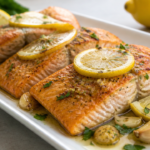
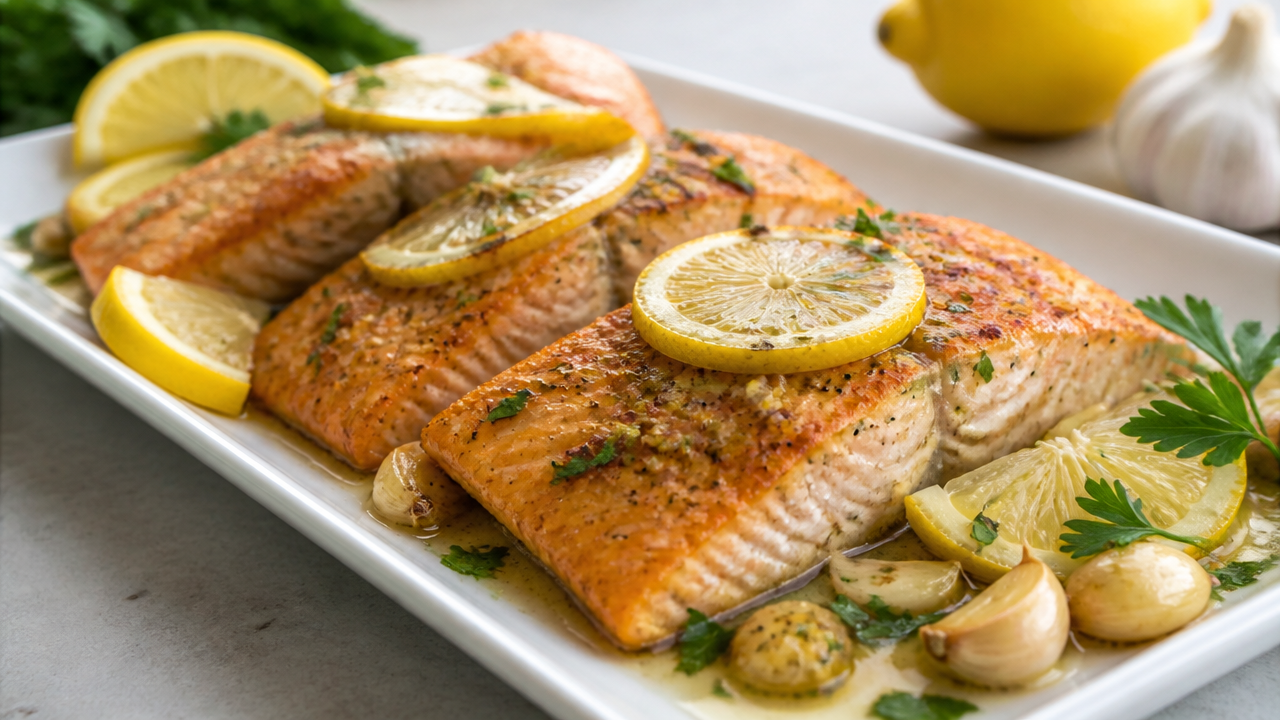
Have you ever wondered why simple baked lemon garlic salmon fillets taste dry? Whether planning a summer cookout or holiday dinner, the right technique makes the dish shine. You need a reliable lemon garlic salmon recipe to ensure the protein stays moist. This guide shows how to bake salmon right without burning the garlic. You will learn to prep fish correctly. Follow my steps for a consistent result. Lemon garlic salmon flavor comes from zest, not just juice.
Quick Questions and Answers
Question: Why does my lemon garlic salmon taste dry after baking? Answer: Salmon can taste dry if it is overcooked, as the flesh loses moisture when baked beyond the ideal internal temperature of 145°F. To prevent this, check the fish early, aiming for 125–130°F if you prefer a medium texture, and let it rest for three minutes before serving. Patting the fish dry before baking helps it cook tender rather than steam, which preserves moisture.
Question: Can I use frozen salmon for lemon garlic salmon recipe? Answer: Yes, you can use frozen salmon by thawing it completely in the refrigerator before cooking. Once thawed, pat the fillets dry with paper towels to remove excess moisture, which helps them bake tender instead of steaming. Season and apply the lemon garlic sauce as directed, then bake until the fish flakes easily with a fork.
Question: Do I need to remove the skin from salmon before baking? Answer: No, you do not need to remove the skin; most recipes recommend placing the salmon skin side down on the baking sheet to protect the flesh and help it cook evenly. The skin becomes crispy if broiled briefly at the end, and it can be easily removed after cooking if you prefer not to eat it. Keeping the skin on also helps the fillet hold its shape.
Key Takeaways
- Patting salmon dry prevents steaming and ensures tender results.
- Cooking to 125–130°F keeps the fish medium and moist.
- Lemon zest provides the main flavor, while juice adds the tang.
What You Need
| Item | Purpose | Notes |
|---|---|---|
| Salmon Fillets | Main protein | Fresh or thawed; look for bright, firm flesh |
| Butter | Flavor base | Salted butter mixes well with olive oil |
| Olive Oil | Cooking fat | Prevents butter from burning in the pan |
| Garlic | Aromatics | Grated to avoid burnt chunks |
| Lemon | Flavor | Use both zest for taste and juice for acid |
| Salt & Pepper | Seasoning | Essential for bringing out fish flavor |
| Microplane | Tool | Grates zest and garlic finely |
| Baking Sheet | Cook surface | Line with parchment for easy cleanup |
Step 1: Prep the Surface
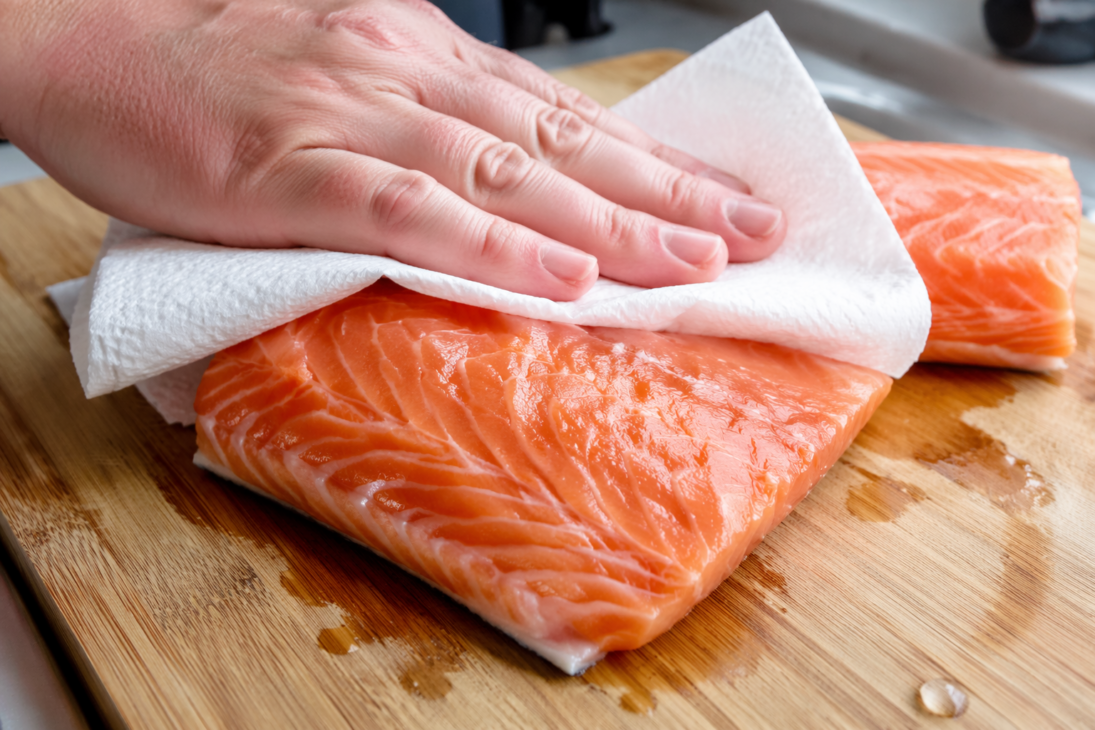
Pat the salmon fillets dry with paper towels. This step is non-negotiable for texture. Excess moisture causes steam instead of searing. Steaming leads to a mushy surface that lacks the proper crust. Dry fish absorbs the butter and garlic mixture better. You want that surface to get golden. Start with a clean cutting board.
Step 2: Infuse the Butter
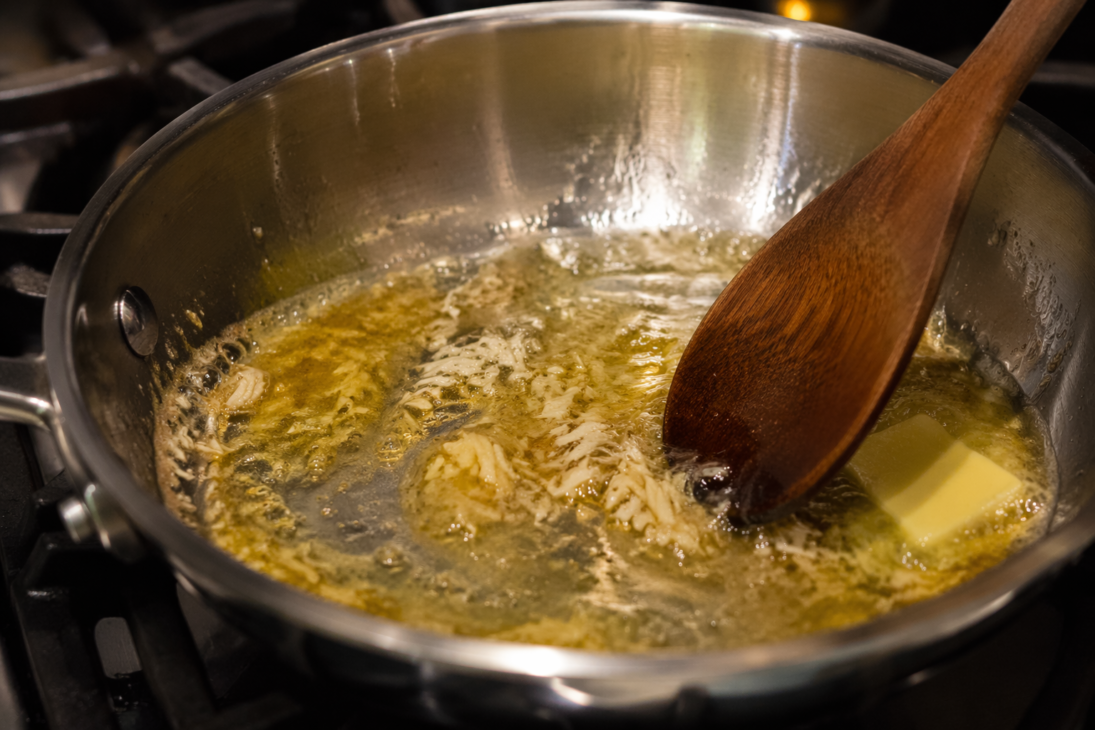
Melt the butter in a small saucepan over low heat. Add the oil to stop the butter from scorching. Stir in the garlic immediately. Cook for one minute until fragrant. Do not let the garlic brown. Burnt garlic tastes bitter. You want the butter to carry the flavor into the fish. Remove from heat to cool slightly before brushing.
Step 3: Season and Zest
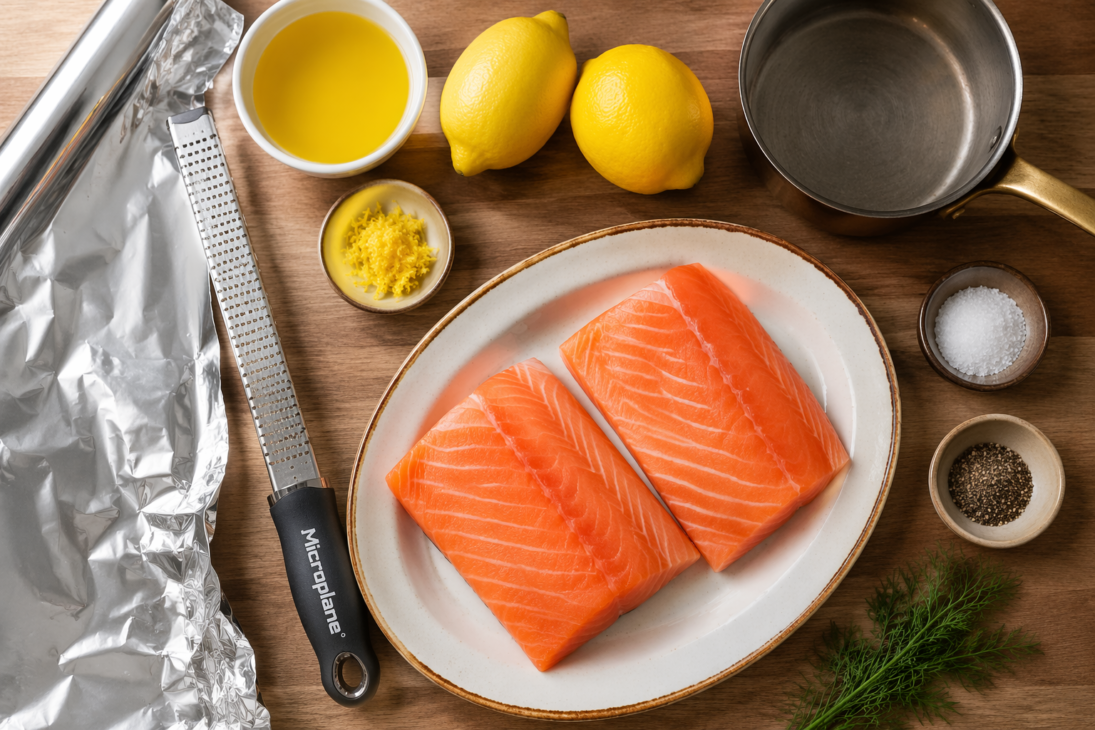
Combine the lemon zest with the butter mixture. Skip the zest and you lose intense flavor. Add the juice for acidity. Brush the mix over the top and sides of the fillets. Season generously with salt and cracked pepper. Fish needs salt to bring out its natural sweetness. Make sure you coat every bit of flesh. This layer creates the protective barrier.
Step 4: Preheat the Oven
Set the oven to 425°F. Let it reach full temperature before baking. A cold oven cooks unevenly. Preheating guarantees consistent results from start to finish. While heating, check your baking sheet. Line it with parchment paper. This prevents sticking and makes cleanup faster. Place the sheet inside while the oven finishes warming.
Step 5: Place the Fish
Lay the salmon fillets skin side down. The skin protects the delicate meat from direct heat. If you are using a roasting tin, arrange them in a single layer. Leave space between the pieces. Overcrowding leads to steaming. If you want a crispy top, you can place them skin side up later. For now, let the heat penetrate from the top down.
Step 6: Bake and Broil
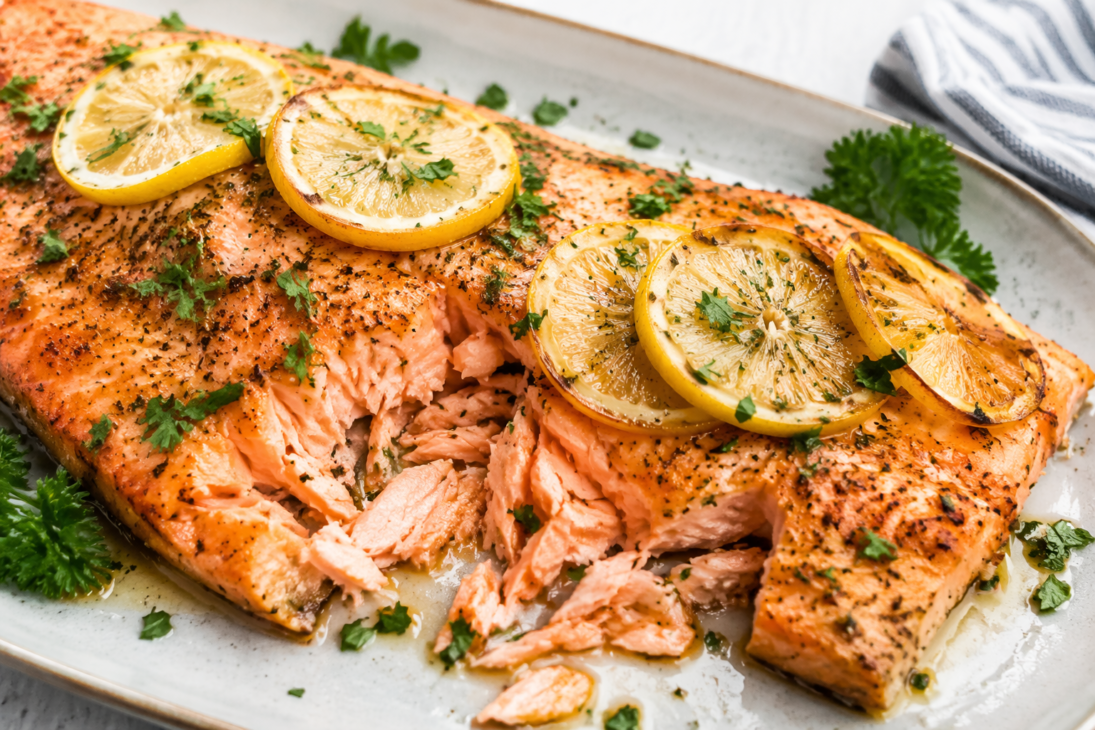
Bake for 15 minutes at 400°F. Check the fish to see if it flakes. If not, extend by 2 minutes. For a browned top, turn on the broiler. Watch it closely for one to three minutes. The sugar in the sauce burns quickly. You want a golden glaze, not charred bits. Remove from heat once flaky.
Recipe Card
Lemon Garlic Salmon
A simple, flaky baked salmon recipe infused with fresh lemon and garlic butter.
Prep: 10 minutesCook: 18 minutesTotal: 28 minutesYield: 4Category: DinnerCuisine: American
Ingredients
- 4 salmon fillets (6 oz each)
- 4 tbsp unsalted butter
- 2 tbsp olive oil
- 4 cloves garlic, grated
- 1 lemon, zested and juiced
- Salt and pepper to taste
- 1 tsp paprika
Instructions
- Preheat oven to 425°F. Line baking sheet with parchment.
- Melt butter with oil in a small saucepan.
- Add grated garlic and cook for 1 minute. Stir in zest.
- Pat salmon dry and season with salt and pepper.
- Brush fillets with the butter mixture. Place skin side down on sheet.
- Bake for 15-20 minutes until opaque and flaky.
- Broil for 2-3 minutes for a golden top. Monitor closely.
Nutrition Info (per serving)
| Calories | 380 |
| Protein | 34g |
| Carbs | 4g |
| Fat | 22g |
| Fiber | 1g |
| Sugar | 1g |
| Sodium | 420mg |
Notes
- Use a meat thermometer for 145°F internal temp.
- Add asparagus or tomatoes for a complete tray bake.
| Method | Cook Time | Texture | Best For |
|---|---|---|---|
| Baking | 15-20 mins | Juicy and flaky | Weeknight meals |
| Broiling | 3-5 mins | Crispy top | Quick dinners |
| Smoked | 1-2 hours | Firm and smoky | Weekend prep |
| Pan Seared | 10-15 mins | Crispy skin | Fast serving |
Tips
Cooking time varies based on fillet thickness. Use a thermometer to gauge doneness accurately. If you prefer sweeter notes, add a teaspoon of honey to the sauce. Avoid using too much lemon juice if you fear sourness. The zest adds aroma without making it tart. Pair this dish with roasted asparagus to match the citrus. You can also serve with The Best Broccoli Cheddar Soup Recipe for a complete meal. Some cooks add a pinch of cayenne for heat.
FAQ
Q: Are there any substitutes for honey in lemon garlic salmon?
Yes, you can substitute honey with maple syrup, agave nectar, or a small amount of brown sugar to achieve similar sweetness and a glossy finish. If you prefer a tangier profile without sweetness, you can omit the sweetener entirely and rely on the lemon juice and dijon mustard for flavor balance. Just adjust the amount slightly based on the sweetener’s intensity.
Q: How long should I bake salmon for lemon garlic flavor?
Bake salmon for 15 to 20 minutes at 400°F, or until it flakes easily with a fork and reaches 145°F. Thicker center-cut pieces may take closer to 18 minutes, while thinner tail pieces cook in about 15 minutes. For a golden top, broil the salmon for 1 to 3 minutes at the end, watching closely to prevent burning.
Q: Will lemon juice make the salmon too sour or tart?
Fresh lemon juice can be tart, but ingredients like honey, butter, olive oil, and dijon mustard balance it out. If you find it too sour, reduce the amount of lemon juice slightly or add a bit more honey or maple syrup to sweeten the sauce. The zest adds aromatic flavor without increasing acidity significantly.
Q: How do I know when lemon garlic salmon is perfectly cooked?
The salmon is perfectly cooked when it flakes easily with a fork and the internal temperature reaches 145°F, as recommended by the USDA. Some prefer it slightly underdone at 125–130°F for a medium texture, then letting it rest for three minutes. The flesh should look opaque throughout but remain moist.
Q: What vegetables pair best with lemon garlic salmon tray bake?
Asparagus and cherry tomatoes are excellent pairings for a lemon garlic salmon tray bake, as they cook quickly and absorb the citrus flavors. You can also add broccoli, zucchini, or bell peppers, tossing them with olive oil, salt, and pepper before placing them on the tray. Grated parmesan over the vegetables adds a rich, savory finish.
Q: Is lemon garlic salmon healthy for a weight loss diet?
Yes, lemon garlic salmon is healthy for weight loss because it is high in protein and omega-3 fatty acids while being relatively low in calories. Using olive oil and butter in moderation keeps the dish nutritious, and the lemon and garlic provide flavor without added sugars. Pairing it with vegetables boosts fiber and micronutrients.
Q: Which oven temperature works best for baking lemon garlic salmon?
The best oven temperature for baking lemon garlic salmon is 400°F, which cooks the fish evenly in 15 to 20 minutes without drying it out. Some recipes use 375°F for a gentler cook, especially for thicker fillets, while 425°F yields a faster cook time of 12 to 20 minutes. Always preheat the oven and pat the salmon dry before baking.
My Experience With Lemon Garlic Salmon Recipe
I have made this fish many times. I learned the hard way that patting the fish dry matters most. Once I skipped that step, the texture was soggy. It felt like steaming in a bag instead of roasting. Now I always grab a stack of paper towels. I also use a microplane for the garlic. Large chunks burn. Grated garlic distributes evenly without creating bitterness. I often add a little honey to the butter. It balances the sharp lemon.
I serve it with a side of The Perfect Sauteed Swiss Chard With Chickpeas Recipe for a full meal. The earthiness of the greens pairs well with the bright sauce. I sometimes forget to remove the skin before serving my partner. I forgot because the texture is crispy. It is fine if I forget. The skin is edible.
This recipe saved my weeknight dinners last year. I made it three times in one week. Everyone liked how moist the fish remained. I found the temperature 400°F worked better than 350°F. Higher heat keeps the cooking time short. Does your family like the lemon flavor strong or mild?
Conclusion
Mastery comes from attention to detail. Dry surface and accurate heat are the keys. Follow the steps to avoid common errors. The result is restaurant quality food at home. You can replicate the taste every time with practice. This method works for other white fish too. Enjoy the fresh, bright flavors with friends and family.
References
- Mediterranean Dish. (n.d.). Lemon Garlic Salmon Recipe. https://www.themediterraneandish.com/lemon-garlic-salmon-recipe/
- Sally’s Baking Addiction. (n.d.). Baked Lemon Garlic Salmon (25 Minutes). https://sallysbakingaddiction.com/baked-lemon-salmon/
- USDA. (2024, January 15). Safe Food Handling. U.S. Department of Agriculture. https://www.usda.gov/fact-sheets/safe-food-handling
