

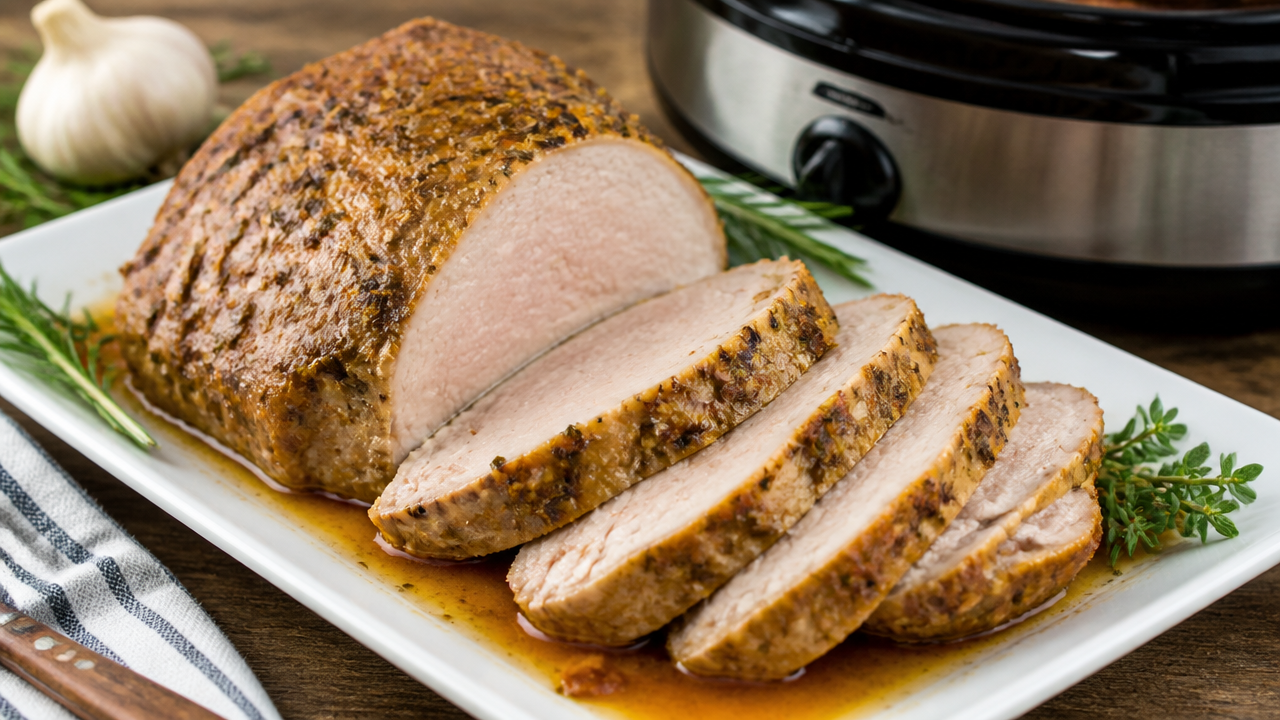
What makes a perfect crock pot pork loin arrive at your table so succulent that it practically melts on the fork? Preparing homemade meals for a holiday gathering or a simple Tuesday night dinner requires understanding how to manage lean cuts of meat in slow-motion cooking environments. Getting this easy, beginner-friendly centerpiece right starts with recognizing the difference between thick pork loin and thinner tenderloin. You can rely on simple, accessible techniques to bring flavor to this healthy, protein-packed meal. Let’s get your slow cooker ready for a delicious, stress-free dinner tonight.
Quick Questions and Answers
Question: Why does pork loin turn out dry in the crock pot? Answer: Pork loin often turns dry because it is overcooked or lacks sufficient fat, especially when cooked too long on high heat. Unlike pork shoulder, lean pork loin has little fat to keep it moist, so it should be cooked to an internal temperature of 145°F and rested for 10 minutes to retain juices.
Question: Can you cook pork loin in a crock pot on high? Answer: Yes, you can cook pork loin in a crock pot on high for 3–4 hours, but low heat for 6–8 hours yields more tender, fall-apart results. Cooking on low helps the lean meat stay juicy and prevents it from drying out.
Question: What temperature should pork loin be in the crock pot? Answer: Pork loin should reach an internal temperature of 145°F for safety and optimal texture, according to most recipes. Some sources suggest 165°F for pulled pork style, but 145°F is ideal for tender, sliceable loin.
Key Takeaways
- Always use a meat thermometer to ensure the roast hits that vital 145°F mark.
- Choose waxy potatoes rather than starchy ones to avoid a mushy texture in your slow cooker.
- Braising the meat in liquid creates a steaming effect that helps keep lean meat moist throughout the cooking process.
What You Need
| Item | Purpose | Notes |
|---|---|---|
| Pork Loin Roast | Main protein | Ensure you buy a loin, not a tenderloin. |
| Slow Cooker | Cooking vessel | Use a 6-quart size for most standard roasts. |
| Meat Thermometer | Safety/Doneness | Essential for hitting 145°F without overcooking. |
| Waxy Vegetables | Side base | Yukon Gold or red potatoes hold shape better. |
| Aromatics/Liquids | Flavor/Moisture | Onions, herbs, or broth create a braising liquid. |
Preparing Your Pork and Vegetables
Preparation starts with the right cuts. I always reach for small, red-skinned potatoes or Yukon Gold varieties because they are waxy enough to survive 6 hours in a slow cooker without falling apart into starch clouds. Russet potatoes have a high starch content that turns unpleasantly mushy in long-cook methods. Slice your potatoes and carrots into thick chunks, roughly 2 inches in size.
Creating a sturdy base layer in the Crock Pot helps protect the bottom of the pork loin from direct heat. Arrange these hearty vegetables at the very bottom of the ceramic insert. If you are a fan of bold flavors, take a moment to whisk your sauce ingredients—such as soy sauce, herbs, or citrus juices—in a separate bowl. According to guidance from the USDA Food Safety and Inspection Service, keeping preparation surfaces clean and organized is the first step toward a safe meal.
Step-by-Step Cooking Process
Step 1: Base Layer

Place your prepared vegetables at the bottom of the slow cooker to create a flat, stable bed. This layer keeps the meat elevated slightly above the hottest part of the appliance, which promotes even heat distribution.
Step 2: Seasoning the Roast

Pat your pork loin dry with a paper towel and apply a generous coating of your chosen dry rub. Herbs like rosemary, thyme, or a simple mixture of garlic powder and salt work wonders.
Step 3: Positioning

Lay the pork roast centered on top of your vegetable base. If the piece of meat has a significant fat cap, position that side facing upward so the fat renders down into the meat as it cooks.
Step 4: Adding Sauce

Pour your prepared braising liquid directly over the roast. As the meal cooks, this liquid accumulates at the bottom, creating the steam and moisture environment needed to keep the lean pork from drying out.
Step 5: Temperature and Time
Set your cooker to the desired setting. Cooking on low for 4–6 hours is generally the safest way to ensure tenderness. If you are in a rush, a high setting for 2–3 hours works, but monitor the temperature carefully towards the end of the window.
Step 6: Finishing Touches
Let the roast rest for 10 minutes on a cutting board once the thermometer hits 145°F. This allows the internal juices to redistribute, ensuring every slice is as moist as possible. You might even want to try a Quick and Easy Dot Cake Recipe So Fun So Easy Chicken Wing Sauce for a different kind of culinary success later this week.
Recipe Card
Crock Pot Pork Loin
A simple and delicious way to prepare a tender pork loin roast using your slow cooker and fresh root vegetables.
Prep: 15 minutesCook: 6 hoursTotal: 6 hours 15 minutesYield: 6 servingsCategory: Main CourseCuisine: American
Ingredients
- 3 lb pork loin roast
- 1 lb red potatoes, quartered
- 4 large carrots, cut into chunks
- 1 cup beef broth
- 2 tablespoons olive oil
- 3 cloves garlic, minced
- 1 teaspoon dried thyme
- Salt and pepper to taste
Instructions
- Place the chopped potatoes and carrots in the bottom of the slow cookerinsert.
- Season the pork loin generously with salt, pepper, and dried thyme.
- Place the pork loin on top of the vegetables.
- In a separate bowl, whisk together the beef broth, olive oil, and minced garlic.
- Pour the liquid mixture over the pork loin.
- Cover the slow cooker and cook on low for 6 hours, or until a meat thermometer reads 145°F.
- Rest the meat for 10 minutes before slicing.
Nutrition Info (per serving)
| Calories | 320 |
| Protein | 35g |
| Carbs | 15g |
| Fat | 12g |
| Fiber | 2g |
| Sugar | 3g |
| Sodium | 450mg |
Notes
- Use a meat thermometer to prevent drying out the meat.
- For a thicker gravy, whisk 1 tablespoon of cornstarch with a splash of water and stir into the liquid after taking the meat out.
Common Mistakes to Avoid
Most mistakes involve confusing the cut of meat. Pork loin is a stout, thick roast that loves slow, wet heat. Pork tenderloin is a much smaller, thinner muscle that will turn into shoe leather if left in the slow cooker for 6 hours. According to The Kitchn, tenderloin is meant for quick searing or fast-roasting methods, so ignore any recipe that suggests a long, slow cook time for that specific cut. Another common error is skipping the meat thermometer. You cannot tell if a roast is finished by looking at it, and guessing is the fastest way to serve a dry, overcooked dinner.
Troubleshooting Your Roast
If your roast reaches the internal target temperature of 145°F earlier than expected, take it out. Slow cookers vary greatly in power, and a smaller 3-pound loin will always cook faster than a 5-pound version. Trust the thermometer, not the clock. If the sauce is too thin for your liking, don’t stress. Transfer the cooking liquid to a saucepan on your stove and bring it to a boil.
Simmering the liquid for 5 minutes will concentrate the flavors. You can add a slurry of one tablespoon of cornstarch mixed with two tablespoons of cold water to thicken it into a gravy. If your pork seems tough despite following the instructions, ensure it was properly submerged or at least surrounded by enough liquid during the cooking time. A dry environment is the primary reason for toughness in lean meat cuts.
FAQ
Q: Do you put fat side up or down in crock pot pork?
You should place the loin fat side up. As the roast cooks, the fat will slowly render and baste the meat, adding a layer of moisture and richness to the top of the loin. This natural basting process helps bridge the gap between the lean tissue and the heat of the slow cooker, resulting in a significantly more flavorful final product.
Q: How long to cook pork loin in crock pot on low?
Cooking times range from 6 to 8 hours on low setting. Because pork loin is lean, the goal is to reach an internal temperature of 145°F. Start checking the roast around the 6-hour mark using a reliable digital meat thermometer to prevent the meat from crossing the threshold into overcooked territory where it loses its internal juices.
Q: Is pork loin the same as pork tenderloin for crock pot?
These are entirely different cuts of meat despite their similar names. Pork loin is wide, thick, and ideal for these longer, slow-cooking methods. Pork tenderloin is a small, thin, and very lean strip of muscle that cooks in minutes. If you accidentally attempt to cook a tenderloin for 6 hours, it will become extremely dry and stringy.
Q: What sauce works best with crock pot pork loin?
Many sauces excel with this cut, ranging from savory balsamic-honey glazes to brown sugar and soy sauce combinations. Apple-based liquids or cider also pair naturally with pork, adding mild acidity that breaks down the proteins without overpowering the flavor. You can whisk these ingredients together before pouring them over the roast to ensure an even distribution of flavor.
Q: Should you sear pork loin before putting in crock pot?
Searing the exterior of the pork loin in a hot skillet for 8 to 10 minutes before placing it in the slow cooker is a great way to build flavor through the Maillard reaction. This extra step helps develop a deep, savory crust that provides a nice contrast to the soft interior. While this step is technically optional, it is worth the extra pan to clean for the added taste.
Q: Will pork loin become pulled pork in a crock pot?
While you can reach a stage where the meat is shreddable, pork loin lacks the intramuscular fat found in pork shoulder, which is the standard choice for pulled pork. You can definitely shred the loin if you cook it until it hits a higher internal temperature, but it will be much leaner and less “buttery” than a traditional shoulder roast.
Q: When to add glaze to crock pot pork loin?
Add finishing glazes during the final hour of cooking. If you brush the glaze on too early, the sugars may burn due to the long exposure to heat. Brushing it on during the final hour or even once the meat is removed from the pot ensures the glaze caramelizes properly and adds a sticky, flavorful exterior to your slices.
My Experience With How to Make Crock Pot Pork Loin
I remember the first time I cooked a pork loin in a slow cooker. I was so convinced that “longer is better” when it comes to crock pots that I left a 3-pound roast in for 9 hours. What I pulled out was a piece of meat that looked like charcoal on the edges and tasted like drywall. It was a humbling lesson in the specific requirements of lean protein.
Over time, I learned that the thermometer is my best friend. The real expert trick I’ve picked up? I always roast a few onions alongside the potatoes. They soften into a sweet paste in the juice, which makes for an instant, flavor-packed gravy without needing extra seasonings. I also found that even with the best equipment, every slow cooker has a distinct “hot zone.” Learning where your unit tends to heat fastest will save you from accidental overcooking. It really is about being present for the last hour of the cook time. Have you ever had a meal turn out much differently than you expected just because the timing was slightly off?
Conclusion
Cooking pork loin successfully relies on treating the ingredient with respect. Use your thermometer, choose the right cut, and keep an eye on the clock to maintain that perfect, juicy, sliceable texture we all want. These techniques will serve you well for many meals to come.
References
- Hatfield. (n.d.). Your Go-To Guide for a Delicious Crock Pot Pork Roast. Simply Hatfield. https://simplyhatfield.com/your-go-to-guide-for-a-delicious-crock-pot-pork-roast/
- USDA Food Safety and Inspection Service. (2023, June 1). Safe Food Handling: Cooking Meat and Poultry. USDA. https://www.fsusda.gov/food-safety/safe-food-handling/cooking-meat-poultry
- The Kitchn. (n.d.). The Difference Between Pork Loin and Pork Tenderloin. The Kitchn. https://www.thekitchn.com/the-difference-between-pork-loin-and-tenderloin-229285
