

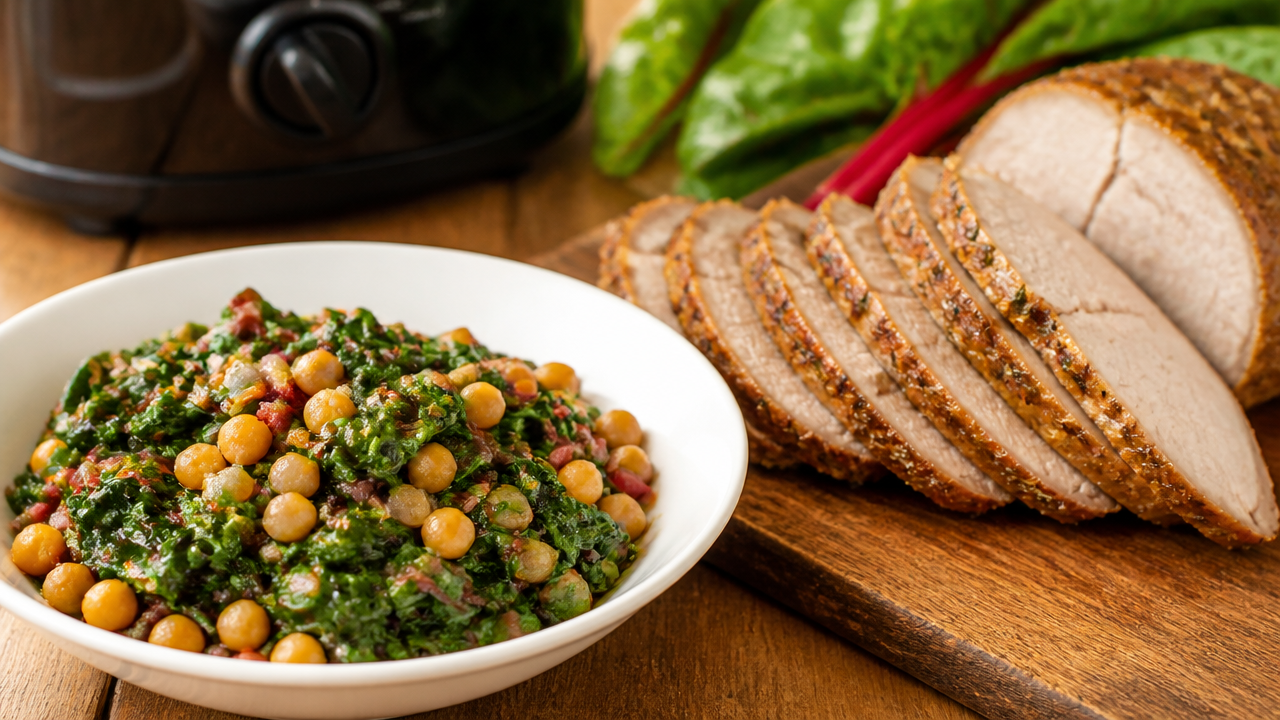
What defines a perfect weeknight meal when you want the ease of a tender crock pot pork loin paired with a fresh side like sauteed Swiss chard with chickpeas? Balancing slow-cooked proteins with crisp, nutrient-dense greens creates an ideal, stress-free dining experience. Whether you are planning a busy Tuesday dinner or a casual weekend gathering, this combination delivers flavor without requiring hours of kitchen labor. Relying on simple, high-quality ingredients ensures your home-cooked meal satisfies every craving. Learning how to manage these two cooking methods simultaneously makes your kitchen routine feel much more manageable.
Quick Questions and Answers
Question: Why is swiss chard a healthy ingredient to eat? Answer: Swiss chard is rich in vitamins A, C, and K, plus antioxidants like beta-carotene and lutein that support eye health and immunity. It also provides fiber for digestion and minerals like magnesium and iron, making it a nutrient-dense leafy vegetable for balanced meals.
Question: Can you saute swiss chard with chickpeas together? Answer: Yes, you can sauté swiss chard and chickpeas together by first cooking the chard stems and garlic, then adding the leaves and chickpeas to wilt and heat through. Most recipes suggest seasoning with lemon juice, salt, pepper, and optional red pepper flakes for a flavorful side dish.
Question: Do you need to remove swiss chard stems before cooking? Answer: You don’t need to remove swiss chard stems, but you should separate them from the leaves and chop the stems into smaller pieces since they take longer to cook. This ensures both stems and leaves are tender and evenly cooked when sautéed.
Key Takeaways
- Prepare the pork in the morning to allow for a slow, consistent cook time.
- Always separate the chard stems from the leaves to ensure even texture.
- Add citrus and fresh herbs at the very end to keep the dish bright and flavorful.
What You Need
| Item | Purpose | Notes |
|---|---|---|
| Pork Loin | Main Protein | 1–2 pounds is ideal for most households. |
| Swiss Chard | Leafy Green | Wash thoroughly to remove trapped grit. |
| Chickpeas | Texture/Protein | Canned is best for a quick weeknight version. |
| Aromatics | Flavor Base | Fresh garlic and shallots provide depth. |
| Broth | Cooking Liquid | Vegetable or chicken base works well. |
Step 1: Slow Cooking the Pork Loin

Start by patting your pork loin dry with a paper towel. Drying the surface helps the seasoning stick and encourages better browning if you decide to sear it first. Season the meat generously with salt, black pepper, cumin, and coriander before placing it into the slow cooker. For a foundational flavor, take a moment to whisk your broth, tomato sauce, and ginger together directly in your 5 to 6-quart crock pot.
According to the Mayo Clinic, slow cooking allows tough cuts of meat to tenderize gradually, retaining moisture without constant monitoring. Set your machine to low for 5 to 6 hours or high for 3 hours. Once the timer finishes, remove the pork to a cutting board. Let the meat rest for 10 minutes before slicing to keep the juices locked inside.
Step 2: Preparing the Sauteed Swiss Chard and Chickpeas

Heat a drizzle of high-quality olive oil in a large skillet over medium heat. Add your sliced shallots and minced garlic, stirring until they reach a translucent, golden state. Sprinkle in a pinch of red pepper flakes if you want a subtle, lingering heat. Toss in the chopped Swiss chard stems first, letting them soften for a few minutes before adding the leaves.
Add a splash of broth to the pan. Frying the greens for roughly 2 to 5 minutes allows them to wilt into a vibrant, tender mass. Incorporate your rinsed, drained chickpeas into the mixture now. Cooking for another 2 to 3 minutes ensures they are heated through without turning mushy. Finish the dish with a generous squeeze of fresh lemon juice, which cuts through the earthiness of the greens. For those looking for more variety, this Quick and Easy Dot Cake Recipe So Fun So Easy Chicken Wing Sauce provides another perspective on simple cooking.
Mistakes to Avoid

Fresh herbs such as parsley often get lost if added too early. Wait until you are seconds away from serving to garnish your plate. Adding lemon zest or fresh juice during the long braising process also strips away the bright, aromatic oils that make the dish pop. Keep those elements fresh to maintain the intended flavor balance.
Crowding the pan is another common error. If you put too much chard into the skillet at once, the greens will steam in their own water rather than sear properly. Work in batches if your pan is smaller. Don’t skip the initial sear on the pork if you want the best results. Browning the meat effectively creates a rich, complex fond that enhances the overall sauce profile significantly.
Troubleshooting

Is your stew base looking a bit thin? Don’t worry. Simmer the liquid uncovered for about 10 minutes, which allows evaporation to naturally thicken the braising juices. If you are in a rush, a small cornstarch slurry added to the pot works instantly.
Does the Swiss chard taste too bitter to your palate? This usually happens if the stalks were left in large, raw chunks. Ensure you finely dice the stems so they cook through and turn sweet. Increasing the lemon juice also neutralizes bitterness effectively. If the cooked pork feels dry, you likely cooked it too fast. Switch to the low setting next time and prioritize the longer cook time to allow the muscle fibers to break down into a softer texture.
FAQs
Q: Can I prepare this in advance?
You can safely prep the pork stew base ahead of time, leaving out the fresh garnish until the very end. Store the cooled mixture in a sealed container in the refrigerator for up to 3 days. Simply reheat it on the stove or in a pot before serving, and add the fresh herbs or lemon right as you plate the meal.
Q: Do I need to soak the chickpeas?
Use canned chickpeas to save time since they are already cooked and ready to go. Rinse them thoroughly under cold water to remove any excess sodium from the canning liquid. If you prefer to use dried chickpeas, soaking them overnight is mandatory to ensure they soften at the same rate as the pork during the slow cooker process.
Q: Are swiss chard and chickpeas good for weight loss?
These ingredients support weight loss because they are naturally low in calories while remaining dense in fiber and plant-based protein. The fiber promotes a feeling of fullness, which helps you regulate portion sizes. Research from the Harvard T.H. Chan School of Public Health emphasizes that incorporating lean proteins and vegetables is a core strategy for maintaining long-term health and satiety.
Q: How long does it take to saute swiss chard?
Sautéing this green usually takes about 5 to 10 minutes. Begin by cooking the stems with aromatics for 3 to 5 minutes, then add the leaves for a final 2 to 4 minutes until they are wilted. Keep an eye on the heat, as the leaves can easily go from bright green to limp if cooked too long.
Q: Does swiss chard taste like spinach when cooked?
The flavor is somewhat similar to spinach, though you will notice a distinct, earthy quality and a mild tang. Many cooks find that the natural bitterness mellows significantly after a quick sauté with garlic and oil, making it approachable for those who usually avoid bitter vegetables.
Q: Will freezing swiss chard change its texture?
Freezing will cause the cell walls to break down, which makes the leaves soft and less crisp once thawed. You should reserve frozen chard for dishes where texture is not the main focus, such as soups, stews, or a blended green sauce. It is not ideal for a quick sauté where you want a bit of bite.
Q: When should I buy fresh swiss chard for recipes?
Pick up fresh chard when the leaves appear firm and vibrant. Avoid any bundles that show yellowing, sliminess, or wilted edges. The stems should feel crisp and rigid; if they seem like they are bending too easily or appear woody, they may be older. Farmers’ markets are excellent places to find peak-season produce throughout the spring and autumn months.
Q: Is swiss chard safe for people with kidney disease?
Swiss chard contains high levels of potassium and oxalates. For individuals managing kidney disease who are instructed to limit their potassium intake, this vegetable might not be the best choice. Always check with a medical professional or a registered dietitian who understands your personal health history before making changes to your regular dietary habits.
Q: What is the best way to store swiss chard at home?
Wrap the unwashed leaves in a damp paper towel and place them safely inside a plastic bag in your refrigerator crisper drawer. This method preserves the humidity the leaves need to stay crisp. Try to consume the chard within 3 to 5 days to ensure the best flavor and texture before it begins to wilt naturally.
Recipe Card
Crock Pot Pork Loin with Sauteed Swiss Chard and Chickpeas
A tender, slow-cooked pork loin paired with a quick, garlicky side of Swiss chard and protein-packed chickpeas.
Prep: 15 minutesCook: 6 hoursTotal: 6 hours 15 minutesYield: 4 servingsCategory: DinnerCuisine: American
Ingredients
- 1.5 lb pork loin
- 1 bunch Swiss chard
- 1 can chickpeas
- 2 shallots, sliced
- 3 cloves garlic, minced
- 1 cup chicken broth
- 1/4 cup tomato sauce
- 1 tsp fennel seeds
- 1/2 tsp cumin
- 1/2 tsp coriander
- 1 tbsp olive oil
- 1 lemon, juiced
- Red pepper flakes to taste
Instructions
- – Season pork with salt, pepper, cumin, and coriander.
- – Whisk broth and tomato sauce in the crock pot.
- – Add pork to the crock pot and cook on low for 6 hours.
- – Sauté shallots and garlic in olive oil in a skillet.
- – Stir in chard stems, then leaves, and chickpeas.
- – Cook until wilted and finish with lemon juice.
Nutrition Info (per serving)
| Calories | 380 |
| Protein | 32g |
| Carbs | 24g |
| Fat | 15g |
| Fiber | 6g |
| Sugar | 3g |
| Sodium | 420mg |
Notes
- Serve the pork sliced with the chard mixture on the side.
- Use a thermometer to ensure the pork reached internal temp of 145F.
My Experience With Quick and Easy Sauteed Swiss Chard With Chickpeas Recipe Crock Pot Pork Loin
I have learned that the key to this recipe is the timing between the slow cooker and the skillet. Whenever I try to multitask, I usually end up forgetting the chard stems are a bit crunchier than the leaves. You really have to give those stems a head start in the hot oil or you will regret it halfway through the meal. My favorite trick is prepping the chard the night before; having clean, chopped greens waiting in the fridge makes me feel like a pro chef even on the busiest Monday nights.
One expert tip I found is to save the pork juices that accumulate in the crock pot. I pour those over the finished slices right before serving, which adds a depth of flavor that is hard to replace. It is a simple habit, but it really elevates the final plate. Don’t worry if you accidentally overcook the greens once or twice; it happens to everyone. Just keep the lemon handy, as that acidity is basically a reset button for flavor. Have you ever tried variations like adding smoked paprika, or do you prefer to keep the flavor profile strictly focused on the garlic and fennel?
Next Steps
Experiment beyond the base recipe by serving the pork and greens over a creamy bed of polenta or alongside a wedge of crusty sourdough bread. These sides are perfect for soaking up the remaining braising liquid. You might also consider swapping fennel seeds for smoked paprika if you want to lean into a more rustic, Spanish-inspired flavor profile. The adjustability of this recipe is its greatest strength, allowing you to adapt it to whichever pantry staples you have on hand.
Latest Updates
In 2026, the focus in home cooking shifted toward efficient, one-pot meals that utilize slow-cooker technology to lower energy consumption. Culinary experts identified that maximizing “passive cooking” time—where the machine does the work while you manage other prep—is the primary driver for modern meal planning. This recipe benefits from these principles by keeping the active stove time limited to the final minutes before dinner.
References
- Mayo Clinic. (2024, May 07). Slow cooker safety. Mayo Clinic. https://www.mayoclinic.org/healthy-lifestyle/nutrition-and-healthy-eating/in-depth/slow-cooker/art-20044552
- Harvard T.H. Chan School of Public Health. (2024, January 02). Protein. The Nutrition Source. https://www.hsph.harvard.edu/nutritionsource/what-should-you-eat/protein/
